


Three fall golf outfits cover every Canadian autumn scenario: a moisture-wicking polo with a quarter-zip for mild days (10–18°C), a fleece vest layered under a wind shell for cool and wet rounds (4–10°C), and a merino base with an insulated hoodie and waterproof shell for cold and windy mornings below 4°C. Each combo is club-ready and built around pieces you can grab right now.
- Mild: Moisture-wicking polo with a quarter-zip pullover, golf trousers, waterproof shoes, and a rope hat.
- Cool and wet: Wicking base layer, fleece vest, lightweight rain shell, golf trousers, thermal socks, and a snapback hat.
- Cold and windy: Merino base layer, insulating hoodie, waterproof wind shell, insulated golf trousers, winter gloves, and a beanie.
Browse the full Plaid Gorilla Golf drop to pick up the hoodie and hat pieces that anchor each combo above.
Key takeaways
The single most important rule for fall golf in Canada: layer thin and technical, not thick and bulky, so your swing stays free when the temperature drops.
| Point | Details |
|---|---|
| Layer base/mid/outer | Two thin technical layers outperform one bulky layer for warmth and swing mobility. |
| Avoid cotton base layers | Cotton retains moisture and chills you; choose merino or synthetic wicking fabrics instead. |
| Check the dress code first | PGA of Canada rules prohibit jeans, cargo shorts, tank tops, and metal spikes at regulated venues. |
| Pack a spare glove and hand warmers | Wet gloves lose grip fast; hand warmers make a real difference below 6°C. |
| Plaid Gorilla Golf for fall | The Bogey Kit bundles a hat and hoodie for cooler mornings — limited drops, ships from Canada. |
Table of Contents
- How do you layer for fall golf in Canada?
- What are the essential pieces for fall golf?
- What do fall golf outfit ideas look like for men and women?
- What are the dress code rules at Canadian golf clubs?
- How should you size and pack for a fall golf round?
- The case for dressing boldly on a cold course
- Plaid Gorilla Golf fall pieces worth adding to your kit
- Sources
- FAQ
How do you layer for fall golf in Canada?
The base, mid, and outer layers system is the backbone of smart autumn golf apparel. A snug wicking base pulls sweat away, a flexible mid-layer holds heat, and a windproof or waterproof outer blocks the elements without locking up your backswing. Two thin technical layers consistently outperform one bulky layer for both warmth and full swing mobility — that principle is the whole game when temperatures drop.
Canadian autumn weather shifts fast. A morning tee time in September can start at 6°C and climb to 14°C by the back nine. Mapping your kit to temperature conditions before you leave the house saves you from either sweating or feeling cold.
| Condition | Base layer | Mid-layer | Outer | Key accessory |
|---|---|---|---|---|
| Mild | Wicking polo | Quarter-zip or light sweater | Optional vest | Rope hat or snapback |
| Cool/wet | Wicking long-sleeve | Fleece vest | Lightweight rain shell | Waterproof gloves |
| Cold/windy | Merino or synthetic base | Insulated hoodie | Windproof/waterproof shell | Beanie + hand warmers |
Fabric dos and don’ts
- Do choose merino wool or synthetic wicking fabrics for your base. Cotton retains moisture and chills you — it is the single worst choice for a cold or wet round.
- Do look for articulated shoulders and stretch panels in any mid or outer layer. Generic shells restrict shoulder rotation on the backswing.
- Don’t pile on a thick cable-knit sweater as your only mid-layer. It traps heat unevenly and kills mobility.
- Do test your full outfit with a practice swing before you leave home.
Pro Tip: Wear your vest under your wind shell rather than over it. The vest locks in core heat while your arms stay free to rotate, and the shell keeps wind off without adding bulk to your shoulders.
What are the essential pieces for fall golf?
Five garments cover every autumn condition on a Canadian course: a moisture-wicking base layer, a quarter-zip or collared polo, an insulating mid-layer or vest, a wind or rain outer, and golf trousers or a skort. Seasonal editorial coverage consistently names quarter-zips, vests, and lightweight waterproof jackets as the silhouettes that keep golfers warm and mobile through autumn play.
- Moisture-wicking base layer: Look for polyester or merino blends with flat seams. Merino regulates temperature better across a wide range; polyester dries faster after rain.
- Quarter-zip or collared polo: Your visible top layer must meet most club dress codes. Choose a fabric with at least 4-way stretch so the collar stays neat through a full swing.
- Insulating mid-layer or vest: A vest is the most versatile piece in your fall bag. It protects your core without restricting arm movement. Golf Digest highlights layerable vests and quarter-zips as indispensable fall items.
- Wind or rain outer: Prioritise golf-specific designs with articulated shoulders and a DWR (durable water-repellent) finish. For heavy rain, look for taped seams and a waterproof rating of at least 10,000mm.
- Golf trousers or skort: Tailored fit, some stretch, and a water-resistant finish. Thermal-lined trousers or insulated leggings layered under a skort work well below 4°C.
Feature checklist before you buy
- Wicking or merino fabric (no cotton)
- 4-way stretch or articulated shoulders
- DWR finish on outer layers
- Taped seams on rain shells intended for heavy weather
- Ankle cuffs that clear the top of your shoe without bunching
Pro Tip: A vest almost always outperforms a bulky jacket on the course because it leaves your arms completely free. Save the insulated jacket for the walk between holes on genuinely cold days, then stow it before you address the ball.
What do fall golf outfit ideas look like for men and women?
These combinations are plug-and-play and meet the collared, tailored standard expected at most Canadian clubs. Each one is built around a real temperature scenario.
Men’s fall outfit ideas
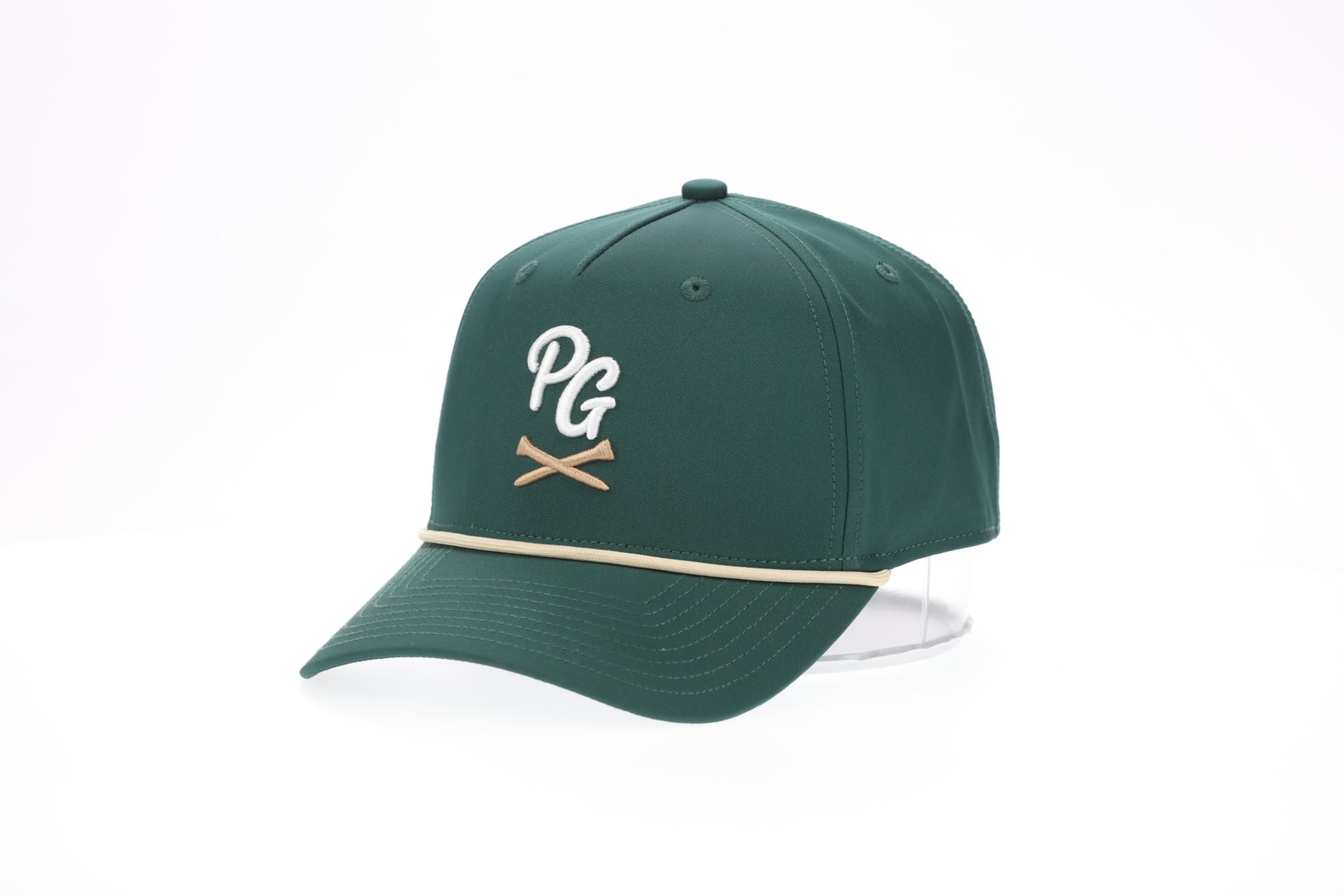
- Mild morning: Wicking polo (forest green or navy) + slim-fit golf trousers + waterproof golf shoes + Champagne Tees Rope Hat – Ponderosa Pine. The rope hat adds texture without breaking any dress code.
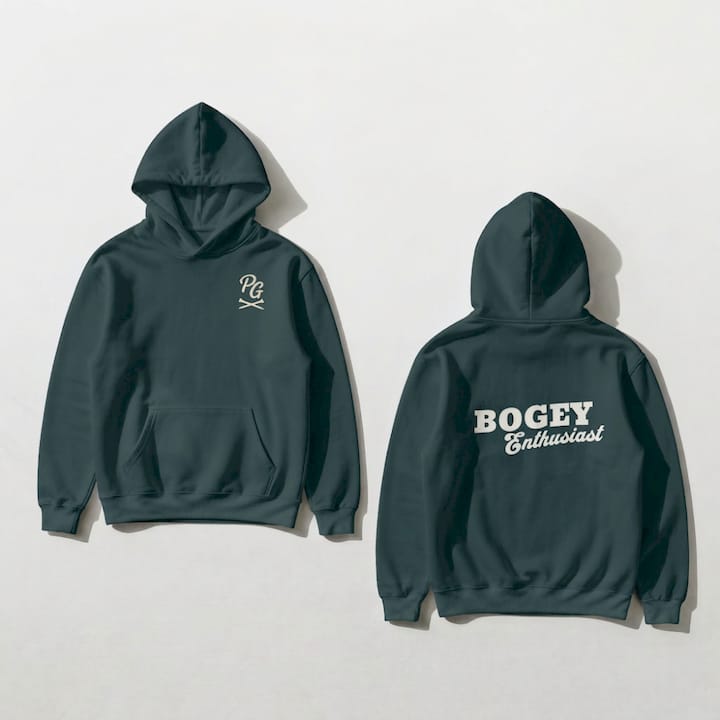
- Cool and overcast: Merino long-sleeve base + Bogey Enthusiast Hoodie – Pine + lightweight rain shell + tapered golf trousers + waterproof shoes + thermal socks. The hoodie pulls double duty as mid-layer and post-round wear.
- Cold and windy: Synthetic wicking base + insulated vest + Bogey Enthusiast Hoodie + windproof shell + insulated golf trousers + winter golf gloves + beanie. Layer up before the first tee and peel back as the round warms up.
Women’s fall outfit ideas
- Mild morning: Wicking polo or fitted quarter-zip + tailored golf skort + ankle socks + waterproof golf shoes + Country Club Snapback – Navy/Cloud White. Clean, polished, and ready for any club.
- Cool and wet: Wicking long-sleeve base + fleece vest + packable rain shell + golf skort over opaque performance leggings + waterproof shoes. Leggings are widely accepted at public courses when opaque and performance-oriented, though private clubs often require them layered under a skort.
- Cold and windy: Merino base + Bogey Enthusiast Hoodie + windproof shell + insulated golf trousers or thermal leggings under a skort + winter gloves + warm hat. Bold, warm, and built for a full 18.
For more outfit inspiration built around golf wardrobe expression, the Plaid Gorilla Field Notes blog covers how to dress with purpose without sacrificing personality.
What are the dress code rules at Canadian golf clubs?
Most Canadian clubs expect a neat, collared appearance. The short version: collared shirts, tailored trousers or skorts, and golf shoes with soft spikes. Jeans, cargo shorts, tank tops, and metal-spiked shoes are off the table at virtually every regulated venue.
The PGA of Canada’s event dress-code policy explicitly permits collared golf shirts, skorts, and tailored pants while prohibiting jeans, cargo shorts, tank tops, and metal spikes during competition rounds. PGA of BC club guidance reinforces this with a neat-appearance standard and lists penalties for infractions. Private clubs like the Toronto Golf Club go further, banning joggers, workout attire, and ripped clothing, and often require shirts to be tucked and logos to be discreet.
Common restrictions at a glance
- Prohibited: Denim, cargo shorts, joggers, workout leggings worn alone, tank tops, offensive logos, metal spikes
- Permitted: Collared polos, tailored trousers, golf skirts and skorts, capris, soft-spike or spikeless shoes
- Check before you go: Visit the course website, call the pro shop, or read your tee-time confirmation email. Rules vary between public and private venues.
A bold hoodie like the Bogey Enthusiast fits the warm-up and post-round context at most clubs. On the course itself, your collared polo or quarter-zip is the visible top layer that keeps you compliant.
How should you size and pack for a fall golf round?
Size for layering from the inside out. Your base layer should fit snug against the skin. Your mid-layer needs room to move over it without pulling at the shoulders. Your outer layer needs enough space to clear both without bunching at the armpits. When in doubt, size up one in your outer shell and stay true to size everywhere else.
For choosing golf clothing that fits well for layering, check shoulder width first — a shell that binds at the shoulder will restrict your swing regardless of how the chest fits. Sleeve length matters too: a base layer that rides up when you swing exposes your wrist to cold air on every shot.
Pre-round packing checklist
- Moisture-wicking base layer (packed if not worn)
- Quarter-zip or collared polo
- Insulating vest or mid-layer
- Packable rain shell
- Spare golf glove (wet gloves lose grip fast)
- Hand warmers (two pairs for rounds below 6°C)
- Warm hat or beanie
- Thermal socks (one spare pair)
- Waterproof golf shoes or shoe covers
- Small towel for club and grip drying
| Measurement | Why it matters for layering |
|---|---|
| Shoulder width | Determines swing freedom in outer layers |
| Sleeve length | Prevents base layer from riding up at address |
| Chest/waist | Sets how much room you have for a vest underneath |
| Inseam | Ensures trousers don’t bunch over waterproof shoes |
Buy from Canadian retailers or Canadian-based online shops where possible. Avoiding cross-border purchases saves you from unexpected customs and duty charges that can add 15–20% to the sticker price. The Just Golf Stuff app on the Canadian App Store is one mobile option for browsing gear locally. Always check the return and exchange policy before you order — sizing for layering often takes one adjustment.
The case for dressing boldly on a cold course
Fall golf style has a reputation problem. Most golfers default to a plain navy fleece and call it done. That works, but it misses something: autumn is the best-looking season on a Canadian course, and your kit should match the moment.
Practicality and personal expression are not in conflict. A well-chosen hoodie in a deep forest green, a structured snapback that holds its shape in the wind, a rope hat that reads as intentional rather than accidental — these details cost nothing extra in terms of performance. They just require a bit more thought than grabbing whatever is on sale.
The golfers who stand out on a cold October morning are not wearing more gear. They are wearing the right gear, in the right colours, with pieces that work together. That is the whole idea behind fashion-forward golf wear: not louder, just more deliberate.
Plaid Gorilla Golf fall pieces worth adding to your kit
Bold fall golf apparel that actually performs on a cold Canadian morning is exactly what Plaid Gorilla Golf was built for. These are not filler pieces — each one is a limited drop designed to stand out on the course and hold up off it.

- Champagne Tees Rope Hat – Ponderosa Pine: A weather-friendly rope hat with structured Plaid Gorilla branding. Pairs with any collared polo for a clean, course-ready look.
- Country Club Snapback – Navy/Cloud White: Structured and polished. Complements tailored trousers and a quarter-zip on cooler days.
- Bogey Enthusiast Hoodie – Pine: A heavyweight hoodie in deep forest green. Wear it as your mid-layer under a shell or as your outer on mild mornings. Built for the course, worn everywhere else.
- The Bogey Kit — Country Club Hat & Bogey Enthusiast Hoodie: The fastest way to kit out for fall. One bundle covers your head and your core — hat and hoodie, matched and ready to go. Save on the pair versus buying separately.
All pieces ship from Canada. No customs surprises, no duty guesswork. Head to the Plaid Gorilla Golf shop to grab your fall drop before the limited stock runs out.
Sources
Dress-code references and layering guides worth bookmarking before your next autumn round:
FAQ
What do golfers typically wear in the fall?
Fall golf outfits centre on a three-layer system: a moisture-wicking base, a quarter-zip or vest mid-layer, and a lightweight wind or rain shell on top. Collared shirts, tailored trousers, and waterproof shoes round out a course-ready autumn kit.
What is the dress code for golf at Canadian clubs?
Most Canadian clubs require a collared shirt, tailored trousers or a skort, and soft-spike or spikeless shoes. The PGA of Canada explicitly prohibits jeans, cargo shorts, tank tops, and metal spikes — always confirm the specific rules with the pro shop before you arrive.
How do you dress for golf when it is cold?
Start with a merino or synthetic wicking base layer, add an insulating mid-layer such as the Bogey Enthusiast Hoodie, and finish with a windproof or waterproof shell. Thermal socks, a warm hat, and insulated golf gloves make a significant difference once temperatures drop below 4°C.
Can you wear a hoodie on the golf course?
At most public and semi-private Canadian courses, a hoodie worn as a mid or outer layer is acceptable during casual rounds, especially in cool autumn weather. Private clubs may require a collared shirt as the visible top layer, so layer your hoodie under a shell or confirm the policy before teeing off.
Can you wear leggings to golf?
Opaque, performance-oriented leggings are generally accepted at public courses. Private clubs often require leggings to be layered under a skort or tailored shorts to meet their dress code — the Toronto Golf Club policy is a good example of how strict private-club standards can be.
Recommended
- Golf outfit accessories checklist for Canadian golfers – Plaid Gorilla Golf
- Choose comfortable golf apparel: a guide for Canadian golfers – Plaid Gorilla Golf
- Find alternative golf clothing options for Canadian golfers – Plaid Gorilla Golf
- Dress comfortably for long golf rounds: layering guide – Plaid Gorilla Golf