


What belongs in your golf outfit accessories checklist?
Every solid round starts before you reach the first tee. A proper golf outfit accessories checklist covers the items that keep your game sharp, your pace on track, and your look dialled in. Here’s what you need:
- Golf balls: Carry enough balls for your round. Good players lose a few; beginners on courses with hazards may lose more.
- Tees: Bring a variety of lengths suitable for drivers and woods. They break, can be lost in rough, and are often shared among players.
- Golf glove plus a spare: A glove prevents blisters and helps keep your grip consistent. It’s useful to have a spare for wet conditions.
- Divot repair tool: Non-negotiable for green etiquette. Keep it in your pocket, not your bag.
- Ball marker: A coin works, but a flat dedicated marker sits cleaner on the green.
- Towel(s): At least one towel is essential; bringing a second towel is advantageous especially for maintaining grip and club performance in humid conditions.
- Sun protection: Use sunscreen, a hat, and sunglasses to protect yourself during multi-hour rounds on the course.
- Water bottle: Staying hydrated supports focus and consistent performance throughout your round.
- Rain gear: Essential for Canadian golf seasons due to frequent rain from spring through fall.
Table of Contents
- How each accessory actually affects your game
- Why layering matters for golf rounds in Canada
- What Canadian golf course dress codes actually require
- How Plaidgorillagolf lets you stand out on the course
- How to care for your accessories and make them last
- Choosing accessories that fit your course’s dress code
- How to mix and match accessories without losing your look
- Seasonal accessory recommendations for Canadian courses
- Key takeaways
- Plaidgorillagolf: bold gear built for Canadian golf
- FAQ
How each accessory actually affects your game
Golf balls in high-visibility colours help on tree-lined Canadian courses where white balls vanish in shadows. Bringing extras means you never slow the group down searching.
Tees are cheap and biodegradable. Wooden ones do the job as well as any performance tee. The real mistake is carrying too few.
- Gloves: Rotate two pairs to extend their life. After a wet round, stuff them with a dry cloth and let them air-dry flat. Never leave a damp glove crumpled in your bag.
- Dual towel strategy: One towel for club faces, one for hands and grips. A wet grip combined with a sweaty glove means loss of club control. Clip both to the outside of your bag where they’re always within reach.
- Divot tool: Insert at the edge of the pitch mark and push the turf gently inward. Never pry upward — that tears the roots and leaves a lump that frustrates every player behind you.
- Ball marker: Magnetic markers that clip to your cap brim are the most convenient option on the market.
Pro Tip: Organise pocket items by category before each tee shot: one tee and one spare ball in your front pocket, divot tool and ball marker in your back pocket. You’ll never fumble on the green again.
Why layering matters for golf rounds in Canada
Canada’s golf season runs from April through October, with morning temperatures that can sit near 5°C and afternoons pushing 28°C. A three-layer apparel system handles all of it.
- Base layer: Moisture-wicking synthetic or merino wool. Cotton absorbs sweat and chills against your skin — avoid it entirely as a base.
- Mid-layer: Quarter-zip pullover, vest, or fleece. Quarter-zips and vests let you adjust quickly without removing your hat or shoes.
- Outer shell: A golf-specific wind and rain jacket with stretch fabrics and gusseted shoulders. Generic rain jackets restrict shoulder rotation and cost you yards. This is where spending more genuinely matters.
Two thin technical layers outperform one thick layer for both swing freedom and thermal regulation. The mid-layer category has grown fast in recent years, and options now range from packable pullovers to hybrid jackets with insulated panels and stretchy sleeves. For Canadian conditions, prioritise water resistance and wind protection over pure warmth.
Check out Plaidgorillagolf’s golf wardrobe modernisation guide for a full breakdown of what works season by season.
What Canadian golf course dress codes actually require
Most Canadian courses follow a consistent standard, though private clubs can be stricter. Check the specific course website before your tee time.
- Men: Collared shirt with tailored pants or golf shorts. Many clubs now accept mock necks as a modern collar alternative.
- Women: Collared or collarless shirts paired with pants, capris, or golf skirts. The range of acceptable options has widened significantly at most public courses.
- Footwear: Spiked or spikeless golf shoes are required at most clubs. Running shoes are typically not permitted.
- Hats: Both men and women can wear visors or baseball-style caps.
Style compliance and personal expression are not opposites. Colour, pattern, and accessory choices are where individuality lives within the dress code framework. A bold hat or a distinctive hoodie can say a lot without breaking a single rule.
How Plaidgorillagolf lets you stand out on the course
Plaidgorillagolf was built for Canadian golfers who want to play on their own terms. The design philosophy is modern and minimalist, with deep forest green and warm cream tones, sharp typography, and zero-radius geometry that feels confident without being loud.
Three kits anchor the current collection:
The Course Kit pairs the Rope Hat with the Prime Hoodie. It’s a clean, versatile combination that works as a mid-layer on cool mornings and a statement piece when the jacket comes off.
The Club Kit combines the Country Club Snapback with the Prime Hoodie. Classic motifs, modern comfort, and the kind of fit that moves with your swing rather than against it.
The Bogey Kit brings together the Country Club Hat and the Bogey Enthusiast Hoodie. Casual, distinctive, and built for golfers who take their game seriously but their wardrobe personally.
Premium materials, limited drops, no filler. Each kit is designed to comply with dress codes while making it clear you didn’t dress like everyone else.
Pro Tip: Layer the Prime Hoodie under your rain shell on cold Canadian mornings. The fit is cut for movement, so you won’t lose swing range when the weather turns.
How to care for your accessories and make them last
Quality gear lasts when you treat it right. A few consistent habits make a real difference.
- Gloves: Rotate between two pairs. After each round, flatten the glove and let it air-dry. Never machine-dry leather gloves.
- Towels: Wash after every two or three rounds. A damp towel left in a bag pocket grows mildew fast.
- Divot tool and ball marker: Wipe them down after each round. Metal tools last indefinitely with basic care.
- Valuables: Use a dedicated lined pouch in your bag for your phone, wallet, and keys. It protects them from moisture and means you’re not digging through balls and tees when you need your card at the pro shop.
Pro Tip: Do a quick pre-round check every time: balls, tees, glove, towel, divot tool, ball marker. Thirty seconds at the car saves five minutes of frustration on the course.
Choosing accessories that fit your course’s dress code
Before you buy, know the rules. Public courses in Canada are generally relaxed; private and semi-private clubs often have stricter standards. A few principles hold across most:
Hats must face forward at most traditional clubs. Hoodies are accepted at a growing number of courses, particularly when they replace a collared layer rather than cover one. Footwear is the most consistently enforced rule — always confirm spiked versus spikeless requirements ahead of time.
When in doubt, express personality through golf clothing through colour and accessory choices rather than silhouette. A bold hat, a distinctive mid-layer, or a coordinated kit reads as intentional rather than non-compliant.
How to mix and match accessories without losing your look
Coordination doesn’t mean matching everything. It means choosing pieces that share a colour story or a design register.
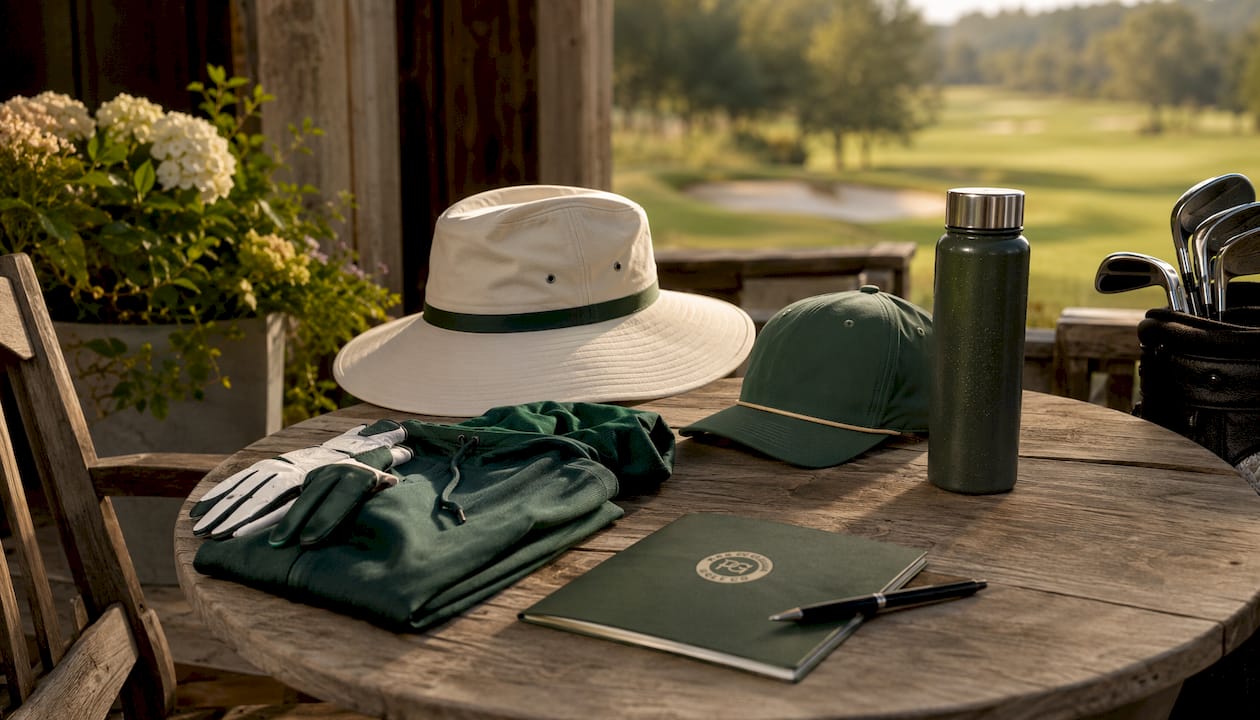
Start with one anchor piece — a hat, a hoodie, or a jacket — and build around it. If your mid-layer is deep forest green, a cream or neutral base layer and a clean white ball marker keep the palette cohesive. Avoid mixing more than two bold patterns in a single outfit. One statement piece is confident; three is chaotic.
The best golf accessories serve double duty: they perform on the course and look sharp doing it. Prioritise pieces that work together across multiple rounds rather than single-use novelty items.
Seasonal accessory recommendations for Canadian courses
Canada’s golf season demands flexibility. What you carry in May is not what you need in September.
Spring (April–May): Rain gloves, waterproof shell, warm hat, and hand warmers for early morning rounds. Mornings can still drop below 10°C in most provinces.
Summer (June–August): Sun hat or snapback, SPF 30+ sunscreen, polarised sunglasses, and a lightweight moisture-wicking base layer. UV exposure across a full summer round is significant.
Fall (September–October): Return to the full three-layer system. Add a thermal base layer, a heavier mid-layer fleece, and waterproof gloves. Rain frequency increases across most of Canada through October.
Winter golf is limited to British Columbia and a handful of mild-weather pockets. If you’re playing year-round, add insulated waterproof gloves and a thermal beanie that fits under your hood.
Key takeaways
A complete golf outfit accessories checklist for Canadian golfers covers the essentials, a three-layer apparel system, and accessories that express your style while respecting course rules.
| Point | Details |
|---|---|
| Core essentials | Carry 6–9 balls, tees, a glove plus spare, divot tool, ball marker, and one or two towels. |
| Three-layer system | Base, mid-layer, and waterproof shell handle Canada’s full season; avoid cotton as a base. |
| Dress code compliance | Check each course’s rules ahead of time; mock necks and hoodies are accepted at many Canadian clubs. |
| Accessory care | Rotate gloves, wash towels regularly, and use a valuables pouch to protect gear from moisture. |
| Plaidgorillagolf kits | The Course Kit, Club Kit, and Bogey Kit offer premium, dress-code-compliant options for bold Canadian golfers. |
Plaidgorillagolf: bold gear built for Canadian golf
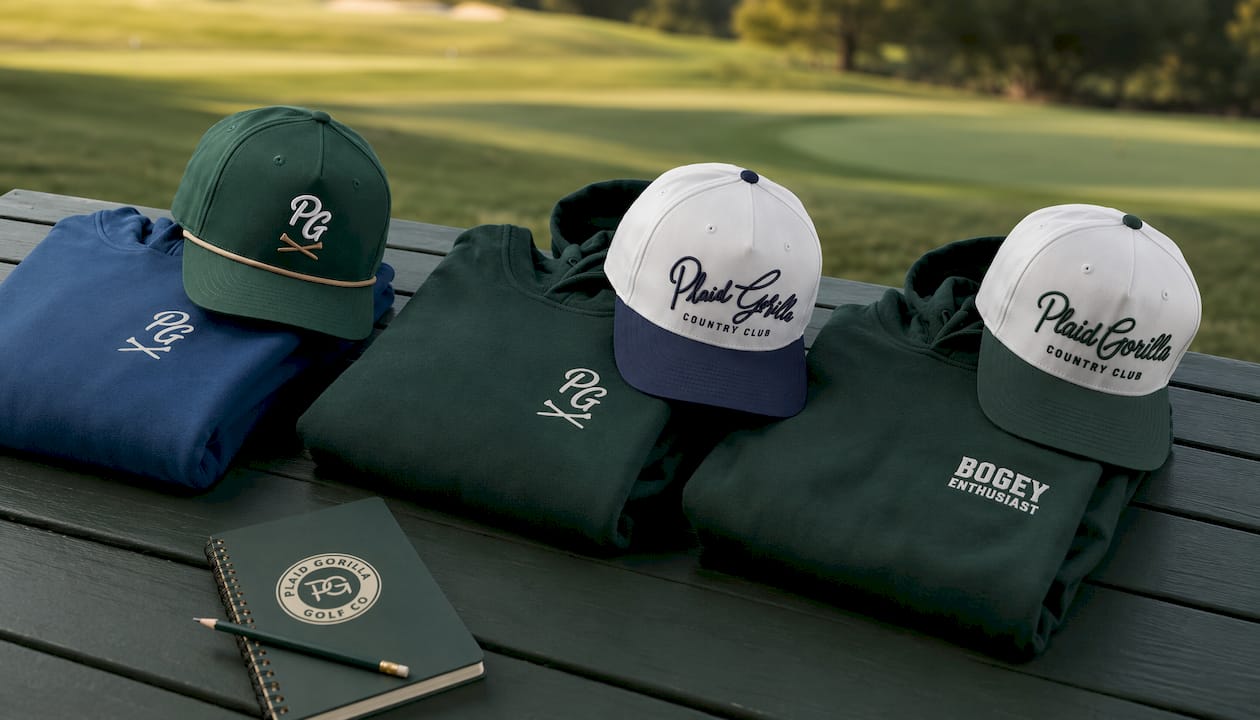
Canadian golfers who want premium quality without the generic look have one clear option: Plaidgorillagolf. Every kit is designed to move with your swing, hold up through a full Canadian season, and make a statement the moment you step on the first tee. The Course Kit, Club Kit, and Bogey Kit are all built from premium materials with a minimalist aesthetic that works from the fairway to the clubhouse. No filler, no compromise. Shop the current drop at plaidgorillagolf.ca and gear up before the next limited release sells out.
FAQ
What are the must-have accessories for a round of golf?
Every golfer needs golf balls (6–9 per round), tees, a glove plus a spare, a divot repair tool, a ball marker, and one or two towels. Sun protection and rain gear are strongly recommended for Canadian courses.
What layering system works best for Canadian golf weather?
A three-layer system works best: a moisture-wicking base layer, an insulating mid-layer such as a quarter-zip or vest, and a golf-specific waterproof shell with stretch fabric for full swing mobility.
Are hoodies allowed on Canadian golf courses?
Many Canadian public and semi-private courses accept hoodies, particularly as a mid-layer. Private clubs may have stricter rules, so check the specific course dress code before your round.
How do I extend the life of my golf gloves?
Rotate between two gloves, air-dry them flat after each round, and never machine-dry leather. Buying two and alternating them significantly extends grip life and saves money over a season.
Which Plaidgorillagolf kit suits a Canadian golfer best?
All three kits — the Course Kit, Club Kit, and Bogey Kit — are built for Canadian conditions with premium materials and bold design. The right choice depends on your style preference, from the clean versatility of the Course Kit to the casual confidence of the Bogey Kit.