


The most important thing you can do when choosing golf clothing is prioritise fit that allows a full swing, performance fabrics that manage sweat and stretch, and a simple layering system built for Canadian weather. Get those three right and everything else follows.
Here’s your quick shopping checklist before we go deeper:
- Collar required. Most Canadian courses demand a collared polo or mock collar. No exceptions.
- Shorts inseam: 9–11 inches is the standard for tailored golf shorts that look polished and meet most Canadian course dress codes.
- Belt loops, not drawstrings. Drawstring athletic shorts will get you turned away at the pro shop.
- Fabric first. Favour polyester or piqué blends with four-way stretch over 100% cotton for anything warmer than a cool autumn morning.
- Test a full swing before you buy. If your shoulders bind, size up.
- Layer smart. A breathable polo, a lightweight mid-layer, and a packable shell covers most Canadian conditions.
Two Plaidgorillagolf pieces worth knowing now: the Bogey Kit (Country Club Hat and Bogey Enthusiast Hoodie together) and the Bogey Enthusiast Hoodie in Pine. Both are built for comfort and bold expression, on and off the course.
Table of Contents
- What should you prioritise when choosing comfortable golf clothing?
- How should golf clothing fit, and what measurements matter?
- Which fabrics and features make golf clothes actually comfortable?
- How do you dress for Canadian golf seasons and changing weather?
- How do you show your style without breaking course dress codes?
- What do golf clothes cost in Canada, and where should you buy them?
- How do you care for golf apparel so it keeps performing?
- Your golf apparel shopping checklist
- What footwear works best with your golf outfit?
- Key takeaways
- Why your golf wardrobe can be both comfortable and bold
- Plaidgorillagolf: bold Canadian golf apparel built for comfort
- Useful sources
- FAQ
What should you prioritise when choosing comfortable golf clothing?
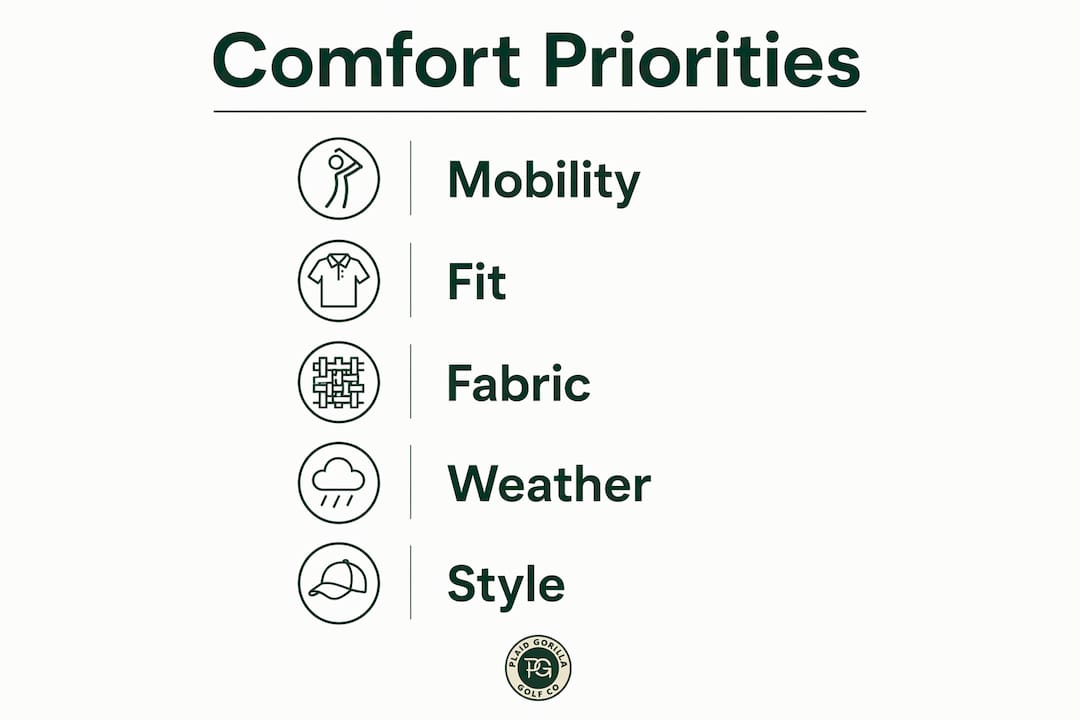
Mobility comes first. A golf swing demands rotation through the hips, shoulders, and torso simultaneously. Clothing that restricts any of those planes costs you distance and comfort across 18 holes. After mobility, moisture-wicking and four-way stretch are the two technical features that matter most. Everything else, UPF protection, water resistance, breathability, durability, is secondary but still worth evaluating.
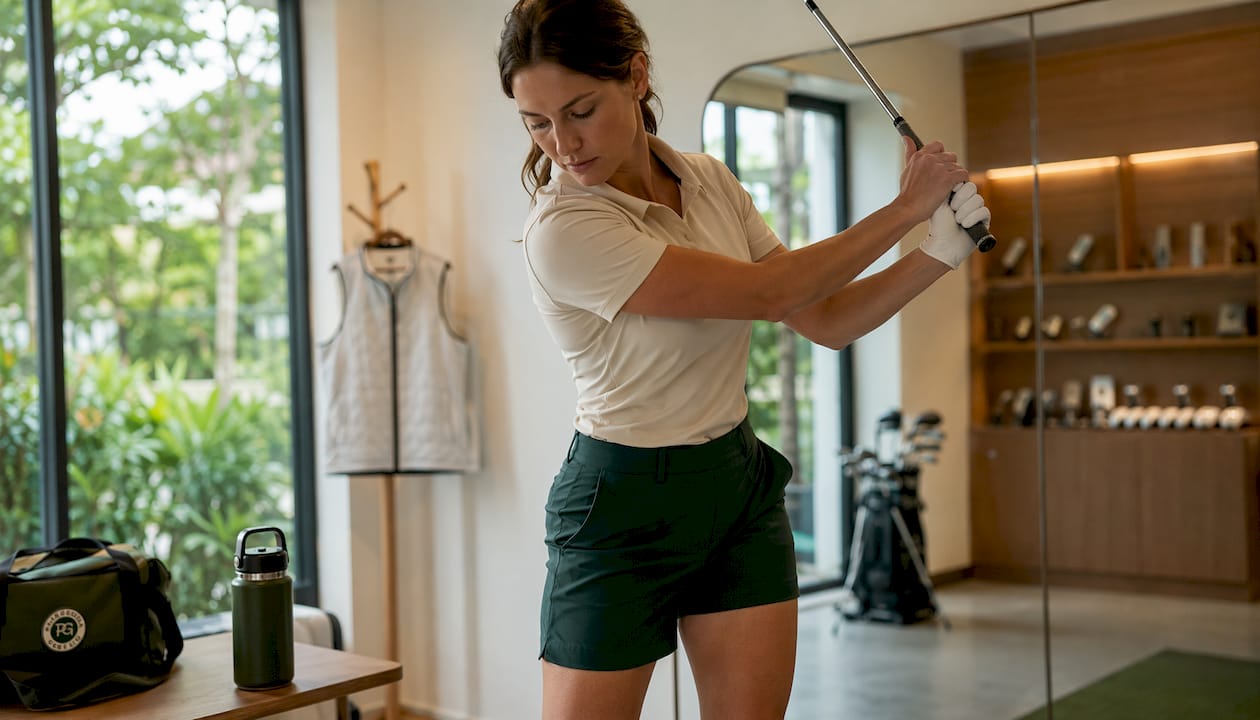
Dress-code compliance shapes your choices before you even get to fabric. Collared tops, belt loops, tailored hems, and no denim or cargo pockets are the baseline at most Canadian courses. Private clubs often go further, so check their website before you show up. Avoid drawstrings, gym shorts, and hoodies as your primary on-course layer. Those details are not just aesthetic preferences; they determine whether you get to play.
Pro Tip: When comparing two otherwise equal pieces, choose the one with more stretch over the slimmer silhouette. You can always dress up a relaxed fit. You cannot undo a shoulder seam that binds mid-backswing.
How should golf clothing fit, and what measurements matter?
A golf polo should sit cleanly across the shoulders with the seam landing at the shoulder point, not drooping onto the upper arm. Through the chest, you want room to rotate without the fabric pulling across the back. The hem should fall just below the waistband so it stays tucked if you choose to tuck, or sits cleanly untucked with a side slit or scalloped back.
For bottoms, tailored shorts with an inseam length that balances professional and comfortable for most golfers. Trousers should sit at the natural waist with enough room in the seat and thighs to bend and rotate freely. Skorts and golf skirts follow the same principle: tailored through the hip, with enough length to meet most club standards.
Movement test checklist before you buy:
- Reach both arms overhead. The shirt hem should not pull out of your waistband.
- Simulate a full backswing. Your shoulders should rotate without the fabric pulling across the upper back.
- Bend forward into an address position. The waistband should not dig in or gap at the back.
- Sit down and cross one leg. Trousers and shorts should not bind through the thigh.
- Walk a few steps. Nothing should bunch, ride up, or shift out of place.
Pro Tip: Size up through the chest and shoulders from your usual casual size. Golf requires more range of motion than everyday wear, and a slightly relaxed fit through the upper body costs you nothing in appearance.
Which fabrics and features make golf clothes actually comfortable?
Avoid 100% cotton for summer rounds. It absorbs sweat, stays wet, and gets heavy fast. Polyester blends and piqué constructions manage moisture far better. Understanding piqué fabric construction helps you read garment labels with confidence rather than relying on marketing copy. For outer layers, nylon resists wind and light rain while staying packable. Spandex or elastane content, even a small percentage, is what gives a fabric four-way stretch.
Key technical features to look for:
- Moisture-wicking: pulls sweat away from skin so it evaporates rather than soaking the fabric
- Four-way stretch: moves with you in every direction, critical for the rotational demands of a swing
- UPF 30+ or 50+: look for the actual garment spec, not just a marketing claim, especially for summer rounds in Canada where UV exposure on open courses is significant
- DWR (durable water repellent) coating: on shells and mid-layers, this sheds light rain without adding weight
- Breathable vents or mesh zones: underarm panels and back vents make a real difference on hot days
On UPF: look for the garment spec on the label or product page rather than a vague “sun protection” claim in the marketing copy. A verified UPF rating tells you exactly how much UV the fabric blocks.
Heavier waterproofing means better rain protection but less packability and sometimes less swing freedom. A lightweight DWR shell you can stuff into your bag beats a heavy waterproof jacket you leave in the car.
How do you dress for Canadian golf seasons and changing weather?
Canada’s golf season runs from roughly April through October depending on the region, and conditions shift dramatically within a single round. A three-layer system handles almost everything: a breathable polo or base layer, a lightweight mid-layer, and a packable wind or rain shell.
Summer (June–August): Light colours, UPF-rated fabrics, and ventilation zones are your priorities. Moisture management matters more than warmth. Keep the mid-layer in your bag rather than on your back.
Spring and Autumn: A lightweight quarter-zip, gilet, or sweater over your polo handles cool mornings that warm up by the back nine. Gilets are particularly useful because they add core warmth without restricting arm movement through the swing.
Wet weather: A quick-dry rain shell with a DWR finish is worth carrying year-round in Canada. Look for packability so it fits in your bag pocket without taking up club space.
Pro Tip: Dress for the first hole, not the forecast. Canadian course weather shifts fast. Pack a mid-layer and a shell even on sunny days, and choose pieces that compress small enough to live in your bag permanently.
How do you show your style without breaking course dress codes?
Most public and semi-private Canadian courses accept collared polos and tailored shorts as the baseline. Private clubs often add requirements around tucked shirts, specific hem lengths, and no logos above a certain size. Check before you play.
Style moves that stay within those rules:
- Structured spread collars look sharp untucked and read as intentional rather than casual
- Side-slit hems allow an untucked polo to hang cleanly without looking sloppy
- Colour and pattern in trims (collar tipping, cuff detail) adds personality without triggering dress-code concerns
- Statement hoodies belong in the clubhouse and the parking lot, not as your primary on-course layer at most clubs
Dos and don’ts at a glance:
| Do | Don’t |
|---|---|
| Collared polo or mock collar | Non-collared T-shirts |
| Tailored shorts with belt loops | Drawstring gym shorts |
| Golf shoes or clean spikeless shoes | Sneakers or sandals |
| Subtle pattern or colour detail | All-over loud prints at strict clubs |
| Tuck at private clubs unless told otherwise | Cargo pockets or denim |
For deeper guidance on using pattern and colour to express individuality, Plaidgorillagolf’s role of pattern in golf fashion guide covers exactly this territory.
What do golf clothes cost in Canada, and where should you buy them?
| Category | Typical price range (CAD) |
|---|---|
| Performance polo | $50–$120 |
| Tailored golf shorts or pants | $60–$150 |
| Lightweight mid-layer (quarter-zip or gilet) | $60–$140 |
| Rain or wind shell | $80–$200 |
| Golf shoes (spikeless or soft spike) | $80–$250 |
Higher prices usually reflect genuine fabric technology rather than brand markup alone. A $120 polo with verified UPF 50+ and four-way stretch will outlast a $50 cotton-blend after a single Canadian summer.
Where to shop in Canada:
- Canadian specialty golf retailers (in-store pro shops and online) let you try before you buy, which matters for swing-test purposes
- Plaidgorillagolf.ca for limited-edition hoodies and hats built for Canadian golfers who want bold, quality pieces
- Online retailers with free returns are worth using for polos and shorts once you know your measurements, since you can order two sizes and return the one that doesn’t pass the movement test
Spikeless golf shoes provide enough traction for most recreational rounds and transition easily to the clubhouse. Soft-spike shoes give better grip on wet grass, which matters on Canadian courses in spring and autumn.
How do you care for golf apparel so it keeps performing?
Technical fabrics need specific care or they lose their performance properties fast.
- Wash in cold water on a gentle cycle. Heat degrades elastane and shrinks synthetic blends.
- Skip fabric softener entirely. It coats the fibres and defeats moisture-wicking and DWR finishes.
- Air dry or tumble dry on low. High heat is the fastest way to kill stretch and shrink a fit you spent time dialling in.
- Reproof DWR shells after several washes using a spray-on or wash-in DWR product. The coating wears off with laundering; reapplying it restores water-shedding performance.
- Store folded, not compressed. Leaving technical garments stuffed in a bag long-term distorts the fabric structure.
Pro Tip: Avoid fabric softeners on every technical piece you own. It feels counterintuitive, but softener is the single most common reason performance fabrics stop wicking after a few washes.
Your golf apparel shopping checklist
Save this before your next purchase:
- Fabric: polyester or piqué blend with spandex content (avoid 100% cotton)
- Stretch: four-way confirmed on the label or product spec
- UPF: 30+ minimum, 50+ for summer rounds
- Shorts inseam: 9–11 inches with belt loops
- Collar: present and structured (polo or mock collar)
- Hem: side slit or scalloped back for untucked wear
- Movement test: passed all five steps before purchase
- Packability: mid-layer and shell compress small enough for your bag
- Return policy: confirmed before ordering online
Shopping tips: Bring your usual golf shoes when trying pants in-store so the break sits correctly. Buy two core polos in neutral colours first, then add personality pieces once you know your fit. For a full breakdown of athletic short styles and inseams, the partner guide covers the options in detail.
What footwear works best with your golf outfit?
Golf shoes do two things your regular trainers cannot: they stabilise your stance through the swing and protect the turf. Spikeless shoes handle both jobs for most recreational rounds and move seamlessly from the 18th green to the clubhouse. Soft-spike shoes earn their place on wet or hilly Canadian courses where grip on damp grass matters.
Fit is the same priority as with any other piece of golf apparel. Your heel should not lift, and your toes should have room to spread at address. Bring the socks you actually play in when you try shoes on. A well-fitted shoe paired with a moisture-wicking sock keeps your feet comfortable across a full 18 holes in Canadian summer heat. For a complete accessories checklist that includes footwear, belts, hats, and gloves, the Plaidgorillagolf golf outfit accessories checklist covers every detail.
Key takeaways
Comfortable, course-appropriate golf apparel comes down to three decisions: fit that allows a full swing, performance fabrics that manage sweat and stretch, and a layering system matched to Canadian seasons.
| Point | Details |
|---|---|
| Prioritise mobility | Test a full backswing and address position before buying any top or bottom. |
| Choose performance fabrics | Polyester or piqué blends with four-way stretch outperform cotton in every Canadian season. |
| Shorts inseam standard | A 9–11 inch tailored inseam with belt loops meets dress codes at most Canadian courses. |
| Layer for Canada | A polo, a lightweight mid-layer, and a packable shell covers April through October. |
| Plaidgorillagolf for bold pieces | The Bogey Enthusiast Hoodie and Bogey Kit deliver comfort and individuality for Canadian golfers. |
Why your golf wardrobe can be both comfortable and bold
The conventional wisdom in golf fashion is that you have to choose between looking sharp and playing comfortably. That framing is outdated. The real tension is between pieces that look intentional and pieces that just look casual. A drawstring hoodie reads as casual. A structured, premium hoodie with clean lines reads as intentional, and that distinction is what gets you through most dress-code conversations.
What Plaidgorillagolf gets right is that bold does not mean loud for its own sake. Deep forest green, warm cream tones, geometric precision — these are design choices that feel confident without screaming for attention. That is exactly the register modern Canadian golfers are looking for. Performance and personality are not competing priorities. The golf wardrobe modernisation guide from Plaidgorillagolf makes this case well, and it is worth reading alongside this guide.
Plaidgorillagolf: bold Canadian golf apparel built for comfort
If you want pieces that pass the movement test AND make a statement, Plaidgorillagolf is the Canadian answer. No generic catalogue filler. No compromises on fabric quality. Just limited drops designed for golfers who play on their own terms.
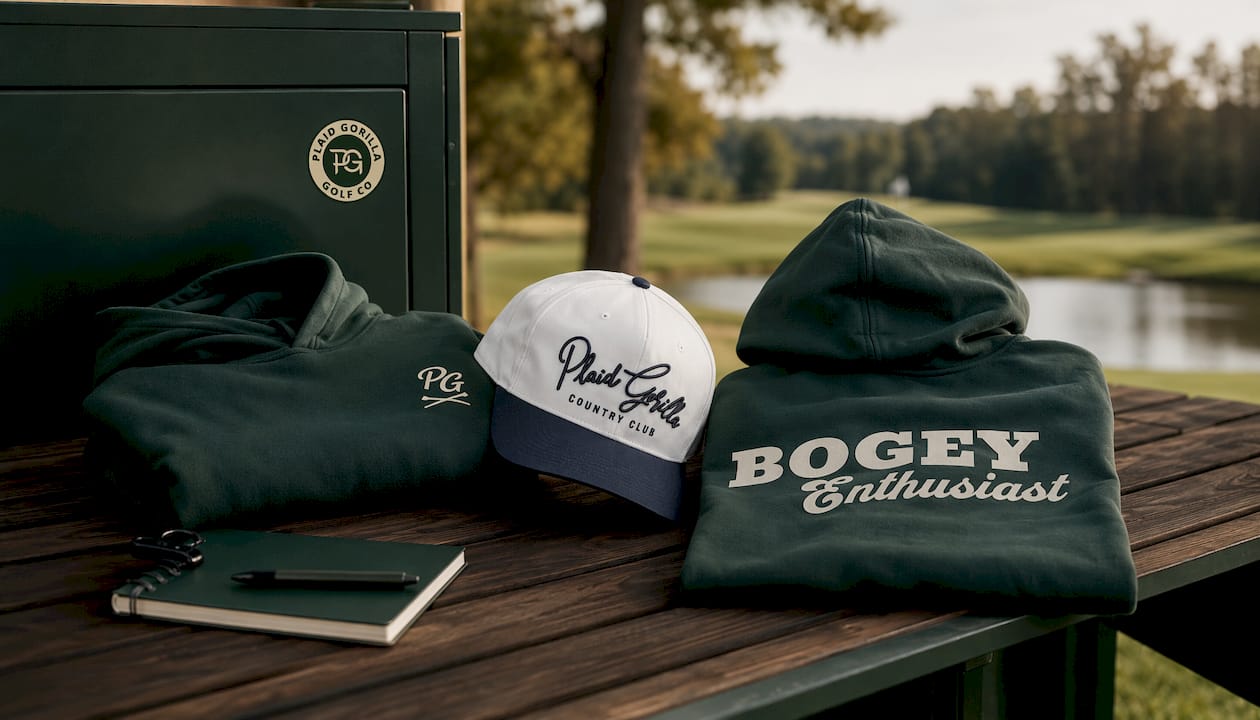
The Bogey Kit pairs the Country Club Hat with the Bogey Enthusiast Hoodie — a complete off-course look that carries the same premium construction you want from anything in your golf bag. The Bogey Enthusiast Hoodie in Pine brings that deep forest green colourway to a piece built for comfort after your round, or anywhere else you wear it. Both are crafted for Canadian golfers who want quality without the usual trade-off between performance and personality. Head to plaidgorillagolf.ca to shop the current drop.
Useful sources
- 5 Best Golf Apparel For Men: Expert-Tested In 2026 — fit and fabric guidance including inseam standards and moisture-wicking priorities
- How to dress properly for golf whatever the weather — layering strategy and fabric selection for variable conditions
- Golf Apparel Fit Guide for Peak Comfort and Performance — sizing-up guidance and care instructions for technical garments
- What Should I Wear Golfing? A Complete Golf Outfit Guide for Beginners — dress code overview across course types and footwear guidance
- Plaid Gorilla Golf: Golf Wardrobe Modernisation Guide — Canadian-focused wardrobe strategy and seasonal planning
FAQ
What fabrics are best for comfortable golf clothing in Canada?
Polyester blends and piqué constructions with four-way stretch are the top choices. They wick moisture, dry fast, and move with your swing across Canada’s variable seasons.
What inseam length should golf shorts be?
A 9–11 inch inseam is the standard for tailored golf shorts that look polished and meet most Canadian course dress codes.
Do I need to wear a collared shirt to play golf in Canada?
Most Canadian courses require a collared polo or mock collar top. Private clubs tend to be stricter, so check the specific dress code before you arrive.
How do I test if golf clothing fits correctly before buying?
Simulate a full backswing, bend into an address position, and reach both arms overhead. If the fabric pulls or the hem rides up, size up through the chest and shoulders.
Are Plaidgorillagolf hoodies suitable for on-course wear?
The Bogey Enthusiast Hoodie is designed primarily as a premium off-course and clubhouse piece. For on-course wear, check your club’s specific dress code, as many Canadian courses restrict hoodies as a primary layer.