


Yes — there are many high-quality alternatives to traditional golf clothing, and you don’t need a single shiny polo to play well or look sharp. The market has shifted hard toward lifestyle-integrated pieces: merino knits, cotton-blend shirts, tailored chinos, and technical outerwear that work on the course and everywhere else you go that day. Grand View Research tracks this move away from synthetic-heavy golf kit toward natural-fibre performance, and MyGolfSpy has been telling golfers for years to stop dressing like a uniform and start dressing like themselves.
Three quick moves to get started:
- Prioritise fabric first. Look for merino wool, cotton-blends, or technical cotton that reads like regular clothes, not like a moisture-wicking billboard.
- Pick one outfit formula and test it at your local course before overhauling your whole bag.
- Check your club’s dress code and confirm Canadian availability before you order — duties and return shipping from the US add up fast.
If you want a Canadian option right now, Plaidgorillagolf ships domestically and carries three pieces worth knowing: the Prime Hoodie in Real Teal, the Bogey Enthusiast Hoodie in Pine, and The Bogey Kit — a bundled hoodie-and-hat combo that gives you an instant on-course outfit.
Table of Contents
- What counts as an alternative, and which category fits you?
- Piece-by-piece swaps: tops, bottoms, outerwear, and accessories
- How do you choose pieces that actually work on-course?
- Where can you buy alternatives in Canada?
- Why lifestyle-integrated pieces outperform strict golf-specific kit
- Key takeaways
- Why the “golf clothes” category is a box worth stepping out of
- Plaidgorillagolf: bold Canadian pieces built for the course and everywhere else
- FAQ
- Further reading and authoritative sources
What counts as an alternative, and which category fits you?
Not every non-traditional piece belongs in the same drawer. The alternatives worth knowing break into five clear categories, each with a different job.
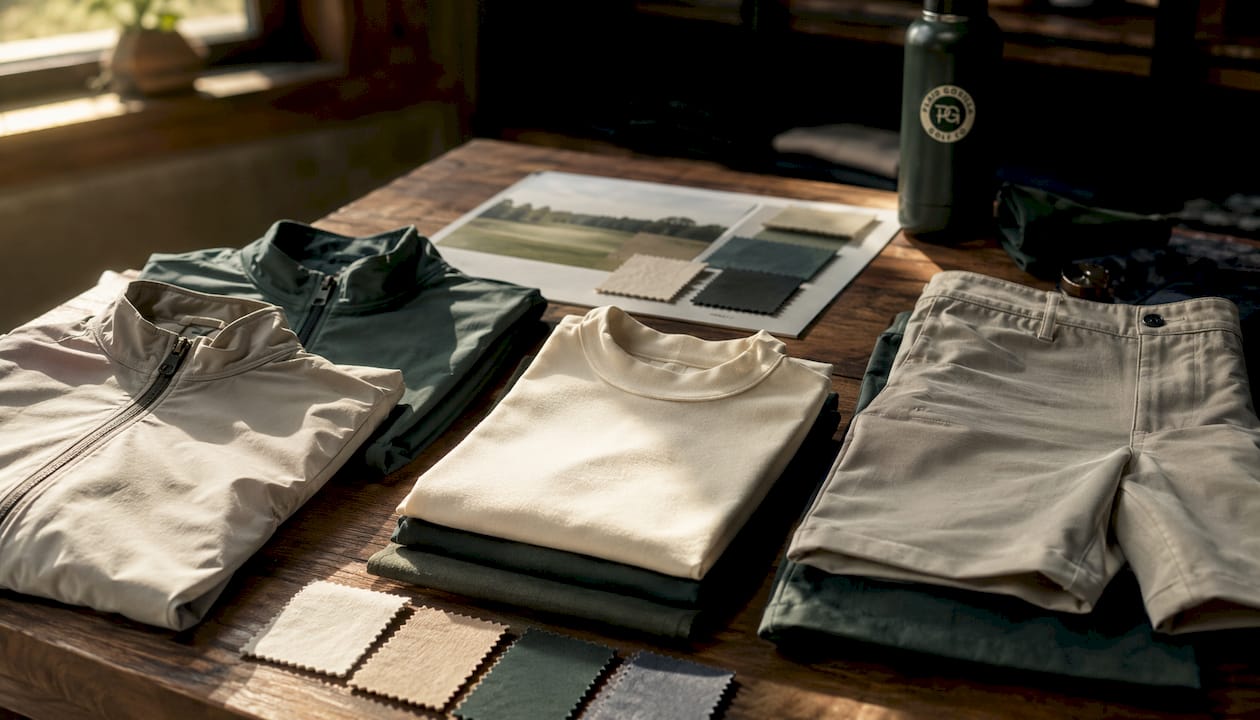
Lifestyle/heritage pieces look like menswear or womenswear that happens to move well: wool trousers, Oxford-cloth shirts, Harrington jackets. They suit resort courses and private clubs where the vibe is relaxed but polished. Athleisure and hybrid technical pieces borrow from running and training gear — think four-way stretch jogger-cut trousers or zip-neck pullovers — and they’re best for walking courses and early-morning rounds where temperature swings matter. Streetwear-influenced pieces (tees, hoodies, casual caps) are increasingly accepted at public and semi-private courses, where buyer guides note growing tolerance for relaxed silhouettes. Vintage-inspired pieces lean on retro golf aesthetics: knit vests, wide-leg trousers, two-tone shoes. They photograph well and age better than trend-driven kit. Accessories — leather headcovers, wool socks, spikeless shoes — are the easiest entry point because they carry no dress-code risk.
The fabric cue that separates a genuine alternative from a gimmick is finish. Matte knit, brushed cotton, and merino all read as everyday clothing. Shiny polyester reads as golf kit, full stop.
Indie golf brands have been leading this shift for years, producing merino knits, wool trousers, and handcrafted accessories in small batches — proof that the category is real, not a trend.
Piece-by-piece swaps: tops, bottoms, outerwear, and accessories
Tops
The polo isn’t dead, but it no longer has a monopoly. A fine-knit merino crewneck or a cotton-blend henley does the same job with less visual noise. Fit matters more than the garment type: aim for a shoulder seam that sits exactly at the shoulder point and a body length that stays tucked through a full swing without pulling. Casual button-downs in lightweight linen or Oxford cotton work well on warmer days — leave the bottom two buttons undone and wear it untucked if your course allows it. MyGolfSpy’s under-the-radar apparel guide profiles several indie labels doing exactly this, blending streetwear and golf in a way that reads clean rather than costume-y.
Dress-code note: most clubs that ban T-shirts will still accept a collared knit or a neat button-down. When in doubt, add a collar.
Bottoms
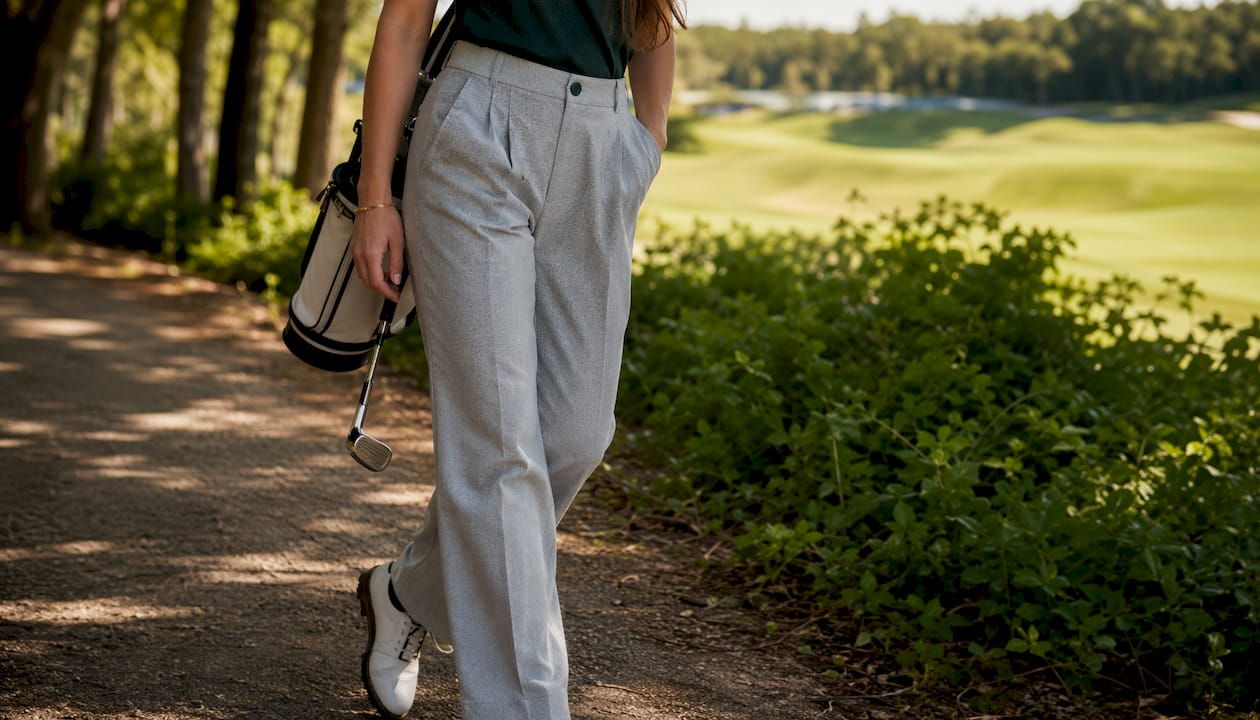
Pleated trousers in a wool-blend or technical cotton are the single best swap for stiff golf trousers. They move, they breathe, and they look like you made an effort. Technical chinos with two-to-four percent elastane give you stretch without the athletic-wear aesthetic. Tailored shorts — mid-thigh, not cargo — work at most public courses and many private ones in summer. The key specs to check: inseam length (no shorter than 9 inches for most clubs), a gusset or articulated knee for mobility, and a waistband that doesn’t dig when you rotate.
Outerwear
A Harrington jacket or a lightweight technical overshirt is the most versatile piece in this category. Both layer over a knit or shirt without restricting the backswing, and neither screams “golf.” For Canadian weather, a windproof shell in a muted colour handles April and September rounds without the bulk of a traditional rain suit. Field reporting on indie brands shows that wool or merino mid-layers are compact, warm, and resist odour across multi-hour rounds — a real advantage when you’re walking 18 in variable conditions.
Accessories and outfit formulas
Accessories are where you can move furthest from tradition without touching the dress code. Leather headcovers, wool-blend crew socks, and spikeless shoes with a clean silhouette all signal style without signalling “I ignored the rules.”
Four outfit formulas that work on- and off-course:
- Men, resort course: merino crewneck + pleated wool-blend trousers + white spikeless leather shoes
- Men, public course: clean graphic tee or hoodie + technical chinos + low-profile cap
- Women, semi-private: linen button-down + tailored shorts + leather spikeless sneaker
- Women, walking course: zip-neck merino pullover + four-way stretch jogger trouser + minimalist cap
For a ready-made version of the second formula, the Bogey Enthusiast Hoodie in Pine pairs directly with technical chinos and a low-profile cap for a complete look.
How do you choose pieces that actually work on-course?
Start with use case. A piece that’s perfect for a walking round at a public course may not clear the dress code at a private club. Know which courses you play most before you shop.
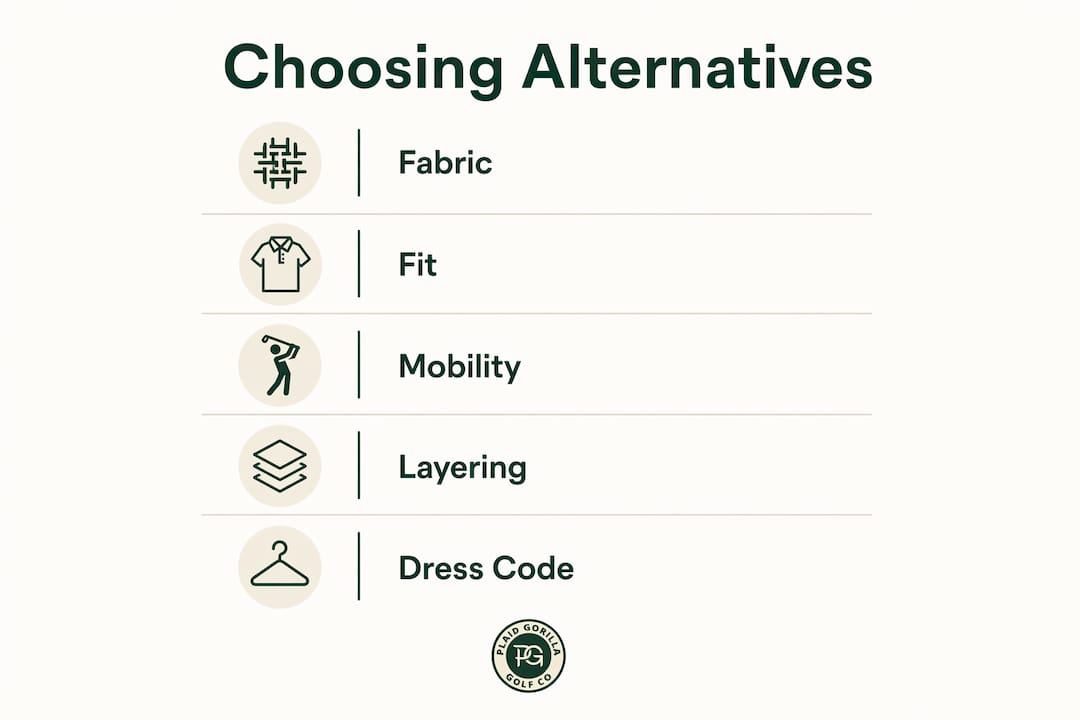
Fabric and label check: read the composition tag before you try anything on. You want natural-fibre content (merino, cotton, linen, wool-blend) or a natural-synthetic blend where the synthetic component is elastane for stretch, not polyester for shine. Avoid anything described as “moisture-wicking” as its primary feature — that language usually signals a synthetic-heavy construction that reads as athletic wear.
Mobility test: perform a slow full swing while wearing the garment in the fitting room. Check that the shoulder seam stays in place at the top of the backswing and that the sleeve doesn’t bind at the elbow. A quick squat also tells you whether the seat of the trouser has enough room. This swing mobility test takes thirty seconds and saves a lot of post-purchase regret.
Layering plan: Canadian seasons demand a system. A merino base, a knit mid-layer, and a windproof shell covers you from May frost to August heat. Buy pieces that work together, not just individually.
Dress-code check: the least awkward method is a quick call to the pro shop before your first visit. Most clubs are happy to answer and will tell you exactly what’s off the table. Alternatively, look at photos from recent club events on their website or social media — what people are wearing in those photos is a reliable guide to what’s accepted.
Pro Tip: Before buying online, check the retailer’s return policy for fit issues specifically. Some Canadian retailers charge return shipping; others offer free exchanges. Knowing this upfront changes whether a $180 trouser is a reasonable risk or not.
Where can you buy alternatives in Canada?
Canadian golfers have more options than they did five years ago, but cross-border ordering still carries real costs. Duties, brokerage fees, and return shipping from US-based brands can add $30–$60 or more to a single order — enough to change the value calculation entirely.
The categories worth checking, in order of lowest friction:
- Canadian-based golf labels with domestic stock and Canadian return policies (Plaidgorillagolf ships within Canada and holds inventory domestically)
- Independent menswear boutiques in major cities that carry lifestyle pieces compatible with golf dress codes
- Menswear brands with Canadian e-commerce (free shipping thresholds, Canadian sizing, and no surprise duties at the door)
- Marketplaces that aggregate indie brands and offer consolidated shipping
Before ordering from any US or international source, confirm: (1) whether duties are included in the listed price or added at delivery, (2) the expected delivery window, (3) whether returns are free or at your cost, and (4) whether the size chart uses Canadian or US measurements.
For fun golf apparel brands that ship without the cross-border headache, Plaidgorillagolf is the clearest domestic option in the lifestyle-alternative category. Their product pages include sizing details, and their limited drops sell through quickly — worth checking stock before a season starts.
Why lifestyle-integrated pieces outperform strict golf-specific kit
The evidence here is consistent. Grand View Research’s golf apparel analysis documents a clear market shift toward natural-fibre performance and lifestyle-integrated brands, driven by golfers who want clothes that work beyond the course. This isn’t a niche preference — it’s where the market is going.
MyGolfSpy’s editorial position reinforces it from a performance angle: avoiding a “uniform mentality” and choosing multi-use garments means you buy fewer pieces, wear them more, and spend less over time. A merino crewneck you’d wear to dinner is also a crewneck you’ll reach for on a cool September morning at the course. A shiny polyester polo lives in your golf bag and nowhere else.
For Canadian golfers specifically, layerability is the practical argument. A merino base layer handles frost-season rounds in April and October without adding bulk, and it packs flat for travel. Cotton-blend pieces breathe through July heat without the clammy feel of synthetic performance fabrics. Care is straightforward: most merino and cotton-blend pieces machine-wash cold on a gentle cycle and air-dry flat — no special treatment required, which matters when you’re washing kit weekly through a full season.
The neutral example that makes this concrete: a fine-knit merino zip-neck in navy. It clears the dress code at virtually every course in Canada, layers under a windshell for cold rounds, looks right at a post-round lunch, and washes without drama. No single-purpose golf piece does all four.
Key takeaways
Lifestyle-integrated pieces in natural fibres outperform traditional golf-specific kit for Canadian golfers who want clothes that work on- and off-course.
| Point | Details |
|---|---|
| Fabric is the first filter | Choose merino, cotton-blends, or wool-blends; avoid shiny synthetics that read as athletic wear. |
| Test mobility before buying | Perform a slow full swing in-store; check shoulder seam position and sleeve freedom at the top of the backswing. |
| Confirm dress code early | Call the pro shop or check recent club event photos before wearing a new piece for the first time. |
| Buy Canadian to avoid duties | Cross-border orders can add $30–$60 in duties and return costs; prioritise vendors with domestic stock. |
| Plaidgorillagolf ships in Canada | The Prime Hoodie, Bogey Enthusiast Hoodie, and Bogey Kit are available domestically with no cross-border friction. |
Why the “golf clothes” category is a box worth stepping out of
The conventional wisdom says you need golf clothes to play golf. What that usually means in practice is: you need a collar, you need to cover your legs, and you need to move freely. Nothing in that list requires a logo-heavy polo or a synthetic rain suit in a colour you’d never wear anywhere else.
The most interesting thing happening in golf apparel right now isn’t a new technical fabric or a celebrity collaboration. It’s the quiet normalisation of wearing real clothes on a golf course. A well-cut merino crewneck, a pair of pleated wool trousers, a clean cap — none of that is radical. It’s just dressing like an adult who happens to be playing golf.
What gets underestimated is how much the “golf clothes” category has historically been defined by what brands wanted to sell, not what golfers actually needed. The indie brand movement — documented thoroughly by The Old Ghosts and echoed in GQ’s roundups — is a direct correction to that. Smaller labels are making pieces with craftsmanship and longevity in mind, not quarterly sell-through targets.
For Canadian golfers, the practical upside is real: clothes you actually wear between rounds justify their cost in a way that locker-room-only kit never does. Buy one good merino piece, wear it twenty times a season on and off the course, and the per-wear cost drops to almost nothing.
Plaidgorillagolf: bold Canadian pieces built for the course and everywhere else
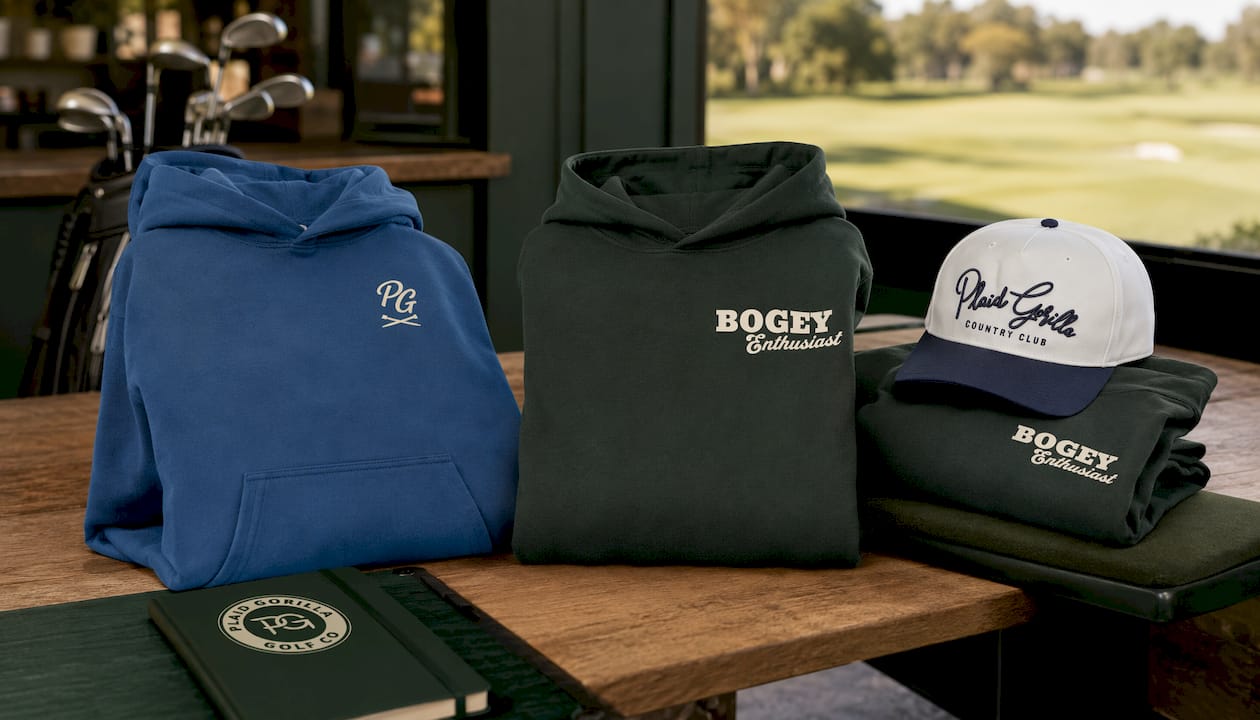
If you’ve read this far, you already know what you’re looking for: pieces that work on the course without looking like you raided a pro shop clearance rack. Plaidgorillagolf is a Canadian-owned label born in Spruce Grove, Alberta, built specifically for golfers who want bold, quality gear without the synthetic-heavy aesthetic of mainstream golf brands.
Three pieces worth your attention right now:
The Prime Hoodie in Real Teal is a clean, premium hoodie in a colour that stands out without being loud. It layers over a merino base for cold rounds and wears just as well off the course. The Bogey Enthusiast Hoodie in Pine is a limited-drop piece in a deep forest green — the kind of colour that photographs well and ages better than trend-driven kit. And The Bogey Kit bundles the Bogey Enthusiast Hoodie with a Country Club Hat for an instant, coordinated on-course outfit.
All three ship within Canada, no cross-border duties, no sizing guesswork. Stock on limited drops moves fast. Check current availability at plaidgorillagolf.ca and grab your size before the drop closes.
FAQ
What is the alternative golf dress code?
An alternative golf dress code prioritises fit, fabric, and mobility over brand-specific golf apparel. Most courses require a collar, covered legs or appropriate shorts, and clean footwear — all of which lifestyle and heritage pieces satisfy without a traditional polo.
Can you wear a hoodie on a golf course in Canada?
At most public and semi-private courses in Canada, yes. Many private clubs still restrict hoodies, so a quick call to the pro shop before your round is the safest move. Plaidgorillagolf’s hoodies are designed with this dual-use context in mind.
What fabrics work best as alternatives to traditional golf polos?
Merino wool and cotton-blends are the strongest options. They wick reasonably well, resist odour, and look like everyday knitwear rather than athletic wear, which helps them clear dress codes at a wider range of courses.
How do I avoid duties when buying golf clothing in Canada?
Buy from Canadian-based vendors with domestic inventory. Cross-border orders from US brands can add significant duties and brokerage fees at delivery. Plaidgorillagolf ships domestically, which removes that cost entirely.
Where can I find non-traditional golf clothing brands in Canada?
Canadian-based labels like Plaidgorillagolf, independent menswear boutiques in major cities, and curated indie brand guides like The Old Ghosts field guide are the most reliable starting points for golfers who want to move beyond traditional golf apparel.
Further reading and authoritative sources
- Grand View Research — golf apparel market analysis: The primary market research source for the shift toward natural-fibre performance and lifestyle-integrated golf brands.
- MyGolfSpy — under-the-radar golf apparel guide: Practical buyers’ guide profiling indie and style-forward labels; useful for golfers who want expert-vetted alternatives to mainstream brands.
- The Old Ghosts — field guide to 30 indie golf brands: The most thorough editorial survey of small-batch, craft-focused golf labels producing merino knits, wool accessories, and limited-run pieces.
- GQ — best golf clothing brands: A mainstream editorial lens on where golf fashion is heading, with useful price and style context for lifestyle-integrated pieces.
- Plaidgorillagolf — fashion-forward golf wear guide: The brand’s own editorial resource on wardrobe modernisation and what fashion-forward choices look like on a Canadian course.