


The single best way to wash a hoodie without shrinking it or wrecking the print is cold water, gentle cycle, inside out, a modest dose of mild detergent, then air dry (or tumble low and pull it out while still slightly damp). Skip the heat, skip the heavy agitation, and skip the fabric softener entirely. That’s the whole routine. Everything below is why it works and how to handle the details.
TL;DR:
- Washing hoodies in cooling water on a gentle cycle with inside-out orientation preserves prints, prevents pilling, and minimizes shrinkage risks.
- Pre-treat stains carefully using oil-specific or enzyme cleaners without applying heat, as heat sets stains and damages fibers.
- Machine washing on delicate, low spin, and with a mesh bag for embellished pieces is more effective and gentler than hand washing, especially for thick fleece.
- Air drying flat avoids heat shrinkage, while tumble drying on low with space between garments helps maintain fleece loft and prevents heat damage.
- Protect prints and embroidery by turning hoodies inside out, skipping bleach, and avoiding high heat, especially for vintage, limited-edition, or heavily decorated pieces.
Table of Contents
- Quick pre-wash checklist for washing hoodies
- How do you prepare a hoodie and pre-treat stains?
- Should you machine wash or hand wash a hoodie?
- What’s the safest way to dry a hoodie?
- How do you protect prints, embroidery, and hardware?
- How do you fix pilling, stiffness, shrinkage, and odour?
- How often should you actually wash a hoodie?
- How do you wash hoodies with delicate prints or embellishments?
- Do vintage or limited-edition hoodies need special care?
- When should you skip home washing entirely?
- Product-aware care notes
- Keep your hoodie looking as sharp as the day it arrived
- Sources
- FAQ
Quick pre-wash checklist for washing hoodies
Run through this before the hoodie ever touches water. It takes thirty seconds and saves you from the two mistakes that ruin most hoodies: heat and friction.
- Turn the hoodie inside out to protect the print and reduce pilling on the fleece face.
- Zip up any zippers and tie off or tuck in drawstrings so they don’t snag inside the drum.
- Check the care label for fibre content. Cotton, polyester blends, and fleece all behave a little differently.
- Sort by colour and fabric weight. New dark or printed pieces wash alone.
- Pre-treat any visible stains before the wash cycle starts, not after.
- Select cold water on a gentle or delicate cycle.
- Use half the usual detergent dose for heavyweight fleece.
- Leave the fabric softener out of the dispenser.
- Plan to air dry, or tumble on low and remove the hoodie while it’s still a bit damp.
A mesh laundry bag adds a layer of protection for anything with embroidery or trim, and it’s worth keeping hoodies away from jeans, zippers on other garments, and towels in the same load. Those items cause the abrasion that turns a smooth fleece interior into a pilled mess.
How do you prepare a hoodie and pre-treat stains?
Preparation matters more than most people think, because a hoodie that goes into the machine unprepared usually comes out with a set stain, a snagged drawstring, or a print that’s starting to crack.
- Read the care label first. Fibre content tells you the safe temperature ceiling and whether the piece can handle a machine cycle at all.
- Test for colourfastness. Dab a damp cloth with a little detergent on an interior seam. If colour transfers, hand wash cold and skip harsh stain removers.
- Empty every pocket, zip up zippers, tuck or remove drawstrings, and fasten any Velcro closures shut. Loose hardware scrapes fleece and can snag prints during the spin cycle.
- Treat oil or grease stains first. Blot the spot, work in a small amount of dish soap, and let it sit for about 10 minutes before washing. Never apply heat to an oil stain before it’s treated, since heat sets the oil deeper into the fibres, according to CNET’s laundry guidance.
- Handle protein and food stains with an enzyme cleaner. Soak the area in cold water with an enzyme-based detergent or stain remover for 15 to 20 minutes.
- Treat fresh blood with cold water only. Rinse immediately, then follow with a short enzyme detergent soak. Hot water cooks the protein into the fabric.
- Lift sweat stains and odour with an enzyme soak or a white vinegar pre-soak before the wash cycle runs.
Pro Tip: Always test a stain remover on an inside seam first. A product that’s safe on white cotton can bleach or discolour a printed or dyed hoodie in seconds.
Should you machine wash or hand wash a hoodie?
Machine washing on a gentle cycle usually beats hand washing for hoodies, mainly because machines rinse detergent out far more completely than hand washing does, and leftover soap is what makes heavyweight fleece stiff and dull over time, per Whirlpool Canada’s guidance on the delicate cycle. Hand washing feels gentler, but it’s easy to leave suds trapped in thick fabric, and that residue is exactly what causes the crunchy, stiff texture people mistake for wear and tear.
Temperature is non-negotiable: always cold, for cotton, poly-cotton blends, and anything printed. Warm or hot water is the single biggest cause of permanent shrinkage and cracked graphics, according to Laundry with Olivia’s shrinkage research. Heat doesn’t just shrink the fabric. It also softens the ink bond on screen prints and heat-transfer graphics, which is how a crisp logo turns into a cracked one after a handful of washes.
For cycle selection:
- Choose delicate or permanent press, whichever your machine calls it.
- Set spin speed to low. High spin speed is a form of mechanical agitation, and Whirlpool Canada notes that agitation damages fleece interiors just as badly as heat does, matting the loft and flattening that soft, fluffy inside face.
- Drop the hoodie into a mesh bag if it has embroidery, foil print, or metal hardware.
- Wash hoodies with similar-weight items only, or run them alone. Jeans, towels, and anything with a zipper or rough seam will pill and abrade fleece in a single cycle.
- Use half your normal detergent dose for a heavyweight hoodie. These garments hold a lot of water, and full doses often don’t rinse clean, leaving the stiffness and faint odour retention that plague thick fleece.
- Leave fabric softener out entirely. It coats fibres in a waxy film that dulls prints and reduces the fleece’s ability to trap warmth.
What’s the safest way to dry a hoodie?
Air drying flat is the safest option, full stop. Lay the hoodie on a clean towel or drying rack, gently press out excess water without wringing or twisting, and reshape the body and hood while it’s still damp. Wringing stretches the fibres unevenly, which is how you end up with one sleeve longer than the other.
If you need the dryer, here’s the one rule that matters: tumble on low heat only, and pull the hoodie out at roughly 80% dry, meaning it should still feel slightly damp to the touch. Finish the last stretch of drying flat on a rack. High heat is the number one cause of permanent shrinkage, and once fleece shrinks from heat, it typically can’t be reversed. Wet blocking and stretching a damp garment can reclaim a small amount of size, but it won’t fully undo heat-driven fibre contraction.
- Never hang a wet hoodie by the shoulders on a wire hanger. The wet weight stretches the shoulder seams and leaves permanent bumps.
- Use a wide wooden hanger, or better yet, fold heavyweight hoodies flat while damp until they’re dry enough to hang.
- Toss in a couple of wool dryer balls if you’re using the dryer. They help maintain loft in the fleece interior and cut down on total tumbling time, which means less heat exposure overall.
Pro Tip: If you’re drying more than one hoodie at a time, space them out in the dryer. Overcrowding forces longer cycles to get everything dry, which means more heat exposure than a single hoodie needs.
How do you protect prints, embroidery, and hardware?
Prints and embroidery take the most damage from washing, and most of that damage is preventable with a few habits.
- Turn every hoodie inside out before it goes in the machine. This is the single biggest thing you can do to reduce abrasion on a screen print, DTG print, or foil design.
- Wash new dark or printed hoodies separately for the first two or three cycles. Fresh dye and fresh ink both shed slightly in early washes, and isolating the garment keeps that transfer off other clothes and reduces friction on the print itself.
- Skip bleach and fabric softener completely. Bleach breaks down ink bonds outright, and softener leaves a film that causes prints to lift over time.
- Iron inside out, or use a pressing cloth, if a hoodie needs it. Direct heat on a DTG or heat-transfer print will lift or crack the ink almost immediately.
- Zip and fasten all hardware before washing, and bag heavily embroidered pieces. Embroidery threads catch on drum ridges and other garments if left exposed, and a mesh bag stops that entirely.
The first wash on any printed hoodie matters most. Cold water, gentle cycle, air dry. That first cycle sets the tone for how the print holds up over the garment’s whole life. If the piece has puff embroidery or raised trim, it’s worth understanding how that construction affects durability before it hits the wash at all, since puff and flat embroidery age very differently under repeated washing.
How do you fix pilling, stiffness, shrinkage, and odour?
Every hoodie develops one of these four problems eventually. Most are fixable at home if you catch them early.
- Pilling: Run a fabric shaver gently over the surface, keeping the blade flat against the fabric. Test a small hidden area first, and treat high-friction zones (under the arms, at the cuffs) roughly once a month for hoodies in heavy rotation, per 6ix Merchandise’s care guidance.
- Stiffness from detergent residue: Run an extra rinse cycle, or add a small amount of white vinegar to the rinse water. Vinegar cuts through leftover soap without coating fibres the way fabric softener does.
- Odour: Soak in an enzyme detergent solution or a vinegar rinse before washing, and make sure the hoodie dries completely. Damp fleece left folded is how mildew smell sets in.
- Shrinkage: Wet blocking, meaning gently stretching the damp garment back toward its original shape, can reclaim some size, but it has real limits. Heat-driven shrinkage is often permanent, which is exactly why the cold-water rule matters more than any fix that comes after the fact.
How often should you actually wash a hoodie?
Most people over-wash their hoodies, and it’s the fleece and print that pay for it. Heavyweight cotton hoodies generally only need a wash after several wears, with guidance ranging from every 3 to 7 wears depending on activity level, according to 6ix Merchandise. A hoodie worn over a shirt for a couple of hours at the golf course collects far less body oil and sweat than one worn directly against skin all day.
Use these guidelines as a starting point, then adjust for your own wear pattern:
- Light, occasional wear (over a shirt, short outings): every 5 to 7 wears.
- Regular daily wear, direct skin contact, or workouts: every 2 to 3 wears.
- Visible stains, sweat, or odour: wash immediately, regardless of wear count.
Every wash cycle, even a gentle one, puts some stress on fibres and print bonds. Fewer washes mean less cumulative fading, less pilling, and a longer life for the fabric’s loft. This is especially true for heavyweight or double-layer construction, where the extra fabric weight holds onto moisture longer and takes more punishment from repeated machine cycles. If you’re choosing between a midweight and heavyweight hoodie, know going in that the heavier piece needs fewer washes but more careful drying each time.
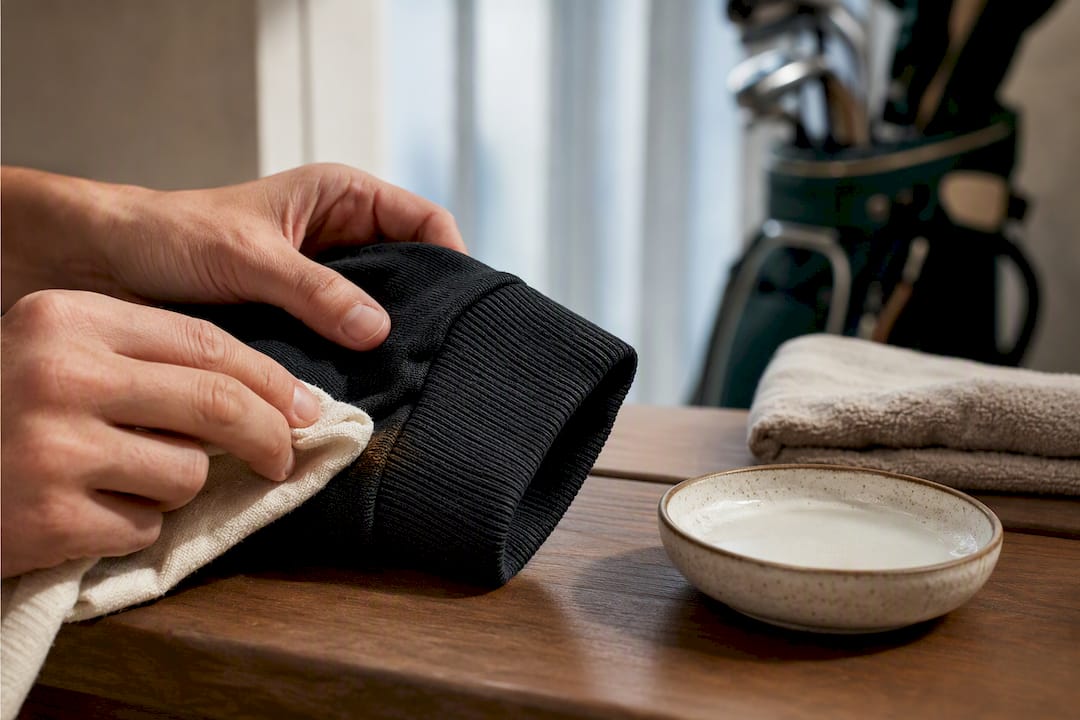
Spot-cleaning small marks between washes, rather than running a full cycle for one coffee splash on the cuff, is one of the easiest habits to adopt. A damp cloth and a dab of dish soap handle most small marks without a trip through the machine at all.
How do you wash hoodies with delicate prints or embellishments?
Embroidery, foil prints, and appliqué trims all need a gentler hand than a plain screen print. Foil prints in particular are prone to cracking because the foil layer doesn’t stretch the same way the base fabric does during a spin cycle.
For foil and metallic prints, wash cold, inside out, on the gentlest cycle your machine offers, and skip the dryer entirely if you can. Air drying flat removes the mechanical stress that causes foil to crack or peel at the edges. A partner guide on preserving printed garments covers similar principles for extending the life of printed fabric generally, and the core idea holds across most print types: less heat, less agitation, longer life.
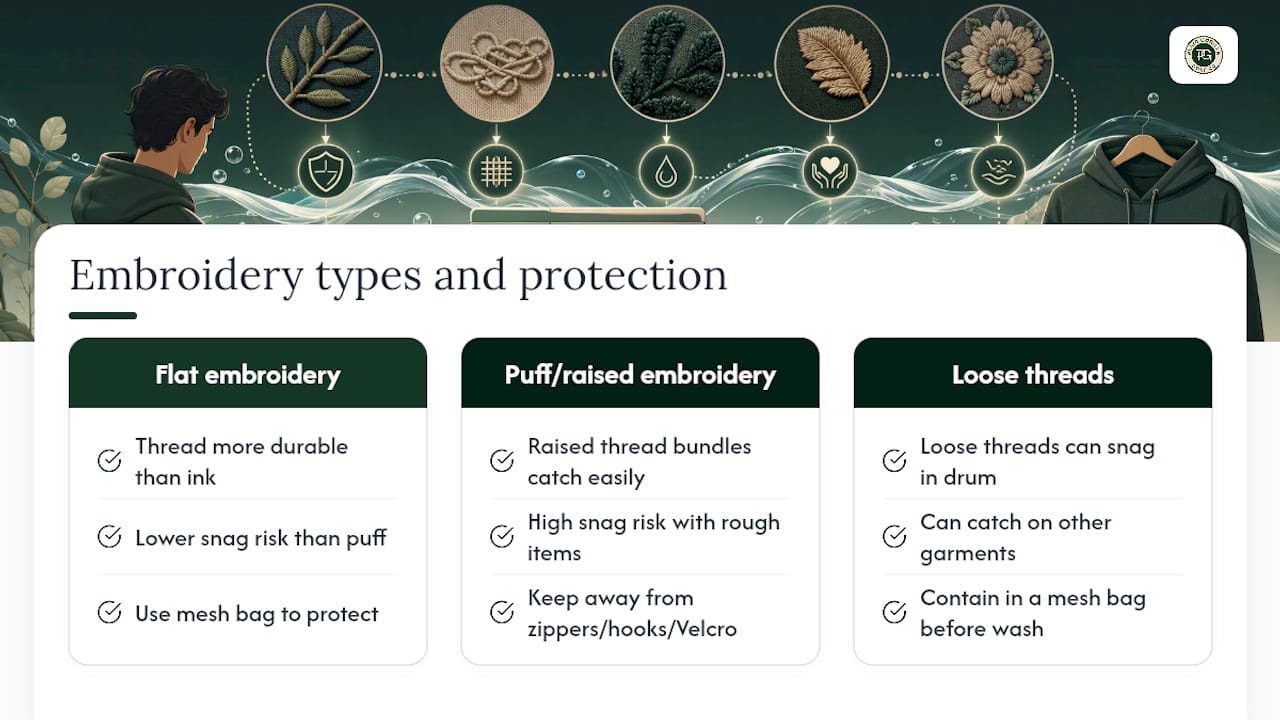
Embroidery holds up better than most people expect, since thread is more durable than ink, but loose threads can still snag on other garments or on the washer drum itself. A mesh bag solves this cleanly. Raised or puff embroidery needs a bit more care than flat embroidery because the raised thread bundles catch more easily on rough surfaces, so keep heavily embroidered hoodies away from anything with zippers, hooks, or Velcro in the same load.
Appliqué patches, the kind stitched or heat-pressed onto the fabric, should always be washed inside out and air dried. Tumble heat is what causes the adhesive backing on heat-pressed patches to loosen over repeated cycles, eventually leaving a patch that curls at the corners or lifts entirely.
Do vintage or limited-edition hoodies need special care?
Vintage and limited-edition pieces carry risks that everyday hoodies don’t, mostly because the fabric, dye, or print process may already be decades old or produced in small batches without the same fibre-blend consistency as mass-market apparel.
Older cotton, particularly anything printed before the 2000s, often has less colour stability than modern reactive dyes. Always test colourfastness on an interior seam before the first wash, even if the piece has been washed before under a previous owner’s routine. Discoloured or faded vintage prints usually got that way from exactly the mistakes this article warns against: hot water and high heat drying.
Limited-edition drops with specialty finishes, foil accents, embroidered patches, or unique dye treatments deserve the most conservative routine available: cold water, hand wash or the gentlest machine cycle, inside out, air dry only. Treat these pieces the way you’d treat a garment you can’t replace, because in most cases, you genuinely can’t. A sold-out drop doesn’t restock.
If a piece has any sentimental or collector value, consider whether the risk of even a single machine cycle is worth it versus spot-cleaning and airing it out between wears. Some vintage and designer pieces are better served by professional cleaning from the very first wash, particularly anything with leather trim, sequins, or fabric composition that isn’t listed on the label at all.
When should you skip home washing entirely?
Some hoodies are better left to a professional cleaner, and knowing the difference saves you from turning a fixable problem into a permanent one.
Send a hoodie out for professional cleaning if it has leather or suede trim, since water and standard detergent damage those materials in ways home laundering can’t fix. The same goes for any hoodie with a care label that specifically says “dry clean only,” which shows up more often than people expect on wool-blend or heavily structured pieces.
Unlabelled vintage or thrifted hoodies with unknown fibre content are a judgment call. If you can’t identify whether it’s cotton, a poly blend, or something with wool content, a professional cleaner can test and treat it more safely than a guess at home.
Stains that don’t respond to enzyme treatment or a dish soap pre-treat after two attempts are another sign to stop trying and hand the piece to a professional. Repeated harsh scrubbing at a stubborn stain does more damage to the fibres than the stain itself ever would.
Finally, any hoodie showing signs of dye bleeding, colour transfer between panels, or a print that’s already starting to crack or lift needs expert handling rather than another trip through your washer. At that point, a home wash risks finishing the damage instead of preventing it.
Product-aware care notes
Fabric choice changes the whole care equation, and that’s something we think about at the design stage, not just the laundry stage. Ringspun cotton, the finer, more tightly twisted yarn used in premium fleece, holds its shape and colour better over repeated washes than standard carded cotton. If you want the full breakdown of how ringspun compares to combed cotton, it explains why some hoodies tolerate a slightly heavier wash routine while others need the full gentle treatment every time. GSM (grams per square metre) matters too. Heavier fleece holds more water and needs the half-dose detergent rule more than a lightweight piece does.
For anyone running a limited-edition hoodie through the wash, the same rules apply, just with less room for error. There’s often no second production run to fall back on if a wash goes wrong.
Quick notes for drop pieces: if a drawstring frays or pulls loose after a few washes, replacing it is a five-minute fix rather than a reason to retire the hoodie. And if you’re curious what actually makes a hoodie feel premium beyond the print, our full breakdown of hoodie comfort and construction covers the GSM and weave choices that drive most of what you feel wearing it.
— Mike
Keep your hoodie looking as sharp as the day it arrived
Bold colour and premium fleece only stay bold if the wash routine backs them up. The Prime Hoodie in Real Teal is built from heavyweight fabric designed to hold its shape and colour through the cold wash, gentle cycle routine covered above, no fading, no fibre breakdown, no shortcuts required.
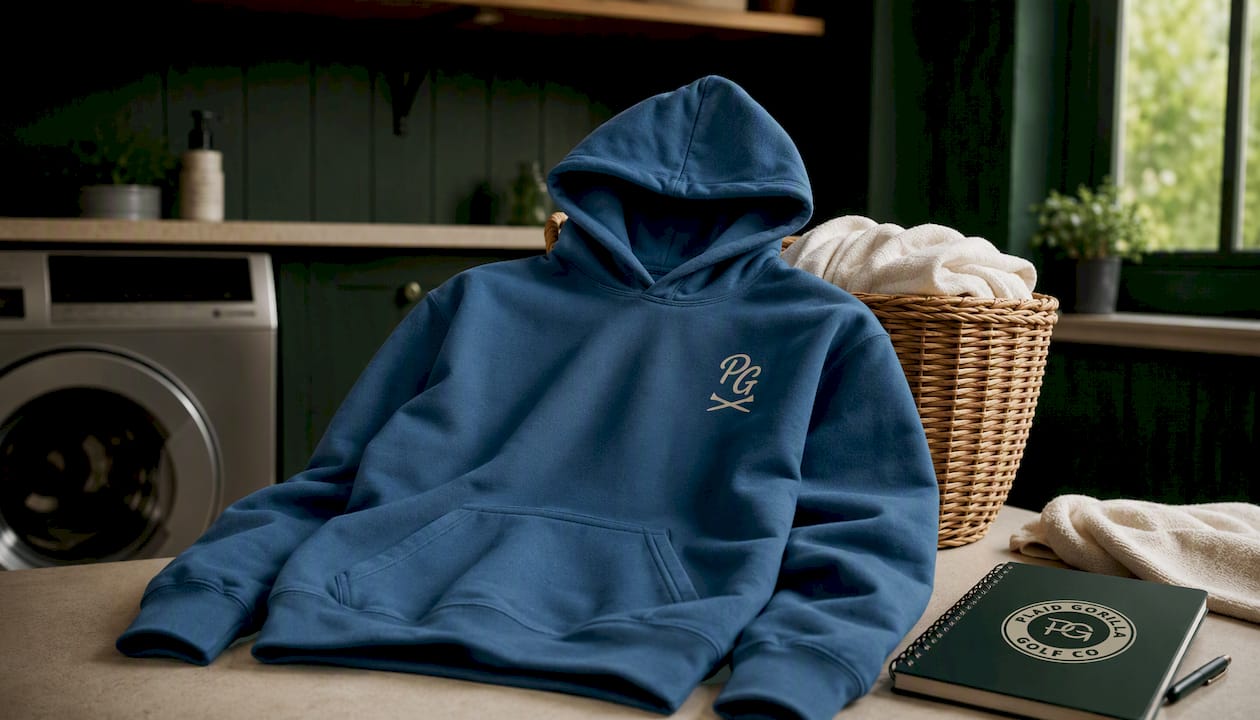
Limited-edition pieces may not be restocked once sold out. Treat the fabric right from wash one and it holds its loft and colour for years, not months. If you’re ready to add one to your rotation, check out the Prime Hoodie and see the teal for yourself before the drop closes.
Sources
- How to Wash Hoodies Without Shrinking
- Too much laundry detergent damages your duds — CNET
- Hoodie care: 7 rules to last 5+ years — 6ix Merchandise
FAQ
Can you put a hoodie in the washing machine?
Yes. A gentle or delicate cycle in cold water is generally better than hand washing because machines rinse detergent out more thoroughly, leaving less residue in thick fleece.
Should hoodies be washed inside out?
Yes, always. Turning a hoodie inside out protects prints, embroidery, and the fleece nap from abrasion against other fabric and the washer drum.
What’s the best way to wash a hoodie without shrinking it?
Cold water on a gentle cycle, followed by air drying or a low-heat tumble with removal while still slightly damp. Heat, not water itself, causes most permanent shrinkage.
How often should you wash a hoodie?
Light, occasional wear generally needs a wash every 5 to 7 wears, while daily or direct-skin wear needs washing every 2 to 3 wears, with immediate washing for visible stains or odour.
Can fabric softener damage a hoodie?
Yes. Fabric softener coats fibres in a film that dulls prints, reduces fleece loft, and contributes to the stiffness people mistake for normal wear.