


A double layer hood is built from two full layers of fabric stitched together to form the hood, not one shell with a thin lining tucked inside. That construction creates a “hood stand” that keeps the shape framed around your face instead of collapsing flat, plus more insulation and a heavier, premium hand. The trade-off is real: more weight, a higher price, and longer drying time than a single-layer hoodie.
TL;DR:
- Genuine double layer hoods are constructed from two full fabric layers sewn together, providing better shape retention and insulation compared to lined or single-layer hoods.
- Combining two 400 GSM fabric layers results in roughly 800 GSM total weight, making double layer hoodies significantly heavier and more durable than single-layer options.
- The insulation benefit of a double-layer hood mainly comes from the trapped air pocket between layers, which reduces wind penetration and heat loss in cool, breezy conditions.
- Checking fabric weight (GSM) and seam reinforcement details before purchase ensures the hoodie’s construction matches your needs for warmth, shape, and longevity.
- Proper care involves washing on a cold cycle, flat drying, and reshaping the hood to preserve its structure and insulation quality over time.
Table of Contents
- What makes a double layer hood different from a lined one
- GSM and materials: what fabric weight and composition tell you
- How warm is a double layer hood in real conditions?
- How to choose a double layer hoodie: a shopper’s checklist
- How to style a double layer hoodie without losing the shape
- Care and maintenance for double-layer hoodies
- Why Plaid Gorilla Golf builds hoodies this way
- The conventional advice on this misses the point
- Get the structured hood look without the guesswork
- Sources
- FAQ
What makes a double layer hood different from a lined one
A lot of hoodies on the market claim a “lined hood” and let shoppers assume that means double layer construction. It rarely does. A true double layer hood is built from two full fabric layers sewn together to create the hood’s structure, not just a soft inner lining tacked onto a single-layer shell for comfort against the neck.
The difference shows up in the seams. On a genuinely double-layered hood, both layers are cut to the same pattern and sewn as a unit, often with reinforced stitching along the edge and drawstring channel. On a lined hood, the outer shell carries all the structural weight while the inner layer is thinner and mostly cosmetic. Pull the hood up and the contrast becomes obvious: one holds its shape away from your head, the other folds against your neck like a scarf.
That shape retention is the “hood stand” effect, and it’s the single fastest way to tell construction apart from marketing copy. When two fabric layers are sewn together rather than layered loosely, the hood physically resists collapsing, which is why double-layered hoods photograph better on product pages and hold their silhouette after a full day of wear.
Here’s a simple test you can do on any hoodie, whether you’re trying it on in a shop or checking a product listing:
- Pull the hood up and let go. A double layer hood should hold its shape rather than flop against your back.
- Pinch the fabric at the hood’s edge. You should feel two distinct layers of material, not one thick layer with a stitched seam.
- Check the drawstring channel. Reinforced double-layer hoods usually have a wider, more structured channel because there’s more fabric to anchor the eyelets.
- Look at the seam allowance inside the hood. Double layer construction typically shows a folded seam rather than a single raw edge.
If a product page doesn’t mention hood construction at all, that’s often a sign the hood is single-layer with a basic lining, dressed up in vaguer language like “soft-lined” or “fleece-lined interior.”
GSM and materials: what fabric weight and composition tell you
GSM, or grams per square metre, is the number that tells you how heavy the fabric actually is before you even touch it. Lightweight hoodie fabric runs 180 to 250 GSM, midweight sits around 250 to 320, heavyweight climbs to 350 to 450, and anything above that counts as ultra-heavyweight. Most premium single-layer hoodies land in that 350 to 450 range per layer.
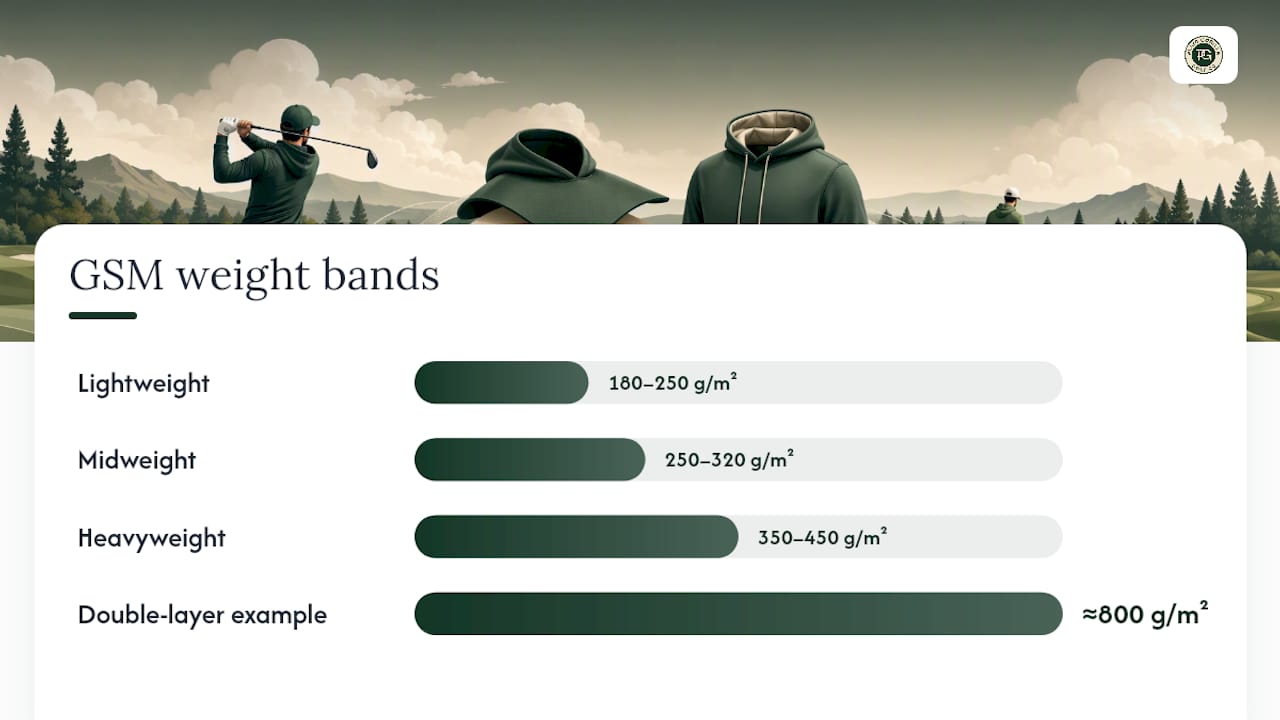
Double layer hoods do the math differently, and this is where a lot of shoppers get confused by product listings.
Two 400 GSM layers don’t average out. They add up. Combining two 400 GSM fabric layers produces roughly 800 GSM total, which is why a double-layer hoodie can weigh noticeably more than a single-layer piece even when both list a similar per-layer number. That total weight is also why some brands quote combined GSM on the product page while others only mention the per-layer figure, so it pays to check which number you’re actually looking at before comparing two hoodies side by side.
Fibre content changes how that weight feels against your skin and how it performs across a season:
- Cotton blends feel soft and breathable, wear in nicely over time, but hold more moisture and take longer to dry after a wash.
- Brushed fleece interiors trap warmth effectively and feel plush, though they can pill faster with heavy use.
- Polyester and poly blends resist moisture, dry faster, and hold shape longer, but breathe less than cotton in warm weather.
Specifying GSM upfront tells buyers what feature set to expect. A heavier GSM hoodie usually comes packaged with double-layer hood construction, reinforced drawstrings, and stronger seams because the fabric weight demands it. A hoodie listed under 300 GSM is unlikely to carry a genuine double layer hood at all. Whichever fibre you land on, GSM is still the number that predicts warmth and weight, materials just decide breathability and how long the piece lasts in the wash.
How warm is a double layer hood in real conditions?
The insulating power of a double layer hood comes from a simple physical principle: the air pocket trapped between the two fabric layers slows heat loss and blocks wind more effectively than a single sheet of material ever could. That air gap is doing more work than the extra fabric weight itself.
Double-layered hoods reduce wind penetration and slow moisture absorption compared with single-layer versions, which is exactly why they show up so often as the hood of choice for cool, breezy conditions rather than a warm gym session. For most people, a heavyweight double layer hoodie comfortably replaces a light jacket anywhere from mild fall temperatures down to a brisk winter walk, provided you’re not standing still in sustained wind or heavy rain.
Where it earns its keep:
- Watching an early morning round from the clubhouse patio when the temperature hasn’t climbed yet.
- Walking between holes on a cool, windy course day when you don’t want a bulky jacket restricting your swing.
- Layering under a shell on a genuinely cold day, using the hoodie as your mid-layer instead of your outer shell.
- Casual outdoor wear where you want warmth without zipping into a technical jacket.
Reddit reviewers who’ve actually worn double-layered hoodies day to day report the same tension shoppers should expect: the pieces run noticeably heavier than a standard hoodie, and that heft is either exactly what you’re after or more bulk than you want, depending on your build and how you layer. Several also flagged adjustable waist and fit features as a nice offset to the added weight, since a snugger hem keeps the extra fabric from feeling shapeless.
Pro Tip: If you’re ordering online without trying it on first, check the brand’s return policy before committing. Heaviness is subjective, and what feels premium to one shopper can feel like wearing a blanket to another.
Durability tends to be the quiet win here. More fabric and reinforced seams mean a double layer hood typically outlasts a single-layer equivalent through repeated washes, especially around the hood edge and drawstring holes, which are usually the first place a cheaper hoodie shows wear.
How to choose a double layer hoodie: a shopper’s checklist
Picking the right double layer hoodie comes down to matching fabric weight and construction to how you’ll actually wear the thing, not just grabbing the heaviest option on the shelf. Work through these steps in order:
- Decide your primary season first. If you’re buying for late fall through winter, look at 350 GSM and up per layer. If you want something versatile for spring and cool summer evenings, a lighter double-layer build in the 280 to 350 GSM range avoids overheating.
- Decide whether silhouette or packability matters more. If you want that structured hood stand for a clean, put-together look, prioritize confirmed double-layer construction over raw GSM number. If you’re planning to layer it under a jacket or stuff it in a bag, a slightly lighter double-layer build keeps things manageable.
- Size up if the fabric is genuinely heavyweight. Double layer fabric doesn’t drape the way lighter cotton does, so a true-to-size fit can feel restrictive across the shoulders. Many shoppers find sizing up one from their usual hoodie size gives a better range of motion.
- Choose zipper or pullover based on how you use it. A zip-up double layer hoodie is easier to vent when you warm up mid-round or mid-walk. A pullover holds heat more consistently and usually has a cleaner hood-to-body seam.
- Check the product page for four specific things before buying: GSM (per layer and total if listed), fibre content, whether the listing explicitly says “double-layer hood” versus “hood lining,” and seam reinforcement details.
Retailers who take construction seriously tend to spell this out clearly rather than burying it in vague marketing language, and product pages that list double-layer hoodies as premium items typically pair that claim with a specific GSM figure and a note on reinforced seams. If a listing skips all of that, treat the “double layer” claim with some skepticism until you can feel the fabric yourself.
How to style a double layer hoodie without losing the shape
The whole point of paying for a structured hood is wasted if the rest of your outfit buries it under bulk. The fix is proportion: let the hoodie be the heaviest piece in the outfit and keep everything else streamlined around it.
Slim or straight-leg pants balance a heavyweight hoodie better than anything baggy, since two bulky pieces stacked together just look shapeless. If you’re layering a jacket over the hoodie on a colder day, choose something slim-cut rather than another puffy layer, so the hood stand still reads through the silhouette instead of getting swallowed.
Colour and texture pairings matter more with double-layer pieces because the hood is doing visual work. A contrasting inner hood lining against a solid outer shell draws the eye upward and reads intentional rather than accidental, and it’s one of the small details that separates a premium piece from a basic one.
A few outfit formulas worth trying:
- Weekend errands: heavyweight double-layer hoodie, straight-leg denim, clean sneakers, hood down and structured, not slouched.
- Travel day: the hoodie as your mid-layer under a slim shell jacket, joggers, and slip-on shoes for airport ease.
- Golf-inspired casual: hoodie over a quarter-zip or polo, tailored joggers or chinos, worn to the range or the nineteenth hole rather than mid-swing.
For more direction on building looks around structured pieces, golf hoodie outfit ideas break down proportion and layering in more detail, and if you’re wondering whether a hoodie like this is even appropriate at the clubhouse, the dress code question is worth checking first.
Care and maintenance for double-layer hoodies
Heavier fabric and doubled construction mean your usual wash routine needs a small adjustment. Wash on a cold or cool cycle with a mild detergent, and turn the hoodie inside out first to protect any printed or embroidered details on the outer layer.
Skip the tumble dryer if you can. Heat and tumbling can distort the fibre structure of heavyweight double-layer fabric over repeated cycles, which is part of why flat drying is the recommended method for anything sitting near that 800 GSM combined weight. Lay the hoodie flat on a towel, reshape the hood while damp, and expect it to take considerably longer to dry than a single-layer piece.
- Wash cold, turn inside out, mild detergent only.
- Flat dry on a towel, away from direct heat or sunlight.
- Reshape the hood by hand while damp so it dries into its natural stand.
- Avoid fabric softener on brushed fleece interiors, since it can flatten the nap over time.
Pro Tip: Budget an extra day for drying compared to a regular hoodie. Doubled fabric holds water longer, and rushing it in a dryer is the fastest way to shrink a premium piece.
For small issues like a loose drawstring eyelet or a fraying seam corner, a quick hand stitch usually solves it. If the seam along the hood edge itself starts separating, that’s a job for a tailor rather than a DIY fix, since resewing through two structural layers cleanly takes the right machine and tension setting.
Why Plaid Gorilla Golf builds hoodies this way
Plaid Gorilla Golf designs every hooded piece around the same principle this whole guide is built on: construction and weight decide how a hoodie feels and lasts, not just how it looks on a hanger. We build for golfers who want gear that photographs well on the course and holds up off it, which means hood structure isn’t an afterthought in our design process, it’s a starting point.
Our catalogue reflects the checklist above directly:
- Bogey Enthusiast Hoodie – Pine carries the structured hood stand and heavyweight feel this guide points shoppers toward for cooler-season wear.
- Prime Hoodie – Real Teal offers the everyday heavyweight option for shoppers who want warmth and shape without dressing for a specific season.
- The Bogey Kit and other bundled sets pair a hoodie with a rope hat or snapback for buyers who want a coordinated look without piecing it together themselves.
Premium materials and bold patterns without compromising on the fundamentals is the whole design philosophy, built for the course and worn everywhere else.
The conventional advice on this misses the point
Most guides to buying a hoodie lead with colour, print, or brand name and treat construction as a footnote. That’s backwards. Hood construction and GSM decide whether the hoodie still looks structured after ten washes, whether it actually blocks wind on a cold walk, and whether the price tag was justified in the first place. Style is real, but it’s downstream of those decisions, not a substitute for them.
Where I’d push back hardest on typical shopping advice: don’t chase the highest GSM number just because it sounds premium. A 450+ GSM hood is overkill for anyone layering under a jacket, and it’ll sit in a drawer half the year. Match weight to how you’ll actually wear the thing, then let hood stand and seam quality tell you whether the construction backs up the price.
If you take one thing from this guide, make it this: check the hood construction before you check the colourway. Everything else, the fit, the styling, the care routine, follows from getting that one decision right.
— Mike
Get the structured hood look without the guesswork
Skip the trial-and-error of parsing vague product listings for hood construction details. Plaid Gorilla Golf builds every hoodie around confirmed double-layer construction and heavyweight fabric, so the hood stand and warmth this guide describes come standard, not as a marketing claim you have to verify yourself.

The Bogey Enthusiast Hoodie – Pine is the clearest example: heavyweight fabric, structured hood, and a colourway built for cooler months on and off the course. Want a complete look sorted in one order? The Bogey Kit pairs that same hoodie with a Country Club Hat, and The Course Kit pairs a Rope Hat with the Prime Hoodie for a lighter everyday option. If teal is more your speed, Prime Hoodie - Real Teal delivers the same structured build in a bolder shade. These drops are limited, so check current availability on each product page before your size sells out, and browse the full hoodie lineup here to see what’s in stock right now.
Sources
- Double-Layered Hood vs Single-Layered Hood: Experience and Cost Differences
- Double-layered hoodies: Why 800 GSM creates the perfect silhouette
FAQ
What is a double layer hood?
A double layer hood is a hood built from two full fabric layers sewn together, rather than a single shell with a thin inner lining. This construction creates a “hood stand” that keeps the hood framed and structured instead of collapsing flat.
What is a double-lined hoodie?
The term is often used loosely, but a genuinely double-lined hoodie has the same two-layer construction throughout the hood, not just a soft inner fabric added for comfort. Checking the product page for GSM and seam details helps confirm which one you’re actually buying.
What does “double layered” mean on a hoodie?
“Double layered” means two full pieces of fabric were sewn together to form that part of the garment, most often the hood. When two 400 GSM layers are combined, the result is roughly 800 GSM total, noticeably heavier than a single layer of the same fabric.
What are the hoodie trends going into 2026?
Structured, heavyweight double-layer hoods are showing up more often on premium and limited-run hoodies, paired with bold colourways rather than plain basics. Plaid Gorilla Golf’s Bogey Enthusiast and Prime Hoodie lines reflect that shift toward construction-first design paired with statement patterns, a trend worth reading more about here.
Is a double layer hood worth the extra cost?
For anyone wearing the hoodie regularly through cooler months, yes. The added insulation and wind resistance plus better durability from reinforced seams typically justify the higher price over a few seasons of wear.