


Most golf courses allow hoodies if they are fitted, lightweight, and treated as golf gear rather than gym wear. That’s the short version. The longer version depends on where you’re playing, whose clubhouse you’re walking into, and whether the club still clings to a collared-shirt-only mindset.
Three qualifiers decide whether your hoodie passes muster:
- Fit — trim, athletic cuts get a pass; baggy, sweatshirt-style cuts usually don’t
- Material — lightweight technical fabric reads as golf apparel; thick fleece reads as loungewear
- Context — the course itself is far more forgiving than the clubhouse dining room or a formal tournament
The 2025 PGA Tour Player Handbook doesn’t even use the word “hoodie” — it just asks players to present a neat appearance consistent with currently accepted golf fashion. Plenty of private clubs, like Wascana Country Club, get far more specific, spelling out that hoodies are fine as long as they skip the kangaroo pocket and the bulky fleece.
Key Takeaways
The golf hoodie dress code hinges on fit, fabric, and setting: fitted, lightweight, no kangaroo pocket, and worn on the course rather than the clubhouse dining room.
| Point | Details |
|---|---|
| Fit and fabric decide acceptance | Choose fitted, lightweight hoodies over baggy fleece to match what most clubs’ written policies require. |
| Course versus clubhouse split | Hoodies often pass on the fairway but get rejected in dining rooms and formal club spaces. |
| Skip the kangaroo pocket | Avoid large front pouch pockets, which multiple club policies name as an automatic red flag. |
| Layer over a collared shirt | Wear a golf polo underneath when a club’s dress code specifically requires a collar. |
| Plaid Gorilla Golf fits the checklist | The Bogey Enthusiast Hoodie and bundles like The Bogey Kit are built fitted and lightweight to meet common club standards. |
Table of Contents
- Golf hoodie dress code basics: where they’re welcome and where they’re not
- The hoodie features clubs actually accept or ban
- How to wear a hoodie so it meets golf course clothing rules
- What PGA Tour and tournament rules say about hoodies
- How to check a course’s dress code before you show up
- Golf hoodies and gear built to pass the dress code test
- Why modern clubs are loosening up, and why courtesy still matters
- Get hoodies built for golf’s changing dress code
- Sources
- FAQ
Golf hoodie dress code basics: where they’re welcome and where they’re not
The venue you’re playing decides more than the hoodie itself does. A public municipal course, a resort, and a private club can all have wildly different reactions to the exact same garment.
Public and municipal courses tend to be the most relaxed. If it’s clean and doesn’t look like it came from a mosh pit, you’re usually fine on the tee box. Resort courses sit in the middle. Many actively market golf-specific hoodies through their pro shops, which tells you plenty about what they’ll tolerate on the fairway. Private clubs are where the old guard still holds ground, especially around dining rooms, verandas, and anywhere members socialize after the round.
The split that trips people up most is course versus clubhouse. Some of the clearest policy language comes from Prestwick St Nicholas, which treats hoodies as outdoor garments rather than everyday clothing:
Hoodies and similar outerwear are acceptable while playing but are not permitted in any of the public rooms of the clubhouse.
That single line sums up how a huge number of clubs think. Wear it while you’re grinding out bogeys in the wind. Take it off before you order a beer at the bar.
Here’s where hoodies typically get rejected outright:
- Formal member-guest events or club championships with posted dress standards
- Clubhouse dining rooms, lounges, and pro shop counters at traditional clubs
- Any tournament where the local rules sheet specifically bans “outerwear with hoods”
And here’s where they’re almost never a problem:
- Practice ranges and putting greens
- Casual public course rounds, especially in cool or windy weather
- Off-season play at resort courses trying to keep pace with modern apparel trends
One more wrinkle worth knowing: some clubs write in specific exceptions for kids. Corral de Tierra Country Club allows children under eight to wear a clean t-shirt or sweatshirt when they’re not actively playing, which shows how granular these policies can get. If you’re unsure where an adult hoodie lands, that same level of detail is usually buried somewhere on the club’s policy page. Coverage from Golf Monthly backs this pattern up: public and resort venues trend permissive, while private clubs stay selective about what counts as acceptable golf attire.
The hoodie features clubs actually accept or ban
Not all hoodies are created equal in the eyes of a starter checking you in at the first tee. The difference between a hoodie that sails through and one that gets you a polite word from staff usually comes down to five details.
What clubs commonly accept:
- A fitted or athletic cut, not a boxy, oversized silhouette
- Lightweight technical fabric, not heavyweight cotton fleece
- No kangaroo pouch pocket on the front
- A low-profile hood that doesn’t bunch up under a cap
- Golf-specific stretch panels or seams built for a swing
What gets flagged or banned outright:
- Baggy, sweatshirt-style fleece with a thick, boxy fit
- Large front pouch pockets (the classic “kangaroo” style)
- Loud non-golf logos, team crests, or streetwear branding
- Anything with a distressed, ripped, or worn-out look
Wascana Country Club’s policy language draws this exact line: fitted, lightweight hoodies are fine, but baggy sweatshirts and thick sweatshirt material are not. St George’s Golf repeats nearly the identical standard on its guest information page, which tells you this isn’t one club’s quirky rule. It’s becoming the industry default. Our own breakdown of golf hoodie styles goes deeper into how these constructions differ from the gym-bag version most people already own.
Pro Tip: If a club’s policy says a collared shirt is required, don’t assume a hoodie breaks that rule. Wear a golf polo underneath and let the hoodie work as a layer. That single move satisfies almost every collared-shirt clause we’ve seen.
When you’re shopping, run the fabric and cut past the checklist above before you swipe your card. A hoodie tagged as athleisure or streetwear almost never meets the fitted, technical standard that clubs are actually looking for, no matter how good it looks on Instagram.
How to wear a hoodie so it meets golf course clothing rules
Getting the hoodie itself right is only half the job. How you wear it decides whether you look like a golfer or someone who wandered off a hiking trail.
Layering is the biggest lever you control. If the course requires a collared shirt, wear a golf polo underneath and treat the hoodie as your top layer for the front nine, then peel it off once the sun’s up. The Glendale’s guest policy spells this out directly: hoodies are allowed on the course provided they’re worn over an approved collared shirt.
Pair it with tailored golf pants or shorts and actual golf shoes, not sneakers or sandals. That combination keeps the outfit reading as golf attire instead of athleisure, which is the exact look most traditional clubs push back against.
Quick dos and don’ts to keep the outfit clean:
- Do keep the hood down during play and inside any clubhouse space
- Do keep logos small and subtle, ideally golf-brand branding rather than streetwear graphics
- Don’t tuck a hoodie in; it’s meant to sit loose at the waist, not stuffed into your waistband
- Don’t mix bold, clashing colours between the hoodie, pants, and hat, since “neat and tidy” is the phrase most clubs actually use
Our guide on golf-inspired casual wear walks through how that “neat and tidy” language gets interpreted across different venues if you want more context before your next round.
What PGA Tour and tournament rules say about hoodies
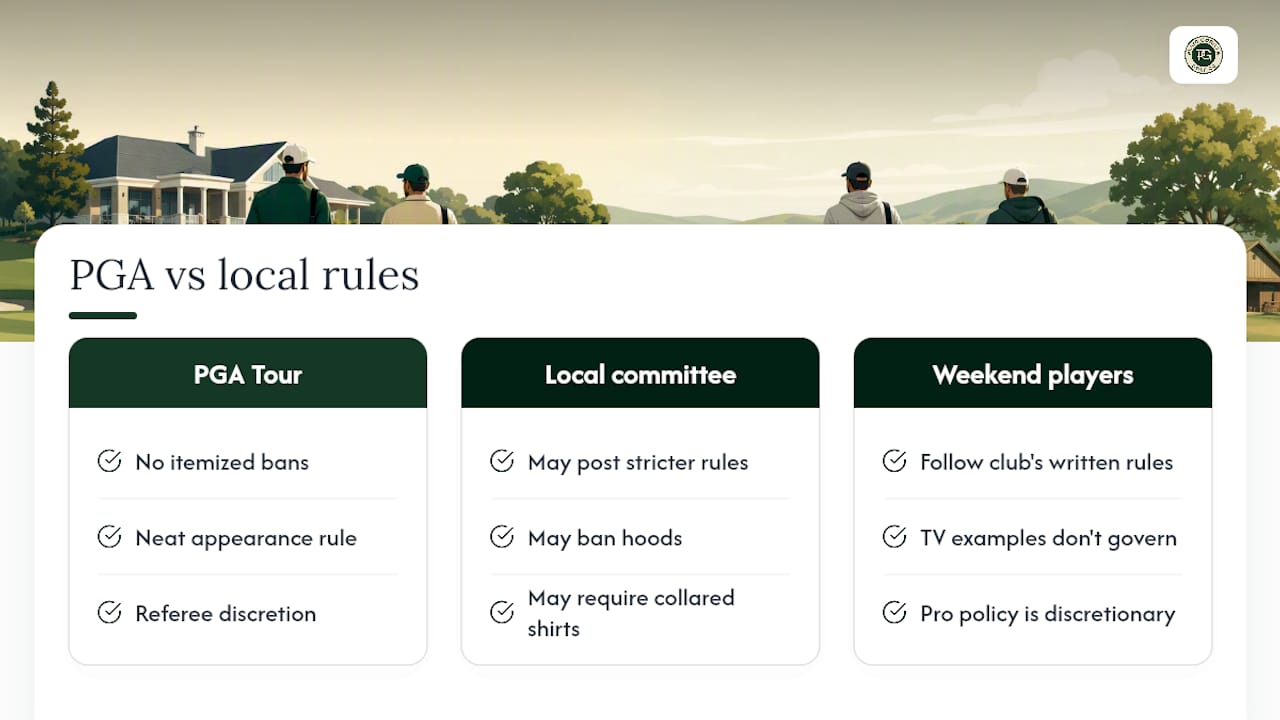
Professional golf is far less specific than most club handbooks, and that’s by design. The 2025 PGA Tour Player Handbook doesn’t list banned garments. It asks players to present a neat appearance consistent with “currently accepted golf fashion” and hands interpretation power to the Chief Referee.
Players are expected to present a neat appearance consistent with currently accepted golf fashion.
That’s it. No itemized list, no fabric weight requirement, no pocket rules. Reporting from Front Office Sports confirms this vagueness is intentional, giving Tour officials room to adjust quickly as fashion trends shift without rewriting the rulebook every season.
That flexibility shows up on-site. A local tournament committee can post stricter house rules for a single event, banning hoods or requiring collared shirts even when the Tour’s own handbook stays silent. Several high-profile moments of pros wearing hoodies or casual outerwear stirred debate in recent years, but none of it forced a uniform rule change across every tour or club, per that same Front Office Sports coverage.
The takeaway for weekend players: pro-level policy is discretionary by design, and your local club’s written rules, not what you saw on television, are what actually govern your round.
How to check a course’s dress code before you show up
Skip the guesswork and go straight to the source. Most clubs post a dedicated dress code or “course policies” page, and the fastest way to find it is a site search for “dress code” or “attire” directly on the club’s website.
If the website is vague, work through this order:
- Check the visitor info or FAQ section first, since public-facing pages tend to spell out casual wear rules more clearly than member handbooks
- Email the pro shop with a one-line question: “Are fitted golf hoodies permitted on the course, and do they need to be worn over a collared shirt?”
- Call ahead if you’re booking same-day; a 30-second phone question beats showing up and getting turned away at the first tee
Watch for ambiguous phrases like “neat and acceptable attire” or “outdoor garments permitted.” Those wordings usually mean hoodies are fine on the course but not guaranteed in the clubhouse, so ask a follow-up question specifically about dining areas if you’re planning to eat after your round.
Golf hoodies and gear built to pass the dress code test
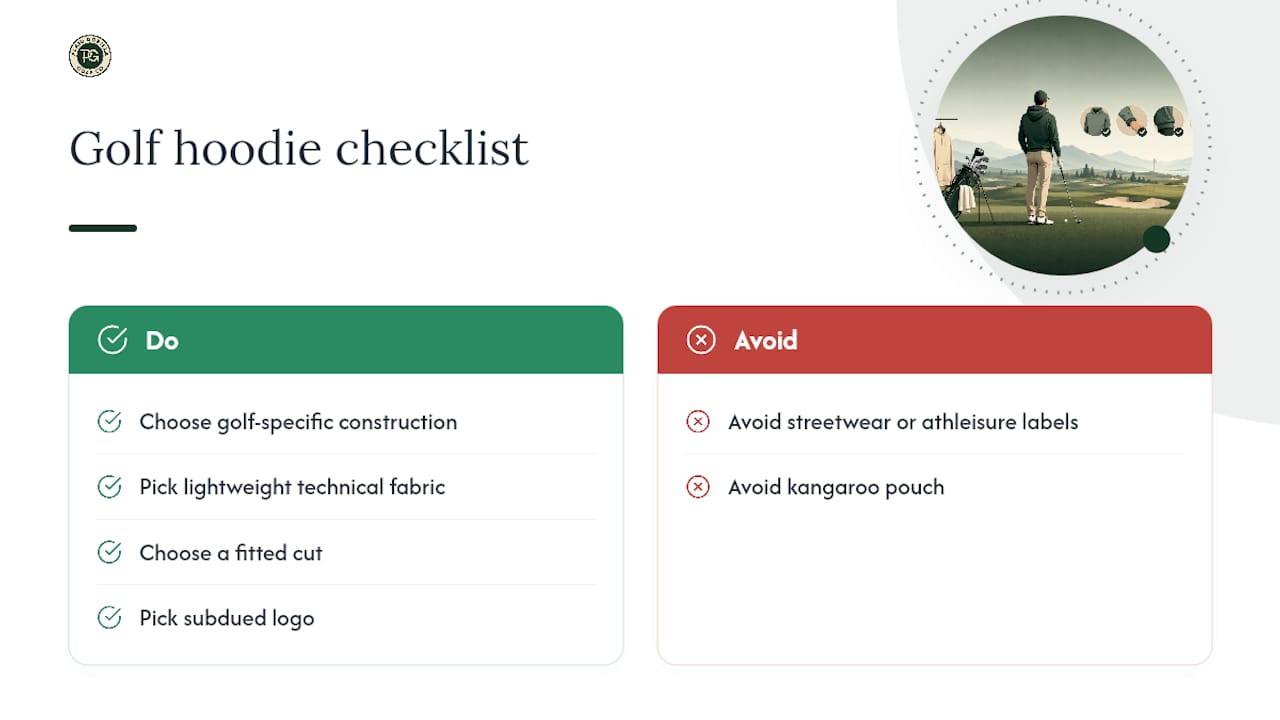
The buying checklist by now should feel familiar: fitted cut, lightweight technical fabric, no kangaroo pouch, subdued logo, golf-specific construction. Plaid Gorilla Golf builds every hoodie drop around exactly that standard, because we’d rather you get compliments from the starter than a polite tap on the shoulder.
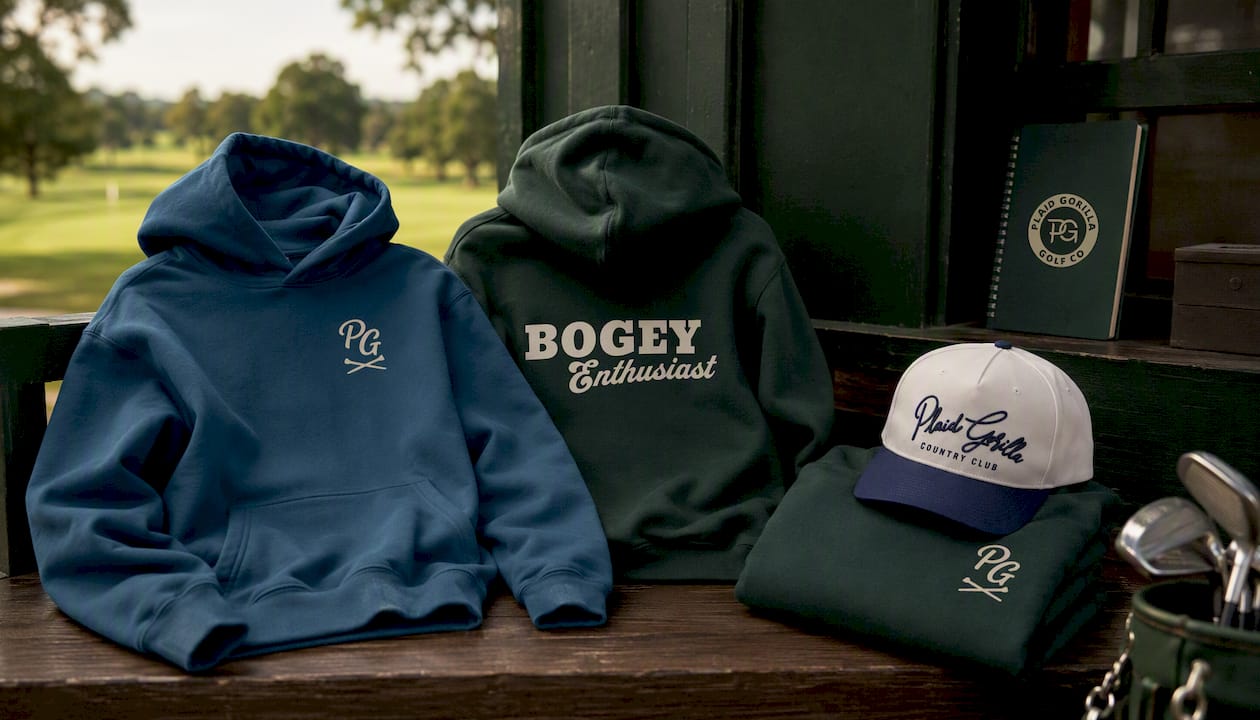
The Bogey Enthusiast Hoodie in Pine is a fitted, lightweight design without a front pouch, built to layer over a collared shirt when a club calls for one. Pair it with the Champagne Tees Rope Hat in Ponderosa Pine or the Country Club Snapback in Navy/Cloud White and you’ve got a complete, club-friendly outfit in two pieces.
For readers who’d rather grab a coordinated set, The Bogey Kit pairs the Country Club Hat with the Bogey Enthusiast Hoodie, while The Ponderosa Pine Set bundles the rope hat with that same hoodie in a matched colourway. If you want a different silhouette, The Course Kit pairs a rope hat with the Prime Hoodie for a slightly different fit.
Priority one when shopping: pick golf-specific hoodies made from lightweight technical fabric over anything labelled streetwear or athleisure. That one filter eliminates most of the garments that get flagged at check-in.
Why modern clubs are loosening up, and why courtesy still matters
Clubs are relaxing hoodie rules because golf apparel companies started designing the garment specifically for the sport, and pros wearing them on television normalized the look faster than any policy committee could keep up with. That shift is good for players who want personality in their wardrobe.
But being allowed to wear something isn’t the same as wearing it thoughtfully. Even where hoodies are fully permitted, keep the hood down during play, keep logos modest, and treat the clubhouse threshold as a mental reset point. The checklist in this piece isn’t about restriction. It’s about giving you the confidence to dress the way you want without becoming the exception a club points to when it tightens its rules again.
Get hoodies built for golf’s changing dress code
Every point in this guide traces back to one buying principle: fitted, lightweight, golf-specific. Plaid Gorilla Golf designs hoodies around that exact standard instead of adapting streetwear silhouettes after the fact, which is why our pieces layer cleanly over a collared shirt and skip the bulky kangaroo pocket that gets flagged at check-in.
Limited drops mean sizes and colourways move fast, so if the Pine colourway or a bundle like The Course Kit catches your eye, don’t wait for a restock announcement. Head to the Bogey Enthusiast Hoodie product page to check current specs against the checklist in this article, from fabric weight to pocket style, before your next tee time.
Sources
- Dress code Wascanacountryclub - About - Dress Code
- Course policies Corral de Tierra Country Club
- Dress code : Golf Club Prestwick St Nicholas
- 2025 PGA TOUR Player Handbook and Regulations
- Our Guests The Glendale
FAQ
Are hoodies acceptable golf attire?
Yes, at most public, resort, and increasingly private courses, provided the hoodie is fitted, lightweight, and free of a kangaroo pocket. Options like Plaid Gorilla Golf’s Bogey Enthusiast Hoodie are built specifically to meet that standard.
Are hoodies allowed in clubs?
On the course, usually yes; inside the clubhouse, often no. Several club policies, including Prestwick St Nicholas, treat hoodies as outdoor garments barred from public clubhouse rooms.
Can PGA Tour players wear a hoodie?
The 2025 PGA Tour Player Handbook doesn’t ban hoodies outright; it asks for a neat appearance consistent with “currently accepted golf fashion” and leaves enforcement to tournament officials.
What is considered proper golf attire?
Proper golf attire generally means a collared shirt or an approved golf-specific top, tailored bottoms, and golf shoes, with fitted, lightweight hoodies now widely accepted as a layer over that base.