


The biggest golf style mistakes to avoid are jeans, flip-flops, tank tops, metal spikes, untucked tuck-in shirts, and pattern overload. Each one will either get you turned away at the first tee or cost you comfort over 18 holes. Here are the highest-impact errors and what to wear instead:
- Jeans: Restrict your swing and are banned at virtually every Canadian club. Swap for flat-front tailored golf shorts or chinos.
- Flip-flops or sandals: Banned on-course and often in clubhouse areas too. Swap for soft-spike or spikeless golf shoes.
- Tank tops or collarless t-shirts: Most courses require a collar. Swap for a moisture-wicking polo or mock-neck golf shirt.
- Metal spikes: Damage greens and are prohibited under PGA of Canada dress code standards. Swap for spikeless or soft-spike shoes.
- Gym or athletic shorts: No belt loops, wrong cut, wrong fabric. Swap for tailored golf shorts with a flat front.
- Untucked tuck-in shirts: A shirt with a curved hem reads sloppy when worn untucked at stricter clubs. Swap for a shirt with a straight or banded hem designed to be worn out.
- Pattern overload: Three bold pieces at once look chaotic. Keep one statement item and build the rest in neutrals.
- Backward hats: Brim forward on-course is the standard at Canadian clubs. Save the backward cap for the parking lot.
One bold piece, done right — shop the hat + hoodie bundles.
Shop Bundles →Key takeaways
Avoiding common golf outfit errors comes down to five consistent rules: the right footwear, a collar, tailored bottoms, one bold piece, and checking the dress code before you arrive.
| Point | Details |
|---|---|
| Footwear first | Soft-spike or spikeless shoes only; metal spikes are banned under PGA of Canada standards. |
| Collar is non-negotiable | Every Canadian course expects a collar; collarless shirts and tank tops will get you redirected. |
| Tailored bottoms only | Denim, cargo shorts, and gym shorts are prohibited at most clubs; flat-front golf shorts solve it. |
| One bold piece | Pair one statement hat or hoodie with neutral staples to express style without breaking rules. |
| Plaid Gorilla Golf bundles | The Bogey Kit, Ponderosa Pine Set, and Course Kit offer coordinated hat-and-hoodie sets built for Canadian courses. |
Table of Contents
- What are the most common golf style mistakes by category?
- What should you wear instead of the common mistakes?
- Outfit ideas for men, women, and juniors
- What do Canadian dress codes actually enforce?
- Pre-tee checklist: what to verify before your round
- Style rules and personality: you don’t have to choose
- Plaid Gorilla Golf: bold pieces that work on the course
- Sources
- FAQ
What are the most common golf style mistakes by category?
Golf fashion faux pas tend to cluster into five categories. Knowing which category you’re most likely to slip up in makes fixing it fast.
Footwear
Metal spikes are the most enforced footwear rule in Canada. They tear up greens and are prohibited at sanctioned events and most private clubs. Soft-spike and spikeless shoes are the expected standard. Sandals and flip-flops are equally problematic: many venues ban open-toed footwear not just on the course but in the clubhouse as well.
One overlooked footwear mistake is wearing brand-new shoes for a full round. Breaking in golf shoes on the range first prevents blisters on hole 14. Test them for a short practice walk before committing to 18.
Shirts and fit
A collar is the baseline requirement at most Canadian courses. Collarless t-shirts, tank tops, and sleeveless athletic shirts will get you redirected to the pro shop before you reach the first tee. Beyond the collar, fit matters. Overly tight shirts restrict your backswing; oversized ones look unkempt and can catch during your follow-through.
Shirts designed to be tucked in have a curved hem. Wearing one untucked reads as sloppy at any club with a tuck-in rule. Shirts built to be worn untucked have a straight or banded hem — that’s the tell. Cotton is the other shirt mistake. It absorbs sweat and stays wet, which is uncomfortable after the third hole on a hot July day in Ontario. Performance fabrics like polyester blends and moisture-wicking knits dry faster and move better.
Bottoms
Denim is the single most commonly banned item in Canadian club dress codes. Cargo shorts are a close second: the pockets are bulky, the silhouette is wrong, and most club policies name them explicitly. Athletic gym shorts — the kind you’d wear to the gym — lack belt loops, have the wrong cut, and signal that you didn’t check the dress code.
Tailored golf shorts with a flat front and belt loops solve all three problems at once. Chinos work for cooler days or private-club rounds where shorts may not be permitted.
Patterns, colour, and coordination
Neon colours and clashing patterns are not banned by any dress code, but they are a fast track to looking like you dressed in the dark. The practical rule: limit yourself to one bold piece. If the hat is loud, keep the shirt and shorts neutral. Mismatched belt and shoe colours are a subtler error that experienced players notice immediately.
| Mistake | Why it matters | Quick swap |
|---|---|---|
| Metal spikes | Damages greens; banned at most Canadian clubs | Soft-spike or spikeless golf shoes |
| Jeans / denim | Restricted movement; banned by most dress codes | Flat-front tailored golf shorts or chinos |
| Collarless shirt | Fails the baseline collar requirement | Moisture-wicking polo or mock-neck golf shirt |
| Cotton shirt in summer | Absorbs sweat; stays wet for hours | Polyester-blend or moisture-wicking polo |
| Cargo shorts | Bulky; named in most club prohibitions | Tailored golf shorts with belt loops |
| Backward cap | Disrespectful of course etiquette | Brim forward on-course; remove indoors |
| Pattern overload | Looks chaotic; distracts from polished appearance | One bold piece; neutrals for the rest |
Accessories and headwear
Hats go brim-forward on the course. Indoors, they come off — unless the venue explicitly says otherwise, which is rare. Royal Montreal Golf Club is explicit: headwear must be removed indoors, and different clubhouse areas can carry stricter standards than the golfing areas themselves.
Watches and bracelets that sit loosely on your wrist can interfere with your grip and swing. A slim, snug-fitting watch is fine. A chunky bracelet stack is not. Logo overload — wearing three or four pieces with large, competing brand marks — reads as cluttered. One or two clean logos max.
Pro Tip: Keep your accessories minimal on the course. A single statement hat does more for your look than four competing logos ever will.
What should you wear instead of the common mistakes?
Swapping out the wrong pieces is straightforward once you know what to look for.
Performance fabrics over cotton: Polyester blends, moisture-wicking knits, and nylon-stretch fabrics are the right call for Canadian summers. Cotton absorbs sweat and stays damp. On a hot round, that means discomfort from hole three onward. A moisture-wicking polo keeps you dry and moves with your swing.
Garment features to look for:
- Banded or straight hem on untucked shirts (signals it’s designed to be worn out)
- Flat-front tailored shorts with belt loops and a 9–11 inch inseam
- Mock necks or collared shirts that also protect the back of your neck from sun
- Packable windbreakers or lightweight quarter-zips for the back nine when the temperature drops
Specific swaps:
- Cotton polo → moisture-wicking polo in a polyester blend
- Running shorts or gym shorts → tailored golf shorts with belt loops
- Flip-flops or sandals → spikeless golf shoes
- Backward snapback → brim-forward rope hat or structured snapback
- Oversized hoodie with no collar underneath → fitted hoodie layered over a collared polo
Quick outfit recipes:
- Public course, warm day: Moisture-wicking polo (solid colour) + tailored golf shorts + spikeless shoes + rope hat brim forward.
- Private club, cooler day: Collared golf shirt (tucked) + chinos + soft-spike shoes + belt matching shoes + structured cap removed indoors.
- Any course, variable weather: Add a packable windbreaker or lightweight hoodie that layers cleanly over your collar. Keep it in your bag until the turn.
For more on comfortable golf apparel choices suited to Canadian conditions, Plaid Gorilla Golf’s field notes are worth a read.
Outfit ideas for men, women, and juniors
Men
Public course: Moisture-wicking polo in a solid or subtle pattern, tailored golf shorts (flat front, belt loops), spikeless shoes, and a rope hat brim-forward. No belt-shoe mismatch — match the leather tones.
Private club: Tucked collared shirt, tailored chinos or dress shorts, soft-spike shoes, leather belt matching shoes, structured cap removed at the clubhouse door.
Women
Golf dresses and skorts are both acceptable at most Canadian courses. Skirt and skort length matters: most private clubs expect hemlines at or near the knee, and some specify a minimum length in their written policy. Sleeveless golf tops are generally permitted when they have a collar or mock neck. Untucked options designed for golf — with a straight or banded hem — work well with skorts or tailored shorts.
For cooler rounds, a fitted quarter-zip or lightweight hoodie layered over a collared top is both practical and polished. Avoid athletic leggings unless the course explicitly permits them.
Juniors
Keep it simple. A collared shirt, tailored shorts, and spikeless shoes cover the rules at almost every Canadian course. Avoid fashion extremes — oversized fits and very baggy shorts look sloppy and can interfere with a developing swing. No flip-flops, no metal spikes. Fit is the priority: clothes that move with the body, not against it. Check out alternative golf clothing options for younger players who want something a little different from the standard.
Weather swaps for any player type: Pack a packable windbreaker or lightweight hoodie in your bag. Temperature on a Canadian course can drop several degrees between the front nine and the back nine, especially in spring and fall. A layer you can pull out at the turn is always smarter than shivering through holes 10–18.
What do Canadian dress codes actually enforce?
Canadian golf dress codes are more consistent than most players expect. The rules below come directly from national and provincial bodies.
Golf Québec’s 2026 dress code requires collared shirts, permits Bermuda shorts, and explicitly prohibits cargo-style bottoms, denim, and workout clothing. Caps and visors must be worn with the brim forward and removed indoors unless the host venue states otherwise.
PGA of BC lists denim and ripped clothing as unacceptable at events and notes that penalties or corrective measures may apply for infractions. At sanctioned events, that can mean a refusal to start.
Toronto Golf Club enforces tailored bottoms and collared tops, forbids metal spikes, jeans, cargo shorts, and joggers, and specifies sock and hat expectations. The hat brim goes forward on-course and comes off indoors.
Royal Montreal Golf Club goes further: denim is forbidden beyond the parking area, headwear must be removed indoors, and different clubhouse areas may carry stricter standards than the golfing areas. The dining room after a round is not the same dress-code environment as the 18th fairway.
The practical takeaway: Public courses are more relaxed but still usually expect a collared shirt and tailored bottoms. Private clubs enforce their written policies at the door. Check the club’s website or call the pro shop before you arrive — especially for a first visit or a guest round, where you might even find some fun promotional quality chocolate golf clubs to pick up as a novelty gift.
How to check before you go:
- Search the club’s website for “dress code” or “attire.”
- If nothing is posted, call the pro shop directly — they will tell you exactly what is and is not permitted.
- When in doubt, overdress. A polished look is never turned away; a too-casual one often is.
Pre-tee checklist: what to verify before your round
Run through this 15 minutes before you leave for the course.
- Shoes: Soft-spike or spikeless? No metal cleats. Broken in, not brand new.
- Shirt: Collar present. Tucked if it has a curved hem; untucked only if the hem is straight or banded.
- Bottoms: Tailored golf shorts or chinos with belt loops. No denim, cargo pockets, or gym shorts.
- Belt: Leather or woven, matching your shoe colour. Always carry a neutral belt in your bag as a backup.
- Hat: Brim forward. Ready to come off at the clubhouse door.
- Layer: Packable windbreaker or lightweight hoodie in the bag for the back nine.
- Socks: Clean, appropriate length for your shorts. No ankle socks with chinos.
- Sunscreen: Applied before you leave, not on the first tee.
- Spare socks: One clean pair in the bag. Wet socks on hole 12 are a real problem.
- Safety pins: A small repair kit for a loose button or a hem that comes undone mid-round.
For a full golf outfit accessories checklist covering belts, gloves, and hats, Plaid Gorilla Golf’s guide has you covered.
Pro Tip: If you’re playing a private club for the first time, carry one neutral backup outfit in your bag. A tucked collared shirt and a clean belt take up almost no space and have saved more than a few rounds from an awkward conversation at the pro shop.
Style rules and personality: you don’t have to choose
The conventional wisdom in golf style is that you play it safe, stay neutral, and never draw attention to your outfit. That’s one approach. It’s also the one that produces a sea of identical beige polos.
The better approach: pick one bold piece and build everything else around it. A statement hat or a distinctive hoodie worn over a clean collared polo is all you need to stand out without triggering a single dress-code conversation. The clubs that matter care about collars, hems, and footwear. They are not policing your hat colour.
What actually gets players in trouble is not boldness — it’s carelessness. Jeans because you forgot to check. Flip-flops because you thought it was casual. A t-shirt because you assumed public meant anything goes. Those are the real golf attire mistakes to avoid, and none of them have anything to do with expressing your personality.
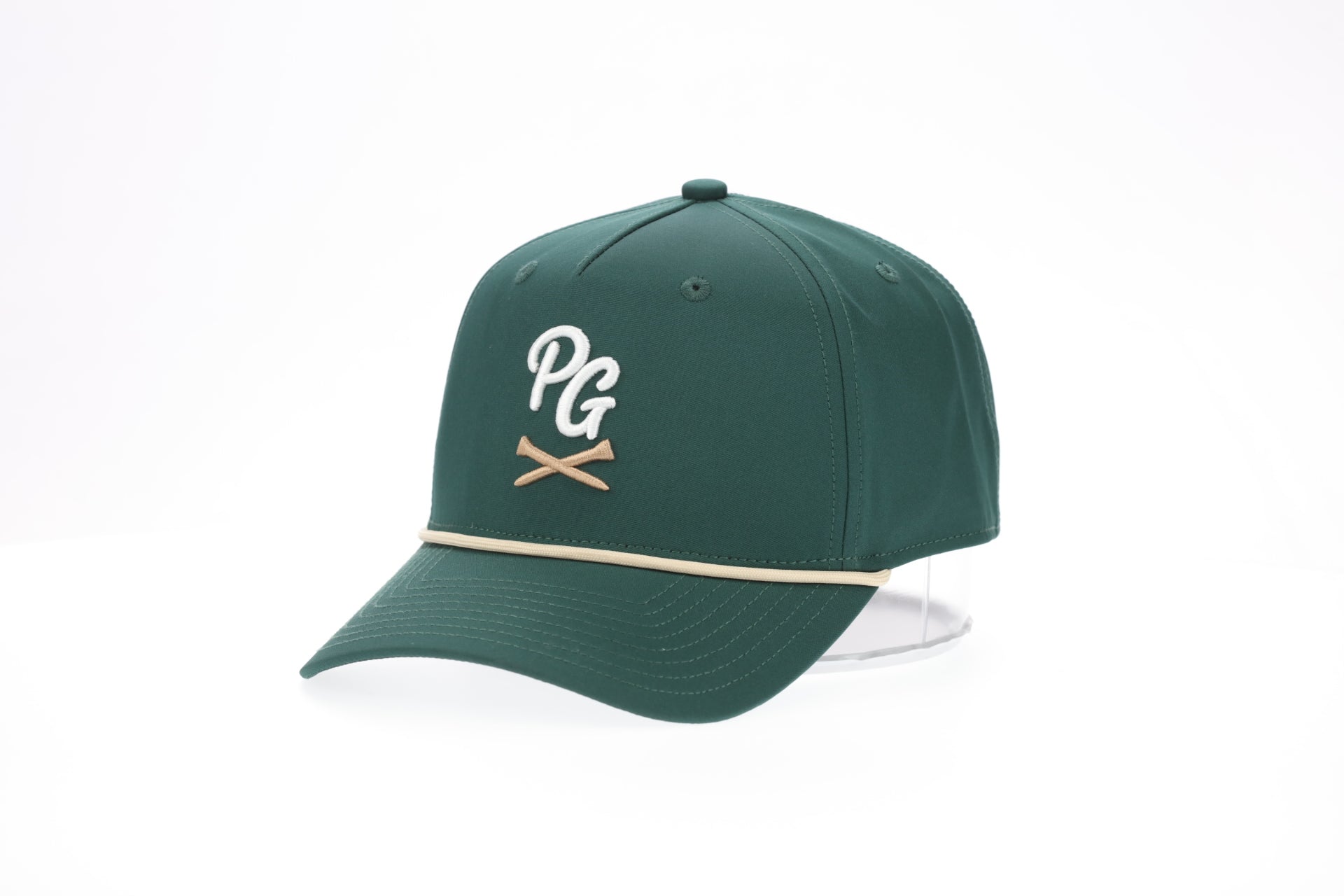
Test a new outfit over nine holes before you wear it for a full round or a tournament. Comfort reveals itself fast. A shirt that pulls across the shoulders on the range will ruin your backswing by hole five. A pair of shorts that gaps at the waist when you bend for a putt needs a better belt, not a looser fit.
Plaid Gorilla Golf’s rope hats and hoodies are built to be that one bold piece — designed to pair with classic golf staples and stay within what Canadian courses actually enforce.
Plaid Gorilla Golf: bold pieces that work on the course
If you want to avoid pattern overload while still showing up with personality, the answer is a coordinated set. Plaid Gorilla Golf’s limited drops are designed exactly for that: one statement hat and one hoodie, built to work together so you’re not guessing at what pairs with what.

The Bogey Kit pairs the Country Club Hat with the Bogey Enthusiast Hoodie — a ready-made combination that layers cleanly over a collared polo for cooler rounds. The Ponderosa Pine Set gives you the Champagne Tees Rope Hat and the Bogey Enthusiast Hoodie in Pine, coordinated from the start. For a versatile starter kit, The Course Kit pairs a rope hat with the Prime Hoodie — clean, course-appropriate, and built for Canadian conditions. All three bundles are available now at Plaidgorillagolf. Pick your set, layer it over a collared shirt, and you’re dressed for the course.
Sources
- PGA of Canada dress code (policies PDF)
- Golf Québec dress code policy (2026)
- PGA of BC dress-code policy
- Dress regulations — Royal Montreal Golf Club
- The Toronto Golf Club — dress code
- What to wear golfing: dress code guide (Outfit-Forecast)
FAQ
What is the most common dress-code mistake golfers make?
Wearing denim is the single most frequently enforced violation at Canadian clubs. Most dress codes name it explicitly, and it is prohibited at public and private courses alike.
What is the 3-3-3 rule for outfits?
The 3-3-3 rule is a general styling guideline suggesting you limit your outfit to three colours, three patterns, and three accessories at most. On the golf course, a stricter version applies: one bold piece, two neutral pieces, and minimal accessories keeps you polished and within most club standards.
What is the 70/30 rule in golf?
The 70/30 rule in golf typically refers to weight distribution in the swing, not attire.
Why do some golfers put Vaseline on their driver?
Vaseline on the clubface reduces sidespin at impact, which can help reduce a slice or hook. It is not a style question, and it is worth noting that applying substances to a clubface is prohibited under the Rules of Golf during a round.
Do Canadian public courses enforce dress codes?
Yes, though less strictly than private clubs. Most public courses still expect a collared shirt and tailored bottoms. Metal spikes and open-toed footwear are widely prohibited even at casual public venues.