


Yes, you can shrink a hoodie, and for most cotton or cotton-blend pieces, the go-to method is simple: a hot wash on the highest safe temperature, followed by a high-heat tumble-dry cycle. Repeat carefully if you need more. Polyester and heavy synthetic blends barely budge, and pushing them with boiling water or repeated heat risks warping the fabric more than shrinking it.
TL;DR:
- Cotton hoodies shrink significantly with hot water and high-heat drying, especially if made from 100% cotton and not pre-shrunk.
- Synthetic blends resist shrinking and risk warping or damage if exposed to excessive heat, making testing and caution essential.
- Heavier fleece fabrics shrink more slowly, often requiring multiple dry cycles, and component parts like ribbing may change at different rates.
- Shrinking prints or embroidery requires protecting decorations with a cloth and avoiding direct heat to prevent cracking or peeling.
- Over-shrunk hoodies can often be partially restored by soaking in cool water with fabric softener and gently stretching the fabric before air drying.
Table of Contents
- How to check your hoodie’s fabric before you shrink it
- Step-by-step methods to shrink a hoodie
- What can go wrong when you shrink a hoodie
- How to unshrink a hoodie that went too far
- Locking in the fit after you shrink a hoodie
- Plaid Gorilla Golf notes on fabric weight and fit
- Fabric first, method second: an editorial take
- Skip the risk: shop a hoodie that already fits
- Sources
- FAQ
How to check your hoodie’s fabric before you shrink it
Before you touch the wash dial, flip the hoodie inside out and read the care label. Fibre content changes everything about how a hoodie reacts to heat, and guessing wrong wastes a wash cycle at best and ruins a print at worst.
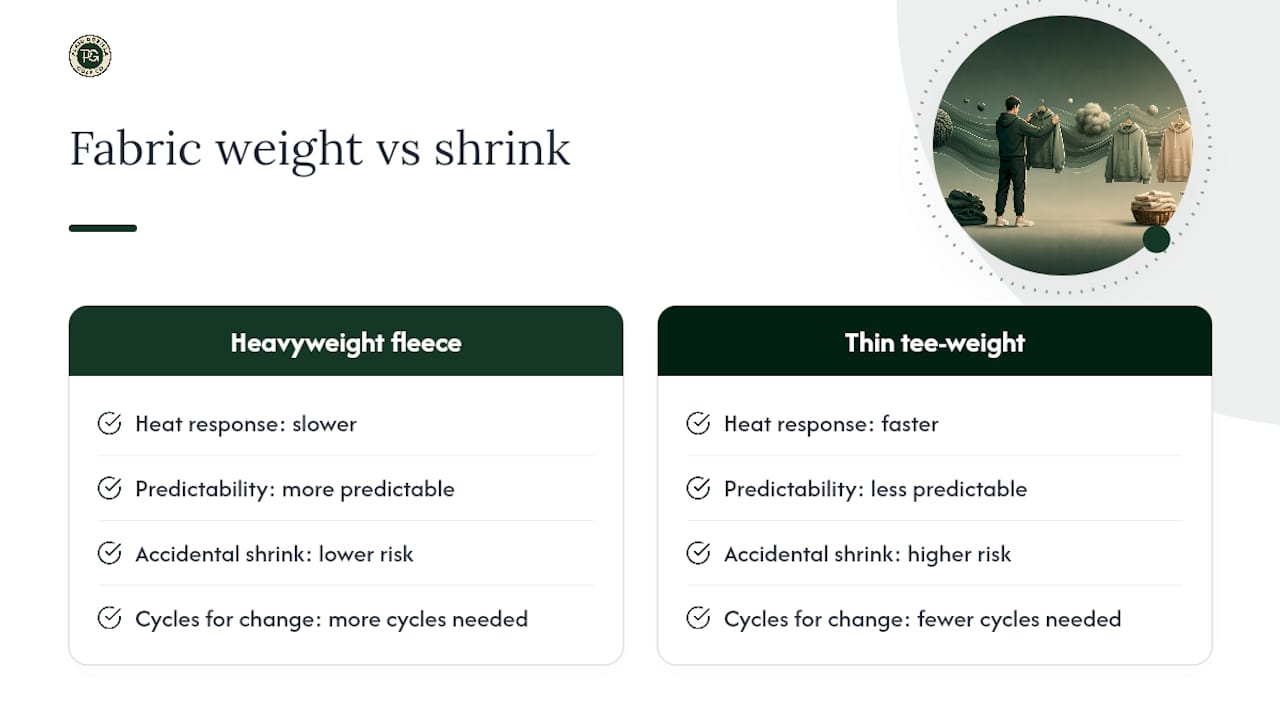
Cotton shrinks fast and predictably in hot water. Polyester barely shrinks at all, no matter how hot you go, because the fibre itself doesn’t absorb water and swell the way cotton does. Fleece-lined hoodies sit somewhere in between, and heavier fabric (measured in GSM, or grams per square metre) tends to shrink less dramatically than a lightweight tee-weight cotton because there’s simply more fibre holding its structure.
A few things to check before you start:
- Fibre percentage on the label — 100% cotton shrinks the most; blends with 20% polyester or more resist it.
- Whether it’s pre-shrunk or “compacted” — some brands treat fabric before cutting to limit shrinkage, and pattern grading that accounts for contraction means less movement in the wash.
- Construction type — tubular knits (no side seam) can shrink differently than garments with sewn side seams.
- Prints, embroidery, or transfers — these don’t shrink the way fabric does, and that mismatch is where damage starts.
If you’re not sure what you’re working with, test a hidden seam or the inside of a cuff with a gentler method first. That fifteen minutes of caution saves a lot of regret.
Step-by-step methods to shrink a hoodie
Work from gentlest to most aggressive. Stop as soon as the fit is right. You can always run another cycle, but you can’t undo overshrinking.
- Hot wash, then high-heat dryer. Wash on the hottest setting your machine allows for the fabric, then move it straight into the dryer on high heat for a full cycle. This combination is widely considered the most effective home method for inducing shrinkage without extreme measures. Expect the most noticeable change on the first cycle. Try the hoodie on damp, straight out of the dryer, since cotton relaxes slightly as it cools.
- Targeted spot shrink with an iron or hairdryer. For small adjustments, like tightening a stretched-out cuff or hood, dampen the area slightly, lay a thin cloth over any print or logo, and apply short bursts of heat rather than holding the iron in place. This method works, but printed graphics and synthetic fibres need extra caution since concentrated heat can scorch or crack a design fast.
- Boiling-water soak. For a hoodie that needs serious shrinkage, submerge it in a pot of boiling water for 10 to 15 minutes, then remove it with tongs (it will be hot) and let it cool before wringing gently. This is the most aggressive at-home option, and it carries real risk to seams and colour, so reserve it for plain, uncoloured cotton pieces you’re not too precious about.
- Repeated high-heat dry cycles. Heavyweight fleece resists shrinking in one pass because there’s more fibre mass to heat through. Running it through the dryer two or three times, checking fit between each, produces a slower but steadier result. Returns diminish fast after the second or third cycle, so if nothing changes by round three, the fabric has likely reached its shrink limit.
Pro Tip: Measure the hoodie flat (chest width and body length) before you start, and after every cycle. A tape measure catches small progress a mirror check will miss, and it tells you exactly when to stop.
What can go wrong when you shrink a hoodie
Shrinking works with fabric, not against it, and a few risks show up consistently:
- Polyester and heavy blends resist heat shrinkage and can instead warp, pill, or develop a stiff, plasticky hand. Skip boiling water entirely for anything with significant synthetic content.
- Screen prints, transfers, and embroidery can crack, peel, or distort under direct heat. Turn the hoodie inside out and place a thin cloth over any decoration before ironing or using a hairdryer. This detail matters even more on 3D puff embroidery, where raised stitching can flatten unevenly under pressure.
- Ribbing at the cuffs and hem often shrinks faster than the main body, which can leave you with tight wrists and a looser torso. Component-level testing consistently shows that rib, hood, and body panels move at different rates in the same wash, so measure each part separately rather than assuming uniform change.
- Colour bleeding is a real risk in hot water, especially with dark or saturated dyes. Test a hidden corner with a damp white cloth before committing the whole garment to a hot cycle.
Non-compacted cotton can shrink 7 to 10% on its very first hot wash, which is often more than people expect from “just one wash.”
How to unshrink a hoodie that went too far
If you overshot it, there’s a reasonable chance you can recover some size, though not always all of it.
- Soak the hoodie in cool water mixed with a capful of fabric softener for 20 to 30 minutes. This relaxes the cotton fibres and makes them more pliable.
- While it’s still damp, gently stretch the fabric by hand. Pull the body lengthwise and the chest widthwise in small, even increments, then lay it flat on a towel to hold the stretched shape while it air-dries.
- For more controlled stretching, block it: pin the damp hoodie to measured dimensions on a towel or foam board, matching your original measurements, and let it dry fully in that position.
This works best on cotton that shrank moderately. If the fibres have fully contracted through repeated high heat, some of that change is permanent, and a tailor or alterations shop is a more realistic fix than another round of stretching.
Locking in the fit after you shrink a hoodie
Once the fit is right, your washing and drying routine going forward decides whether it stays that way.
- Run one more wash on the same settings you used to shrink it, just to confirm the fit holds before you call it done.
- Switch to cold or cool washes after that, and reserve high heat for only when you deliberately want more shrinkage.
- Air-dry flat instead of tumble-drying for regular care. Low-heat tumble is fine occasionally, but repeated high-heat cycles will keep shrinking the garment slowly over time, even after you’re happy with the fit.
- Write down what worked (temperature, cycle count, dryer setting) somewhere you’ll find it later. If you ever pass the hoodie along, that note saves the next owner a lot of trial and error.
Plaid Gorilla Golf notes on fabric weight and fit
Some hoodies are made from heavier fleece than most fast-fashion basics, which means they respond to heat more slowly and predictably than a thin cotton tee-weight hoodie. That’s a feature when you’re trying to avoid accidental shrinkage, but it also means readers hoping to shrink one of our own pieces should expect a gentler curve and more cycles for a noticeable size change.
If you’re deciding whether a hoodie is even worth resizing, it helps to understand what you’re working with in the first place. Our breakdown of ringspun versus combed cotton explains how fibre processing affects both softness and shrink behaviour, and our midweight versus heavyweight comparison walks through how GSM changes what you should expect from a wash cycle. For readers curious how other brands construct and decorate hoodies, Only Queer Crew’s hoodie collection is worth a look as a comparison point.
Fabric first, method second: an editorial take
The advice floating around online treats shrinking a hoodie like a single trick, hot water and a dryer, and calls it done. That’s backwards. The fabric decides what’s possible long before any method does, and skipping that step is why so many people end up with a warped print or a hoodie that’s tight in the wrists and baggy everywhere else.
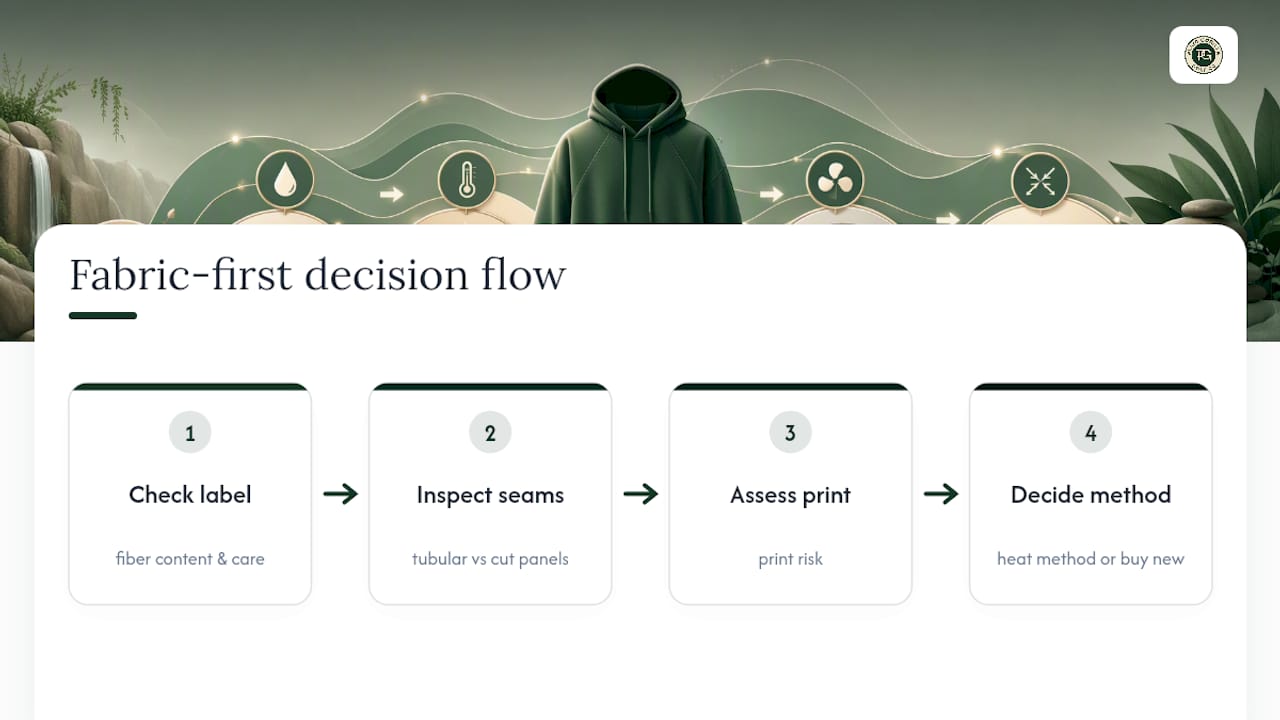
The conventional wisdom also underrates how much construction matters. A tubular knit with no side seam behaves differently than a garment built from cut panels, and ribbed cuffs almost always move faster than the main body. Anyone chasing an even, predictable shrink needs to measure component by component, not judge by a single overall glance in the mirror.
If you take one thing from this, prioritize the label and the seams before the heat. And if the piece has a print you care about or fabric you’re not sure will cooperate, buying a hoodie built to fit right the first time is often the smarter move than gambling on a wash cycle.
— Mike
Skip the risk: shop a hoodie that already fits
Not every hoodie is worth the gamble. If yours has a detailed print, a heavyweight fleece build, or a fit you’re not confident will survive repeated hot cycles, buying one built to size from the start beats risking a favourite piece in the wash.

Some hoodies come in a range of fits and weights so you can pick your size right the first time instead of chasing it after the fact. The Bogey Enthusiast Hoodie – Pine is a solid mid-weight pick for everyday wear, while the Prime Hoodie in Real Teal runs heavier and holds its shape through regular washing better than most fast-fashion fleece. Looking for a full look? The Bogey Kit pairs a hoodie with a Country Club Hat, and The Course Kit bundles a Rope Hat with the Prime Hoodie for a complete drop. If you’d rather build your own combo, browse The Club Kit, the Ponderosa Pine Set, the Champagne Tees Rope Hat, or the Country Club Snapback in Navy/Cloud White. Check sizing on any product page before you order, and you’ll skip the whole shrinking process entirely.
Sources
- Shrinkage control impact on fit and why pattern grading must account for contraction - Gavi Shalom
- Garment Shrinkage Testing for Denim & Hoodies | ZEKA
- Why Hoodies Lose Shape After Washing - MFG Merch
- How To Shrink A Hoodie - FastPrintStar
FAQ
Can you shrink a hoodie down a size?
Yes, a hot wash followed by a high-heat dryer cycle can shrink a cotton hoodie noticeably, sometimes enough to drop a full size, though results depend on fibre content and how heavy the fleece is.
How do I shrink an XL hoodie down to a large?
Wash it hot, dry it on high heat, and check the fit before running a second cycle if needed; heavyweight cotton may need two or three cycles to move a full size, while lightweight cotton often shrinks noticeably after just one.
What do I do if my hoodie is too big?
Start with the hot wash and high-heat dryer method, measure the fit afterward, and repeat cautiously if you need more shrinkage. If the fabric is polyester-heavy, resizing won’t do much, and swapping for a properly fitted hoodie is usually the faster fix.
Can I shrink a 100% cotton hoodie?
Yes, 100% cotton is the easiest fibre to shrink and responds well to hot water and high heat. Non-compacted cotton can shrink 7 to 10% on the very first wash, so go gradual rather than maxing out the heat right away.