


A genuine premium hoodie runs into several price bands, from entry-level to mid-premium and luxury, with increasing quality and exclusivity. Most buyers get the best long-term value in the mid-premium band, where heavier fabric (often 380 to 500 GSM) meets real construction. The Prime Hoodie - Real Teal sits squarely in that sweet spot.
TL;DR:
- Most buyers find the best long-term value in mid-premium hoodies priced between $100 and $200, where heavier fabrics and reinforced construction are standard.
- Fabric density, yarn quality, and construction details like flatlock seams and double-layer hoods matter more than raw GSM weight in assessing true premium value.
- Transparency in product specs, including fabric content, stitching, hardware, and care instructions, is crucial for judging quality and avoiding overpaying for branding.
- Resale value varies; limited drops and collaborations can appreciate if scarce, but most mid-premium hoodies depreciate quickly with wear.
- Buying direct from reputable brands and asking specific questions about fabric and construction helps prevent counterfeits and overpriced options.
Table of Contents
- Premium hoodie price: what each range actually buys you
- Which materials and construction details create real premium value?
- How do you judge value on a product page?
- What happens to a premium hoodie’s resale value?
- What warranty or return policy should you expect?
- How do you spot a counterfeit or an overpriced hoodie?
- How Plaid Gorilla’s Prime Hoodie fits the premium checklist
- Prioritize fit and construction, not the logo
- Sources
- FAQ
Premium hoodie price: what each range actually buys you
Price tells you almost nothing on its own. It only becomes useful once you know what a brand is charging for. Here’s how the market actually splits.
Entry premium ($60 to $100) gets you a step above fast-fashion basics. Fabric usually lands in a moderate weight, construction is solid but unremarkable, and branding is subtle. This band suits daily wear where you want something better than a big-box hoodie but aren’t chasing collector status.
Mid premium ($100 to $200) is where materials and craft start doing real work. Expect heavier fleece, reinforced seams, and better hardware. This is the band built for a durable wardrobe staple, something you’ll wear for three or four seasons without it sagging out of shape.
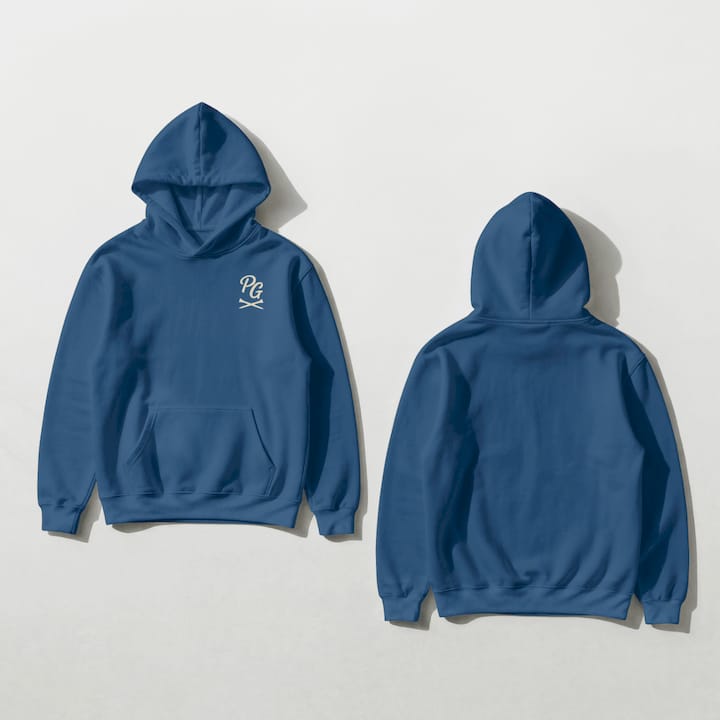
High premium ($200-plus) covers limited drops, collaborations, and small-batch runs. Retail price differences above the basic quality tier often reflect craft, finishing, and brand value rather than fabric weight alone, and hoodies priced past $200 typically stack several of these value-adds at once, not just one. That’s according to a manufacturing and export guide from Zeddwork Studio, which breaks down how craft and process drive cost above raw materials.
A few things push a hoodie’s price beyond what the fabric alone would justify:
- Limited or numbered drops that create scarcity on purpose
- Collaborations with artists, athletes, or other brands
- Garment dyeing, embroidery, or specialty hardware
- Small-batch production runs with higher per-unit costs
None of that is a bad thing. Scarcity and design have real value. Just know the difference between paying for craft and paying for a logo, because they show up as very different line items on the invoice, even if the sticker price looks the same.
Which materials and construction details create real premium value?
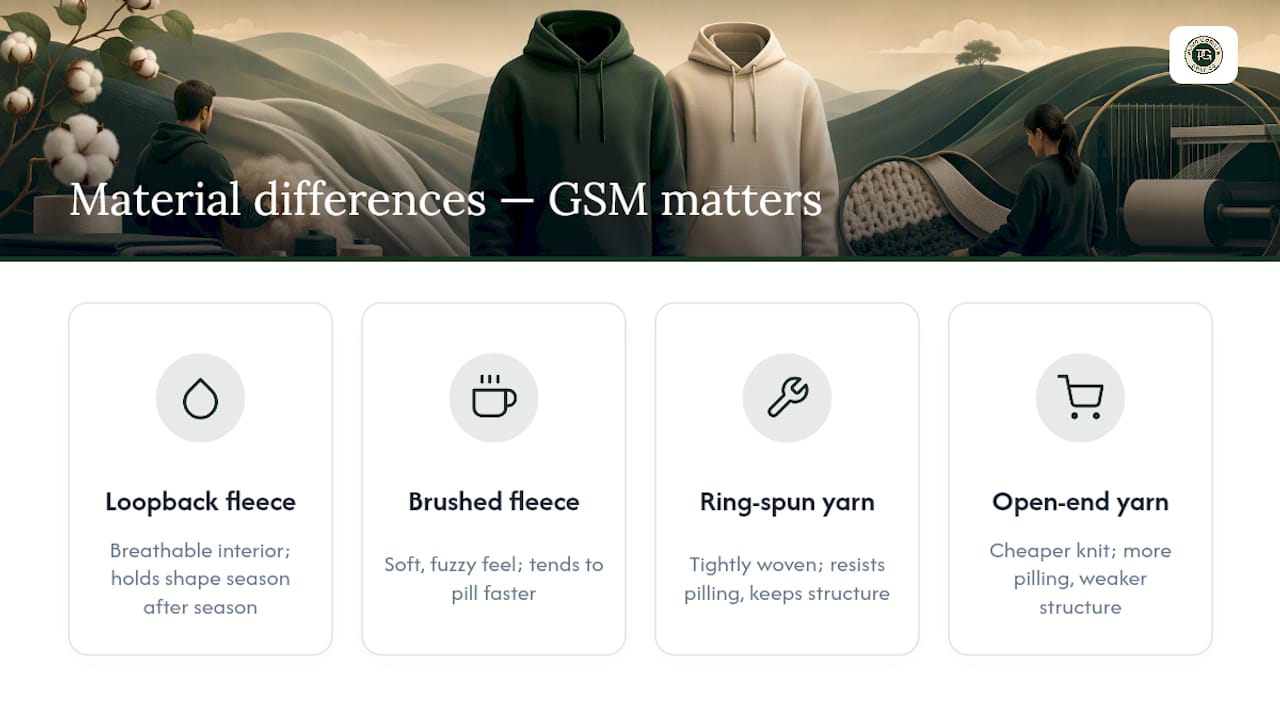
GSM (grams per square metre) is the number everyone quotes, and it’s the least reliable one on its own. Most premium heavyweight hoodies fall between roughly 380 and 500 GSM, but a high GSM number can come from a loose knit that pills and sags within a few washes. Density and yarn quality matter more than the raw figure, since a tightly compacted 380 GSM fabric can outlast a loosely knit 450 GSM one.
Fleece type is where you’ll notice the difference in your hands before you even see a spec sheet. Loopback fleece has a looped interior that stays breathable and holds its shape season after season. Brushed fleece gets that soft, fuzzy inside feel through a mechanical brushing process, which feels cozier but tends to pill faster under friction. Ring-spun yarn, woven tightly through compact knitting, resists pilling and holds structure better than cheaper open-end yarn. A comparison of midweight and heavyweight builds is worth a look if you’re deciding how much weight you actually need for your climate.
Construction is where the real cost hides. Flatlock seams lie flat against skin instead of bunching, which matters if you’re wearing a hoodie all day on a chilly course. A double-layer hood adds structure and warmth around the neck, and it’s worth checking hood construction before you assume “hood” means the same thing across every price point. Bar tacks at stress points, reinforced pocket corners, and metal hardware like YKK zips or metal aglets all cost more to produce, and they’re also why a well-made hoodie survives years of washing instead of months.
Finishing matters too. Garment dyeing, pre-shrinking, and anti-pill treatments all affect how a hoodie ages, and none of them show up in a product photo. They show up after twenty washes, which is exactly when a cheap hoodie starts to fall apart.
How do you judge value on a product page?
Run through this before you check out, whether you’re shopping online or standing in a store:
- Fibre content. Is it 100% cotton, a cotton-poly blend, or something else? Vague blends without percentages are a warning sign.
- Fabric description or GSM. A brand confident in its fabric will state the weight or at least describe density and hand-feel.
- Construction features. Look for mentions of flatlock seams, reinforced stitching, or double-layer panels.
- Hardware type. Named brands like YKK zippers signal a manufacturer sourcing real components, not the cheapest available option.
- Detailed measurements. A size chart with actual body measurements, not just S/M/L labels.
- Wash instructions. Specific care guidance (cold water, gentle cycle, no dryer) suggests the brand understands its own fabric.
- Returns and warranty terms. Clear, generous policies usually correlate with a brand that stands behind its construction.
Product pages that list fabric details, measurements, and care instructions build buyer confidence and cut down on returns, which is exactly the kind of transparency Shopify points merchants toward when building trustworthy listings. If a listing skips all of that and leans on words like “premium blend” with no follow-up detail, treat that as your first red flag.
Pro Tip: Before you buy, message customer service and ask one specific question, like fabric origin or GSM. A brand that answers quickly and specifically is usually the one worth your money.
Watch for these red flags specifically: absent specs, stock photos with no close-ups of seams or hood interior, and pricing that seems driven entirely by a collaboration or logo rather than any visible construction upgrade.
What happens to a premium hoodie’s resale value?
Premium hoodies hold value unevenly, and the split comes down to scarcity versus wearability. A limited drop with a numbered run or a notable collaboration can actually appreciate on resale platforms in the months after release, especially if the brand never restocks it. A well-made mid-premium hoodie bought for everyday wear won’t do that. It depreciates like any other piece of clothing, losing most of its resale value the moment it leaves the packaging.
Condition drives everything in between those two extremes. A hoodie with intact ribbing, no pilling, and clean hardware retains far more resale value than one that’s been through a hot dryer a dozen times. That’s one more reason construction quality isn’t just about how long you keep the hoodie. It’s about what you could get back if you ever decided to sell it.
Buyers chasing resale value should lean toward numbered or collaboration drops with genuine scarcity, not just a higher price tag. Buyers who plan to wear a hoodie into the ground should stop worrying about resale entirely and focus on fit and fabric, since that hoodie was never going to be a collectible in the first place.
What warranty or return policy should you expect?
Most premium hoodie brands offer a return window somewhere between 14 and 30 days for unworn, tagged items, though policies vary widely by retailer and you should always check the specific terms before buying. Very few apparel brands offer a formal multi-year warranty on a hoodie the way you’d see on outerwear or footwear, since a hoodie isn’t typically built to survive a warranty claim process the same way a jacket is.
What matters more in practice is how a brand handles defects. A stitching failure or a zipper that breaks in the first few washes should be covered regardless of the stated return window, and a brand that hesitates on an obvious manufacturing defect is telling you something about how it stands behind its own construction. Read the fine print on exchanges too. Some premium and limited-drop brands only offer store credit or exchanges rather than refunds once a drop has sold out, since replacement stock simply doesn’t exist.
Before buying, look for a return or exchange policy stated clearly on the product page itself, not buried three clicks deep in a general terms page. That visibility is part of the same transparency that keeps return rates low across the apparel industry.
How do you spot a counterfeit or an overpriced hoodie?
Counterfeits and overpriced legitimate hoodies show up differently, and it’s worth knowing both signals.
For counterfeits, check stitching consistency first. Genuine premium hoodies have even, tight stitching throughout, while counterfeits often show loose threads or uneven bar tacks at stress points. Check the hardware next: real YKK zippers and branded metal aglets are hard to fake convincingly, and a knockoff will usually use generic hardware with no visible branding. Tag placement and print quality matter too. A blurry or slightly misaligned logo print is one of the most common counterfeit tells, since counterfeiters rarely invest in the same print equipment as the original brand.
For an overpriced legitimate hoodie, the tell is different. You’re looking for a price with no construction evidence behind it: no stated GSM, no fabric breakdown, no mention of seam type or hardware, just a brand name and a high number. That’s a hoodie priced almost entirely on logo recognition. Compare the listing against a mid-premium hoodie with full specs, and if the cheaper one has more documented construction detail, the expensive one is probably charging you for marketing, not materials.
The safest move either way is buying direct from the brand’s own store rather than a third-party marketplace, where counterfeit risk climbs fast.
How Plaid Gorilla’s Prime Hoodie fits the premium checklist
Everything covered above, GSM, construction, transparency, points to one practical takeaway: buy from a brand willing to show its work. The Prime Hoodie - Real Teal is built around that same standard, with the fabric weight and construction detailing that separates a mid-premium hoodie from a hoodie that’s just wearing a higher price tag.
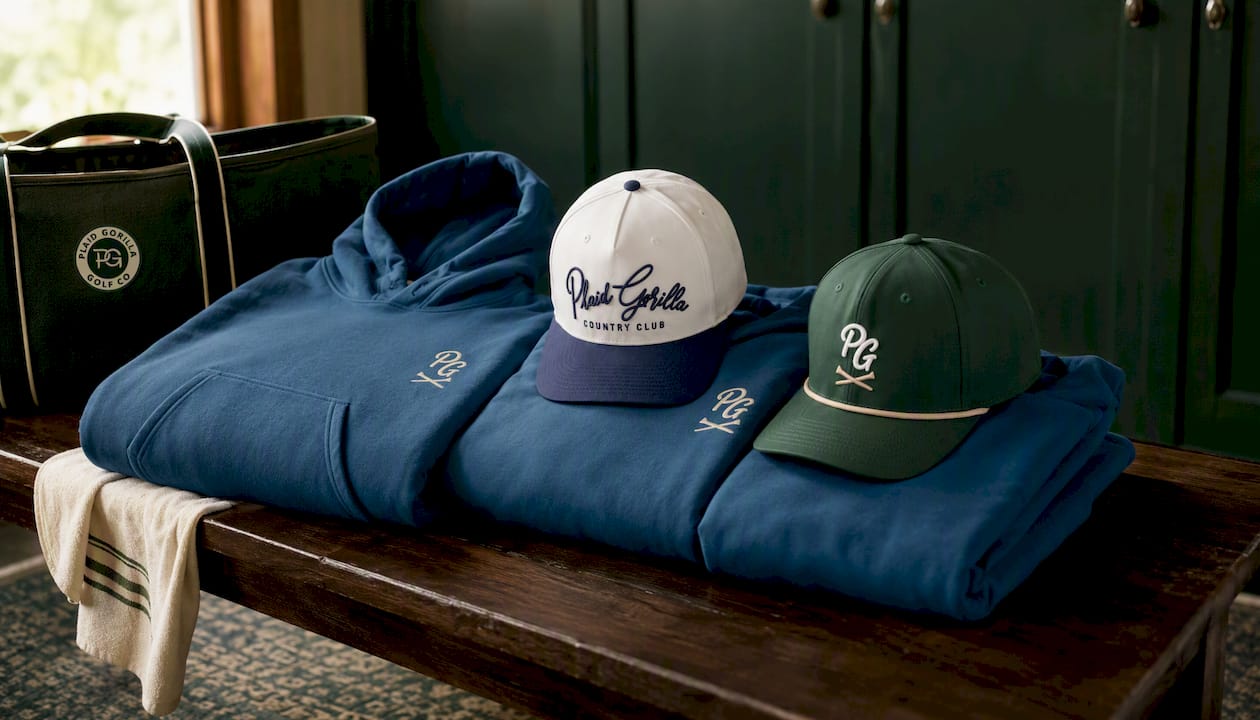
If you want to stack value further, The Club Kit — Country Club Snapback & Prime Hoodie pairs the hoodie with a snapback, and The Course Kit — Rope Hat & Prime Hoodie does the same with a rope hat. Bundling like this drops the effective per-item cost below what you’d pay buying each piece separately, which matters if you’re weighing a mid-premium hoodie against a bundle at a similar total price.
Before you check out on any of these, do exactly what this guide told you to do on any product page: check the fit and measurements, read the care instructions, and confirm the return window. The brand is built on bold patterns and premium materials, not filler, so you’ll find those specs stated clearly rather than buried. Drops are limited, and once a colourway sells out, it’s gone. Browse the full golf hoodie collection or check out golf hats if you want to round out the kit yourself, and grab the Prime Hoodie - Real Teal while your size is still in stock.
Prioritize fit and construction, not the logo
If I had to rank what actually matters, it’s fit first, construction second, fabric density third, and brand or aesthetic last. That order isn’t popular in marketing copy, but it’s how a hoodie survives past its first season.
For a daily commuter hoodie, stay in the entry to mid-premium band and prioritize a fabric that won’t pill under a bag strap. For a travel layer, mid-premium with a compact knit earns its price through packability and recovery. For genuine cold-weather heavyweight wear, spend into the mid-to-high premium range and don’t compromise on GSM density or seam construction. The three price bands from the top of this guide still hold. Most buyers land safest, and get the most hoodie for their dollar, in the middle one.
— Mike
Sources
For deeper reading on the fabric and construction claims above, see StitchQuote’s breakdown of premium hoodie construction and Virex Apparel’s guide to heavyweight hoodie fabric.
FAQ
How much does a high-quality hoodie cost?
A genuinely high-quality hoodie typically starts around $60 and can run past $200 depending on fabric weight, construction, and exclusivity. The mid-premium band, roughly $100 to $200, is where most buyers get the strongest match between price and durable construction.
What are premium hoodie brands known for?
Premium hoodie brands are known for heavier, denser fabric, reinforced construction like flatlock seams and bar tacks, and transparent product details rather than vague marketing language. The Prime Hoodie line is built around those same construction signals, paired with bold, non-traditional golf designs.
What is the most expensive hoodie?
The most expensive hoodies come from limited luxury drops and collaborations, where prices climb well past $200 based on scarcity and brand collaboration rather than fabric alone. Retail price above the basic quality tier usually reflects layered craft and finishing work, not a single material upgrade.
Is $70 too much for a hoodie?
$70 sits right at the entry-premium threshold, and it’s a reasonable price if the hoodie shows real construction signals like reinforced seams and a stated fabric weight. It’s overpriced only if the listing offers no specs beyond a brand name and a logo.