


A rope hat is a cap built with a decorative rope or cord stitched across the front panel, sitting just above the brim. That rope is mostly decorative today, but it’s the whole reason the hat reads as retro rather than sporty. You’ll spot rope hats on golf courses, hiking trails, and patios, usually built with a flatter brim than a standard baseball cap, and sometimes with a structured front, sometimes with a relaxed, broken-in crown.
TL;DR:
- Most rope hats now feature vintage fabrics like corduroy or washed cotton to achieve a heritage look, while performance materials are favored for active outdoor use.
- The style revival is driven by nostalgia and the mainstreaming of country and Western culture, with brands emphasizing craftsmanship through deliberate color and material choices.
- Fit determines the formality of a rope hat, with structured builds feeling more dressy and relaxed profiles offering casual comfort, and fabric choice affects aging and visual impact.
- Proper care includes spot cleaning, reshaping while damp, and storing upright to maintain shape and color, especially for structured or leather accents.
- Rope contrast and profile cues signal whether a hat leans vintage or modern far more than color alone, making fabric and construction essential for conveying style.
Table of Contents
- What is a rope hat, exactly?
- Where did the rope on a hat come from?
- What are the different rope hat styles?
- How do you wear a rope hat?
- How do you choose the right rope hat?
- How do you clean and store a rope hat?
- Why Plaid Gorilla Golf builds rope hats the way it does
- The rope isn’t decoration for its own sake
- Get the rope hat and outfit in one order
- Sources
- FAQ
What is a rope hat, exactly?
The rope sits at the seam where the crown meets the brim, running across the front panel in a single braid, a doubled cord, or a flatter woven trim. That placement is what separates the style from a plain trucker or dad hat — the rope is a fixed design detail, not an add-on you can remove.
Everything else about the hat’s construction affects how it wears and how formal it looks.
- Front panel structure: Buckram-stiffened fronts hold a crisp, upright shape. Unstructured fronts collapse slightly for a lived-in, vintage look.
- Brim profile: Rope hats typically run flatter and lower than a tall baseball cap, which is part of what makes the silhouette distinct at a glance.
- Closures: Snapbacks, adjustable straps, and fitted bands all show up on rope hats. Snapbacks trace back to a very different piece of headwear history, worth a quick read if you’re curious about closure origins.
- Panel material: Mesh back panels signal a warmer-weather, outdoor build. Solid panels lean dressier and hold shape longer.
Compared with a foam trucker cap, the difference is mostly intent. A trucker hat is built rugged, with a tall crown and mesh back for airflow on job sites and farms. A rope hat trades that ruggedness for a cleaner bill and that signature cord, aiming at style over utility.
Where did the rope on a hat come from?
The cord detail didn’t start as decoration. Early headwear from maritime and military trim traditions used rope stitching as reinforcement along seams, and golf and outdoor brands picked up the look decades ago as a practical trim that also happened to look sharp.
- Mid-century origin: Golf and outdoor headwear brands adopted rope trim as both a structural seam detail and a visual signature.
- Function fades, style stays: As materials and stitching improved, the rope stopped doing structural work and became pure branding shorthand, a way to flag a hat as premium or heritage-leaning.
- A quiet stretch through the 2000s: Rope hats fell out of mainstream rotation as foam truckers and flat-brim snapbacks dominated.
- Early 2020s resurgence: The style came roaring back, driven largely by nostalgia and the mainstreaming of country and Western-adjacent culture into everyday fashion.
That revival isn’t a random blip. Rope hats now show up across golf brands, fly-fishing outfitters, and lifestyle labels precisely because the silhouette communicates craft and heritage in a way a plain cap doesn’t. Country music’s move into the cultural mainstream gave the whole aesthetic, rope hats included, a much bigger stage.
What are the different rope hat styles?
Walk into any hat shop or scroll a golf apparel drop and you’ll notice two dominant builds. Style commentators generally describe them as a traditional structured mid-profile and a low-profile relaxed build, and the choice between them says a lot about how you want the hat to read.
- Structured mid-profile: Buckram front, crisp lines, a more “put together” look that pairs well with collared shirts.
- Low-profile relaxed: Softer crown, closer fit to the head, easier to dress down.
- Vintage-leaning builds: Garment-washed cotton, corduroy panels, leather or suede patches, tan or tonal rope.
- Modern-leaning builds: Performance polyester, mesh venting, bold contrast panels, brighter rope colours.
Fabric is doing a lot of the talking here. Corduroy and garment-washed cotton read vintage almost instantly, while performance polyester and mesh push the same silhouette toward something athletic and current. Rope colour works the same lever: tonal rope that nearly matches the crown stays subtle, while a contrasting rope, cream against forest green, for instance, pulls the eye and amplifies the retro accent.
Pro Tip: If you’re not sure which build to buy first, check the fabric before the price tag. Corduroy and washed cotton photograph and age well; polyester holds shape better in humidity but shows its price point faster.
Two builds and two fabric directions give you four broad combinations to shop from, and most rope hats on the market today fall into one of them.
How do you wear a rope hat?
Rope hats work across more situations than most golfers expect, but the pairing changes depending on where you’re headed.
On the course, rope hats sit comfortably alongside a clean polo and chinos. Muted, earthy palettes, olive, cream, forest green, keep the look feeling intentional rather than costume-y, and a golf-inspired casual outfit built around a rope hat translates easily from the fairway to a post-round patio.
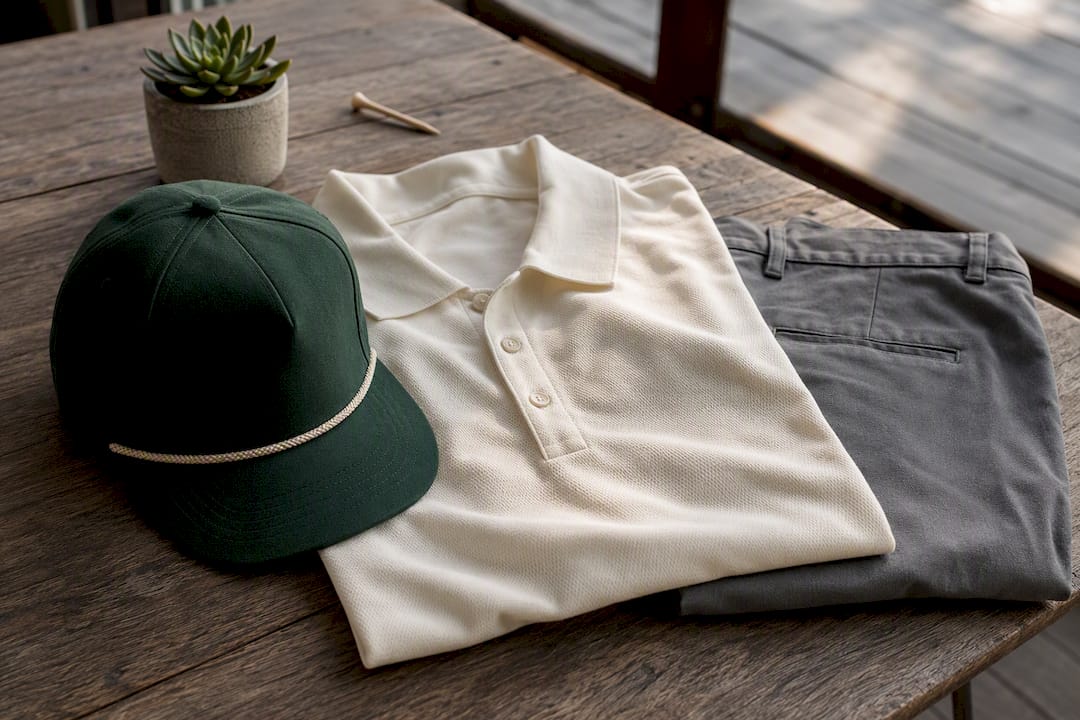
Off the course, rope hats slot into brewery visits, festivals, and travel days without much effort. A relaxed, low-profile build in a vintage fabric does most of the work here. Pair it with a plain tee and worn denim and you’re done.
For actual outdoor use, fishing and hiking specifically, performance fabric matters more than fabric that merely looks the part. A mesh-backed, moisture-managing rope hat holds up to sweat and sun far better than a corduroy version, even if the cotton build looks better in photos.
- Golf and country club settings: structured build, muted tones, tonal rope.
- Casual and lifestyle wear: relaxed build, washed cotton, contrast rope.
- Active outdoor use: mesh panels, performance fabric, adjustable strap.
- Everyday layering: pairs naturally with a hoodie or crewneck for a complete smart-casual outfit.
What a rope hat communicates that a trucker or flat-brim snapback doesn’t is a sense of chosen heritage. The trucker says “utility.” The rope hat says “I picked this on purpose.”
How do you choose the right rope hat?
Fit comes first. A structured mid-profile build sits slightly higher on the head and reads more formal; a low-profile build hugs closer and feels more casual straight out of the box. If you’re unsure which fits your head shape and closure preference, a guide to adjustable hat fit is worth five minutes before you buy.
Material decides how the hat ages. Cotton and corduroy soften and develop character over months of wear. Performance polyester resists sweat and holds its shape in humid rounds, but it won’t develop that broken-in vintage look no matter how long you wear it.
Rope construction and colour balance matter more than shoppers expect. A single tight braid in a tonal shade disappears into the hat until you look closely; a doubled cord in a contrasting cream or tan becomes the focal point of the whole design.
Price bands roughly break down like this:
| Price band | What you typically get |
|---|---|
| Entry | Basic cotton or polyester blend, simple single-braid rope, limited colourways |
| Mid | Better stitching, tonal or contrast rope options, mixed materials |
| Premium | Limited-edition fabrics, structured buckram fronts, coordinated rope-and-panel colourways, small production runs |
Limited-edition drops tend to sit in that premium band because the materials and colour matching cost more to produce, and because the runs are small by design.
How do you clean and store a rope hat?
Rope hats hold their shape and colour a lot longer with a bit of routine care, and most damage is preventable.
- Spot-clean first. A soft brush and mild soap handles most dirt without touching the rope or brim structure. Save full washing for hats explicitly built to handle it, and check proper cleaning steps for golf hats before you soak anything.
- Avoid the washing machine on structured or leather-accented builds. Agitation warps buckram fronts and can loosen rope stitching.
- Reshape while damp. Press the brim back into its curve and let the hat air-dry away from direct sun, which fades both fabric and rope colour fast.
- Store upright or on a hat rack, never crushed flat in a drawer, to protect the crown shape between wears.
- Send structured or leather-patch hats to a specialist if stitching loosens or the brim loses its curve. Some repairs aren’t a DIY job.
Why Plaid Gorilla Golf builds rope hats the way it does
Mike, who covers headwear and golf apparel trends for Plaid Gorilla Golf, put this guide together to cut through the noise around a style that’s suddenly everywhere but rarely explained well.
Plaid Gorilla Golf designs rope hats around the same principle covered above: fabric and rope colour decide whether a hat reads vintage or modern, so every drop pairs deliberate colourways with premium materials instead of defaulting to whatever’s cheapest to produce.
A few examples worth knowing:
- Champagne Tees Rope Hat – Ponderosa Pine: a structured build in a deep forest tone with tonal rope detail for subtle heritage styling.
- Country Club Snapback – Navy/Cloud White: a companion piece for readers who want the closure history and clean lines of a snapback alongside a rope hat.
- The Course Kit — Rope Hat & Prime Hoodie: a bundle for anyone building a full outfit rather than shopping one piece at a time.
- The Ponderosa Pine Set — Rope Hat & Bogey Enthusiast Hoodie: pairs the rope hat silhouette with matching apparel in the same colourway.
Each piece ships in limited runs, which is standard practice across the brand’s catalogue rather than a one-off marketing tactic.
The rope isn’t decoration for its own sake
Most style guides treat the rope on a rope hat as a throwaway detail, a nice-to-have accent that doesn’t affect much. That undersells what’s actually happening. The rope, the fabric, and the crown profile work together as a single signalling system: they tell people whether you’re leaning vintage or modern, dressed up or dressed down, before you say a word.
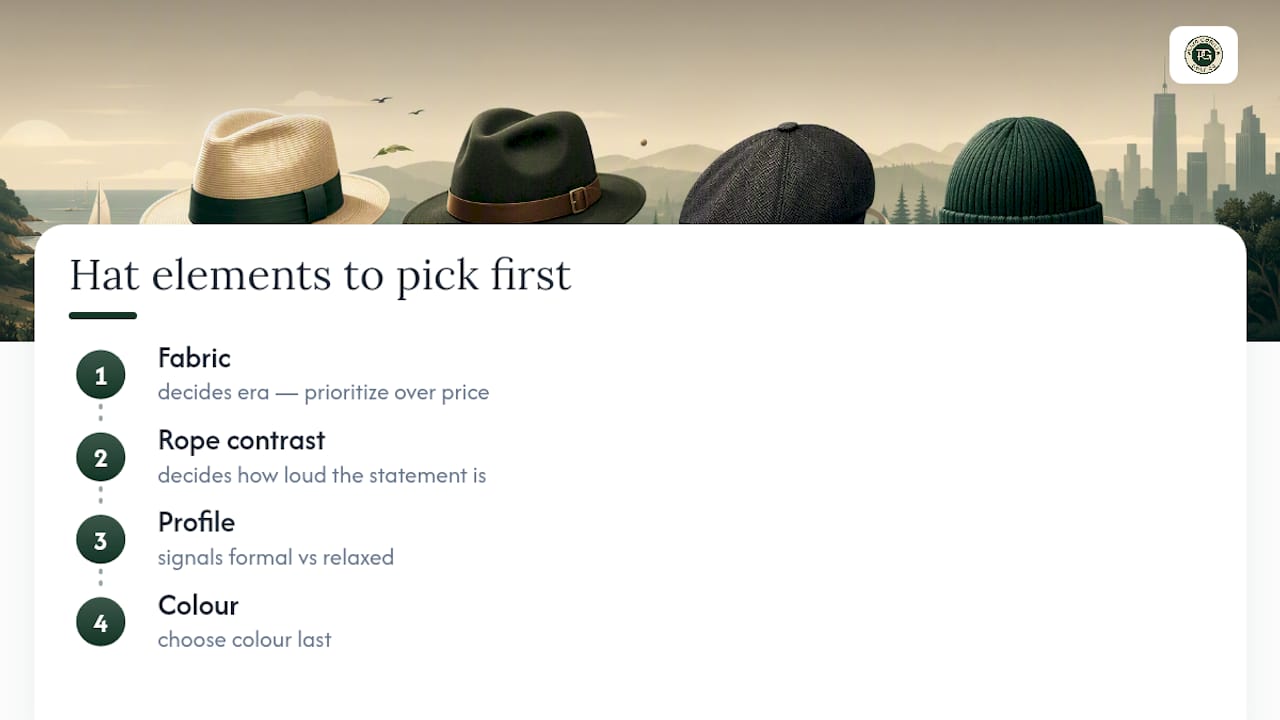
Conventional advice tends to stop at “pick a colour you like.” That’s backwards. Fabric decides the era your hat reads as. Rope contrast decides how loud that statement is. Profile decides whether it reads formal or relaxed. Pick those three first, and colour becomes the easy part.
If you’re buying your first rope hat, prioritize fabric over everything else, including price. A $30 polyester hat and a $30 washed-cotton hat will send completely different signals on the same head, and no amount of styling fixes that mismatch after the fact.
— Mike
Get the rope hat and outfit in one order
Shopping rope hats one piece at a time means guessing whether the hoodie you already own will actually match. Plaid Gorilla Golf skips that guesswork by selling rope hats as part of coordinated kits, so the colourway, fabric, and rope contrast are matched before the box ships.
The Course Kit — Rope Hat & Prime Hoodie pairs a structured rope hat with a matching hoodie for a complete look in one order. If forest green and cream is more your speed, The Ponderosa Pine Set — Rope Hat & Bogey Enthusiast Hoodie bundles the same silhouette in that colourway at a lower cost than buying each piece separately. And if you already own the hat and just want the standalone piece, the Champagne Tees Rope Hat – Ponderosa Pine ships on its own.
All three are limited-edition drops, so once a colourway sells out, it’s gone. Check current availability and shop the rope hat kits before the next drop replaces this one.
Sources
- What Is a Rope Hat? Meaning, Purpose, Styles & Custom Guide
- Performance vs Trucker vs Rope Hats – Outer Wings
- Vintage Rope Hats: Why Brands Choose the Retro Look – Griwolfe
FAQ
What is the point of a rope hat?
The rope across the front panel is mostly decorative today, giving the hat a retro, premium look rather than serving a structural purpose the way early maritime and military trim once did.
When were rope hats popular?
Rope hats trace back to mid-century golf and outdoor headwear, faded through the 2000s, and came back strongly in the early 2020s alongside a broader country and heritage-branding wave.
Are rope hats still trending?
Yes. The style is currently riding a resurgence tied to nostalgia and the mainstreaming of Western-adjacent lifestyle branding, and brands from golf to outdoor gear to lifestyle labels are leaning into it.
What’s the main difference between a rope hat and a trucker hat?
A trucker hat prioritizes a tall crown and mesh back for airflow and durability, while a rope hat trades that ruggedness for a flatter brim and a decorative rope, aiming at style over pure utility.