


For most golf hats, hand-washing in cool water with a mild detergent is the safest way to clean them and it keeps the brim and crown holding their shape. Skip the dishwasher, skip the dryer, and always check the care label before you touch a drop of water.
The two-minute checklist:
- Do: Check the care label first, then run a colourfastness test on a hidden spot.
- Don’t: Put your hat in the dishwasher or dryer. Heat warps brims and fades colour fast.
- Quick sequence: Test for colourfastness. Hand-wash with mild detergent. Air-dry on a form, out of direct sun.
Key Takeaways
Golf hats last longest when the cleaning method matches the brim material, and hand-washing in cool water with mild detergent stays the safest default across nearly every construction type.
| Point | Details |
|---|---|
| Check the brim first | Press the brim gently. Cardboard flexes and creases, plastic snaps back, fabric feels soft throughout. |
| Test before you wash | Dab diluted detergent on a hidden seam and blot with white cloth to catch dye bleed before it ruins the hat. |
| Hand-wash beats machine-wash | Soak 15 to 30 minutes in cool water with mild detergent, then rinse and blot rather than wring. |
| Never use heat to dry or clean | Dishwashers and dryers warp brims and fade colour; air-dry on a form away from sun and heaters instead. |
| Plaid Gorilla Golf hats suit gentle care | Rope hats and snapbacks use stitched fabric brims and moisture-resistant panels built to handle regular hand-washing. |
Table of Contents
- What to gather before you clean a golf hat
- What’s the best way to hand-wash a golf hat?
- Why you should never put a golf hat in the dishwasher or dryer
- How do you clean wool, straw, and cardboard-brim hats?
- How do you get sweat stains out of a golf hat?
- How do you reshape and dry a golf hat properly?
- How often should you clean a golf hat?
- Why trust this golf hat care guide?
- What golfers get wrong about cleaning their hats
- Keep your Plaid Gorilla Golf hat looking sharp for longer
- Sources
- FAQ
What to gather before you clean a golf hat
Good results start before the water even runs. Grab a mild liquid detergent, a small basin, a soft-bristled toothbrush (an old one works fine), a microfiber towel, a mesh laundry bag if you’re considering the machine, and something round to reshape the crown while it dries, a hat form, a bowl, or even a coffee can.
- Read the care label. It’s usually stitched inside the sweatband and tells you whether hand-wash, spot-clean, or machine-wash is safe.
- Inspect the brim. Press gently along the edge. Cardboard flexes with a papery give and holds a crease once bent. Plastic snaps back cleanly. Stitched fabric brims feel soft throughout.
- Run a colourfastness test. Dab a little diluted detergent on a hidden inside seam, wait a minute, then blot with a white cloth. If any colour transfers, skip the soak and spot-clean only.
Pro Tip: Do the colourfastness test on every multicolour or plaid hat, even ones you’ve washed before. Dye lots and trims vary, and a five-second test beats an hour of regret.
If you’re not sure what fabric you’re working with, our colourfastness breakdown for golf apparel walks through the same test in more detail.
What’s the best way to hand-wash a golf hat?
Hand-washing is the gold standard for a reason: no heat, no aggressive spinning, no risk to the brim’s structure. Here’s how to do it properly.
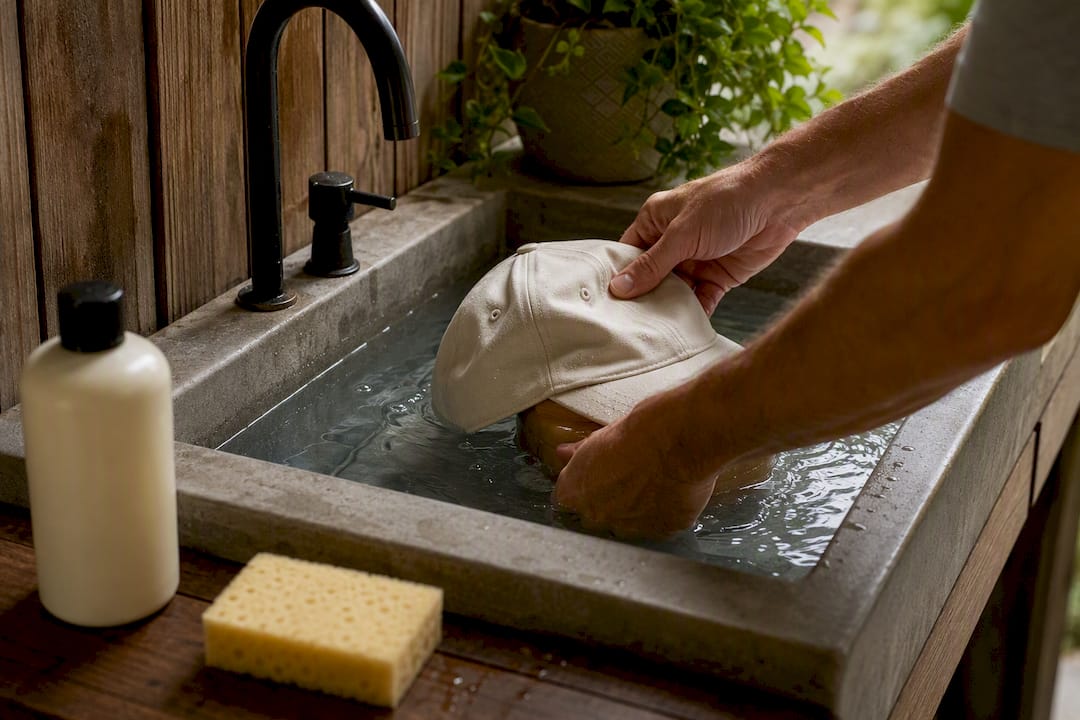
- Fill a basin with cool water and add a small squirt of mild liquid detergent, roughly a teaspoon per litre. Mix until it’s just slightly foamy, not soapy.
- Submerge the hat and let it soak for 15 to 30 minutes. This loosens sweat, oil, and dirt without any scrubbing.
- Dip your toothbrush in the solution and gently brush the sweatband, the underside of the brim, and any embroidered logos. Work in small circles rather than back-and-forth strokes, which can fray thread.
- Rinse under cool running water until no suds remain. Squeeze gently, never wring or twist.
- Blot with a microfiber towel to pull out excess moisture before moving to the drying stage.
Spot-cleaning for smaller marks:
- Mix a paste of baking soda and a few drops of mild detergent for a thicker, targeted treatment.
- Apply directly to the stain or grime spot with your fingertip or a cloth.
- Scrub gently with the toothbrush, keeping extra care near embroidered logos and stitched trims where thread can loosen.
- Wipe away with a damp cloth and let air-dry.
If the care label allows machine washing (this rules out most wool, straw, or cardboard-brim hats), here’s the safer version:
- Place the hat inside a mesh laundry bag, or a dedicated hat cage if you have one, to protect its shape from the drum’s tumbling.
- Run it on a delicate or gentle cycle with cold water only. Cotton and polyester caps generally hold up fine this way, but wool and straw should never go in.
- Remove the hat the moment the cycle ends. Don’t let it sit damp in the machine, it will lose its shape fast.
- Reshape it immediately while the fabric is still pliable, then move to air-drying.
Why you should never put a golf hat in the dishwasher or dryer
Both appliances feel like a shortcut. Both are a fast way to ruin a hat you actually like.
- Dishwashers blast hot water and harsh detergent formulated for dishes, not fabric. The heat and chemical combination fades colour and warps brims, especially on cardboard-reinforced brims that soften and buckle under sustained moisture and heat.
- Dryers apply direct heat that shrinks cotton and wool fibres unevenly, which pulls the crown out of shape. Cardboard brims are particularly vulnerable here. Once that structure cracks or delaminates from heat exposure, it doesn’t go back.
- Bleach and strong solvents strip dye at the molecular level and break down the fibres holding embroidery and trim in place. A hat that’s been bleached once often looks chalky or uneven for good.
None of these methods are shortcuts. They’re one-way trips to a hat that fits worse and looks tired.
How do you clean wool, straw, and cardboard-brim hats?
Not every hat responds to the same treatment, and the biggest mistakes happen when golfers treat a delicate material like a durable one.
Wool needs a wool-safe detergent and cool water only. Keep the soak brief, five to ten minutes rather than the full half hour, and blot rather than brush. Wool fibres swell when wet and can felt or shrink if agitated too much.
Straw hats should never be soaked. Water gets trapped in the woven fibres and causes the straw to split or discolour as it dries slowly from the inside out. Spot-clean only, using a barely damp cloth, and let it dry immediately in open air.
Cardboard brims are the trickiest call because you often can’t tell just by looking. If you’re unsure whether a brim is cardboard, plastic, or stitched fabric, treat it as cardboard and spot-clean only. Full immersion softens the cardboard core permanently, and there’s no reversing that once it’s happened.
Moisture-wicking and coated fabrics hold up well to a light hand-wash, but skip the abrasive scrubbing. A soft brush and minimal detergent protect the fabric’s finish. If the hat has a water-repellent coating that’s started sheeting less than it used to, a fabric reproofing spray can restore some of that performance after cleaning.
How do you get sweat stains out of a golf hat?
Sweat rings and deodorant marks respond to a graduated approach, start gentle, escalate only if needed.
- Fresh sweat stains: Pre-treat the sweatband with diluted mild detergent or a small amount of dish soap. Dawn works well here because it cuts through body oils effectively. Gently scrub with a soft toothbrush and rinse.
- Yellowed or set-in stains: A baking soda paste, applied and left for 15 to 20 minutes before scrubbing, lifts discolouration that a quick rinse won’t touch.
- White or light-coloured hats: An oxygen-based soak, OxiClean is a common choice, can brighten stubborn sweatband stains, but only after you’ve run a colourfastness test. Oxygen bleach is gentler than chlorine bleach, but it can still lighten some dyes.
- When to stop trying: If a stain has been set for months or survived a previous wash attempt, it’s likely permanent. At that point, a professional hat cleaning service is worth the cost over risking further damage with repeated at-home treatments.
Pro Tip: Treat sweat stains within a day or two of a round if you can. The longer sweat salts sit against fabric, the more they set, and a stain that’s a quick wipe on Monday can be a stubborn soak by Friday.
How do you reshape and dry a golf hat properly?
Drying is where most golfers undo all their careful washing. Here’s the sequence that actually preserves shape.
- Pat the hat down with a microfiber towel to remove surface moisture, don’t rub.
- Stuff the crown loosely with a rolled towel, or set it on a bowl or hat form, to hold its rounded shape while it dries.
- Place it somewhere with good airflow, away from direct sunlight and away from heaters or vents. UV and direct heat both fade colour and can warp brims as they dry unevenly.
- A small fan aimed nearby speeds up drying without adding heat, cutting drying time meaningfully compared to still air.
- While the brim is still slightly damp, gently reshape it with your hands to the curve you want. This is your window, once fully dry, the fibres lock into whatever shape they’re in.
If a brim has already warped, rewetting it slightly with warm (not hot) water and reshaping while pliable can often bring it back. A fully dried, structurally cracked cardboard brim usually can’t be recovered, which is exactly why that material needs the spot-clean-only rule from the start.
How often should you clean a golf hat?
The best hat care happens between washes, not during them. A few small habits do most of the heavy lifting.
- Use a disposable sweatband liner or a washable fabric insert to catch oil and salt before they reach the hat itself.
- Wipe the inside sweatband with a damp cloth after every round, even when the hat looks clean. This single habit reduces odour buildup and cuts down how often you need a full clean.
- Rotate between two or three hats rather than wearing the same one every round, giving each one time to fully air out.
- Store hats on a head-shaped form or a shelf, never crushed in a bag or bin, to keep the crown’s shape intact.
As a rough guide: wipe the sweatband weekly if you play often, do a full hand-wash monthly, and check for mildew or odour at each seasonal changeover, especially if hats have been stored in a bag or trunk.
Why trust this golf hat care guide?
Plaid Gorilla Golf builds hats, snapbacks and rope hats among them, with construction choices that make this care routine straightforward rather than risky. Rope hats use a stitched fabric brim rather than a rigid cardboard insert, which means they tolerate a gentle hand-wash far better than many traditional structured caps.
Hat construction dictates cleaning method more than brand or price ever will. A stitched fabric brim opens up hand-washing as a safe option. A rigid, unlabeled brim means you spot-clean and stay cautious, regardless of how the hat looks.
Author Mike covers hat construction and fit trends regularly, including deeper looks at why adjustable hats have become a preferred choice for golfers who want a consistent fit through repeated wear and cleaning cycles. That construction knowledge is what shapes the care advice above, matching method to material rather than offering one generic answer for every hat.
What golfers get wrong about cleaning their hats
Most golfers treat every hat like it’s the same object: a cotton shell, a plastic brim, machine-washable if you’re careful. That assumption is where the damage starts. The research backing this guide makes one thing clear: construction determines method, not personal preference or how dirty the hat looks.
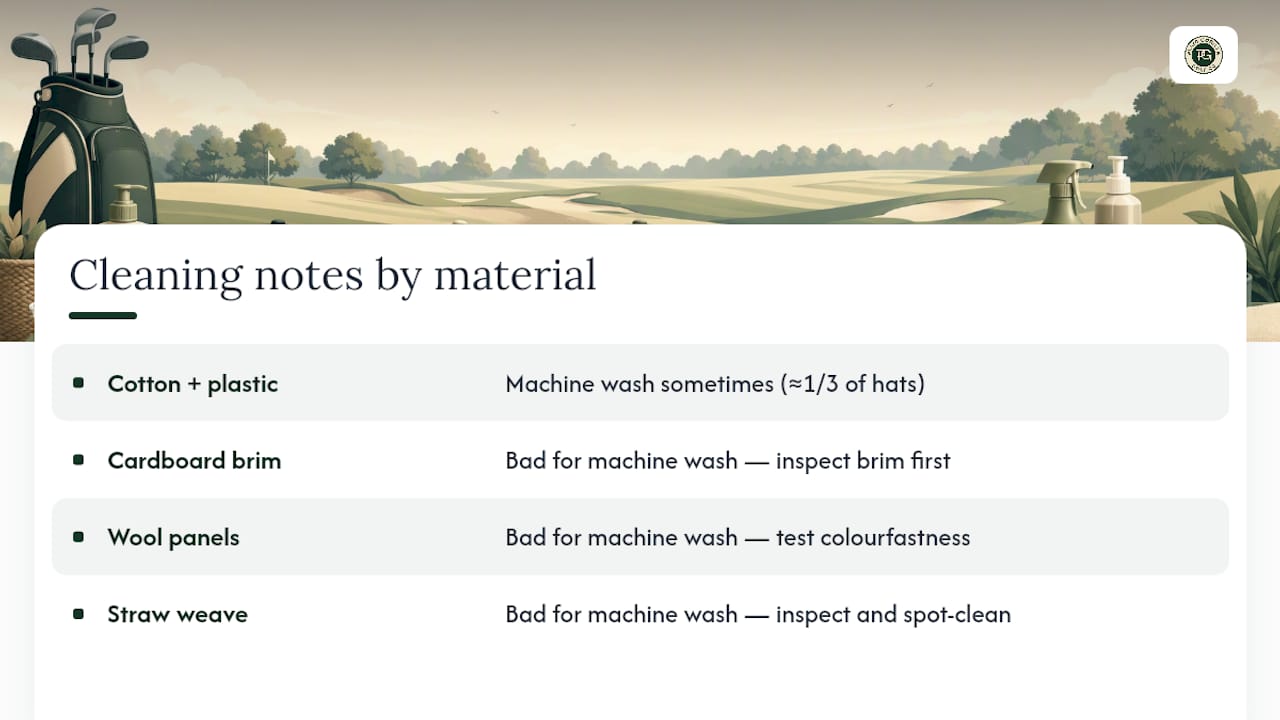
The conventional wisdom, “just throw it in with a load of towels,” is fine advice for maybe a third of the hats out there. It’s a bad bet for anything with a cardboard brim, wool panels, or straw weave, and most golfers can’t tell which category their hat falls into without checking. That’s the gap. People skip the five-second colourfastness test and the thirty-second brim inspection, then act surprised when a $40 hat comes out looking like it survived a flood.
If there’s one priority worth adopting, it’s building the inspection habit before the wash habit. Know what you’re cleaning before you decide how to clean it. Everything else in this guide follows from that first step.
Keep your Plaid Gorilla Golf hat looking sharp for longer
Plaid Gorilla Golf builds hats around materials that respond well to the care steps above, so you’re not guessing every time sweat and sun take their toll. Our rope hats use a soft stitched fabric brim instead of a stiff cardboard core, and our snapbacks use moisture-resistant panelling that holds colour through repeated hand-washes.

If your current hat is past saving, or you just want a fresh one that’s genuinely easy to maintain, The Bogey Kit pairs a Country Club Hat with the Bogey Enthusiast Hoodie for a matched look built for the course and off it. Prefer a rope hat? The Course Kit bundles a Rope Hat with the Prime Hoodie, giving you a lighter, easier-care brim from day one. Browse the current drop and pick the piece that fits your rotation.
Sources
- An Expert Guide on How to Wash a Baseball Cap
- Testing colourfastness — Canadian Conservation Institute
- How to wash a hat (GQ)
- Yes, you can clean most baseball caps at home—here’s how
- How to get sweat stains out of hats (Peloton output)
FAQ
What is the best way to clean golf hats?
Hand-washing in cool water with a mild detergent, followed by a gentle rinse and air-dry on a form, is the safest method for most golf hats and preserves brim shape better than machine or dishwasher cleaning.
Can I use Dawn dish soap to clean my hat?
Yes, a small amount of Dawn or another mild dish soap works well on sweatband stains and general grime, especially when applied with a soft toothbrush and rinsed thoroughly afterward.
How do I clean a hat without ruining it?
Check the care label and brim material first, run a colourfastness test on a hidden spot, then hand-wash rather than machine-wash or dishwasher-wash, since heat and aggressive tumbling are what typically warp brims and fade colour.
Can I use OxiClean on my hat?
An oxygen-based soak like OxiClean can help lift stubborn sweatband stains on white or light-coloured hats, but only after a colourfastness test confirms the dye won’t lighten unevenly.
How often should I deep clean a golf hat?
For regular players, washing a golf hat about once per month with hand-washing tends to work well, complemented by quick sweatband wipes after each round to manage odour and reduce the need for frequent deep cleans.