


Colourfastness is a fabric’s ability to resist fading, bleeding, or transferring colour when exposed to washing, sunlight, friction, and perspiration. For golf clothing, that matters more than most people realise. You’re out on the course for four or five hours, sweating through a shirt under direct UV, then tossing it in the wash. A garment without solid colourfastness will fade fast, bleed onto your other gear, or leave dye marks on your collar and bag strap.
Before you buy, run three quick checks:
- Lab rating: look for a colourfastness score of 4 or higher (on the standard 1–5 scale) for wash, perspiration, light, and rub tests
- Fibre and dye type: solution-dyed polyester holds colour far better under sun and sweat than piece-dyed cotton
- Home crock/wash test: rub a damp white cloth on a hidden seam; if colour transfers, the dye is unfixed
Want gear that's built to last? Shop the hat + hoodie bundles.
Shop Bundles →Table of Contents
- What does colourfastness actually mean?
- Which colourfastness types matter most for golf?
- What affects colourfastness in golf apparel?
- How do labs test colourfastness, and what do scores mean?
- How to check colourfastness at home before first wear
- Care and buying tips to keep your golf colours looking sharp
- Which fabrics hold colour best in golf conditions?
- How Plaid Gorilla Golf approaches colourfastness
- Key takeaways
- Why colourfastness is the most underrated spec in golf apparel
- Plaid Gorilla Golf: bold colour built to last
- Useful sources and standards
- FAQ
What does colourfastness actually mean?
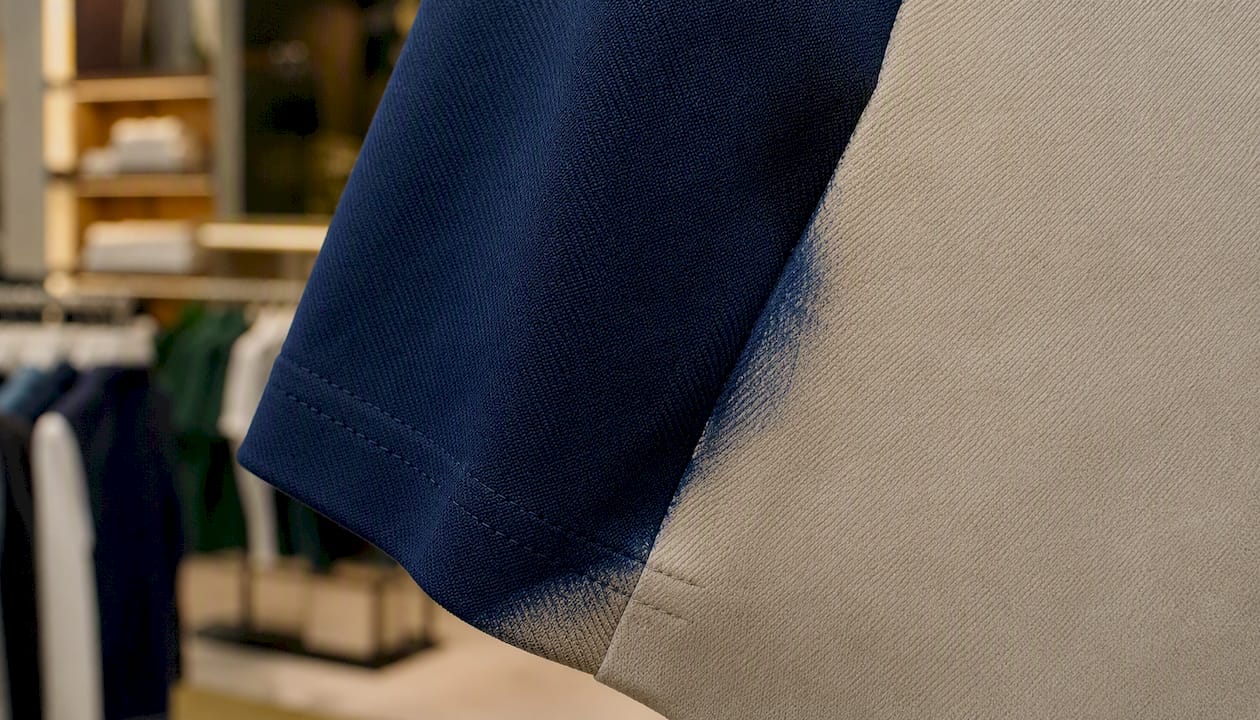
In plain terms, colourfastness describes how well a fabric keeps its original colour. Two distinct failure modes exist, and they’re worth telling apart. Fading is when the garment itself loses colour, usually from UV exposure or repeated washing. Transfer (also called staining or crocking) is when dye migrates from the garment onto another surface, like a white towel, your skin, or a light-coloured shirt.
Technically, colourfastness measures the strength of the dye-to-fibre bond and how well that bond resists external stresses. Labs rate it on a scale of 1 to 5, where 5 means excellent resistance and 1 means significant colour loss or heavy transfer. Brands typically target a score of 4 or higher for premium outdoor sportswear. A polo with low perspiration fastness will leave visible dye marks on your undershirt after use. A high score means you can sweat through it, wash it, and wear it again without visible change.
The 1–5 scale applies separately to each test type, so a shirt can score 5 on washing and only 3 on perspiration. That’s why checking multiple scores, not just one, gives you the full picture.
Which colourfastness types matter most for golf?
Golf puts clothing through a specific set of stresses. These four test categories map directly to what happens on the course:
- Colourfastness to washing (AATCC 61 / ISO 105-C06): Every golf shirt gets washed after a round. Poor wash fastness means the colour dulls after a handful of cycles. This test simulates repeated laundering and is the baseline check for any apparel.
- Colourfastness to rubbing/crocking (AATCC 8 / ISO 105-X12): Collars rub against your neck, bag straps drag across your shoulders, and seams press against your skin for hours. Failure here shows up as dye transfer onto light fabrics or skin, especially on dark-coloured hats and hoodies.
- Colourfastness to light (AATCC 16 / ISO 105-B02): A four-hour round in July means serious UV exposure. Low lightfastness turns a deep forest green into a washed-out olive within a season. This test is especially relevant for bold golf apparel with saturated colours.
- Colourfastness to perspiration (AATCC 15 / ISO 105-E04): Sweat is the toughest test for golf clothing. ISO 105-E04 tests both acidic and alkaline sweat formulations, because human sweat chemistry shifts during exercise. AATCC 15 focuses on a strong acidic evaluation. Both matter for any shirt worn close to skin during physical activity.
A garment that scores well across all four is genuinely built for the course.
What affects colourfastness in golf apparel?
Four manufacturing variables determine whether a garment holds its colour or doesn’t.
Fibre chemistry and dye class
Fibre chemistry and dye class are the primary determinants of colourfastness outcomes. Polyester bonds best with disperse dyes, which penetrate the fibre under heat and pressure. Cotton requires reactive dyes, which form covalent bonds with the fibre. When the wrong dye class is used for a given fibre, the bond is weak and failure is almost guaranteed. Nylon accepts both acid dyes and some reactive dyes, but needs careful fixation.
Dye fixation and finishing
Even the right dye can fail if fixation is incomplete. Reactive dyes on cotton, for example, produce hydrolysed dye as a byproduct. If that loose dye isn’t removed through thorough hot-soaping and rinsing, it sits on the fabric surface and bleeds immediately when it contacts sweat. Finishing steps like hot-soaping and reduction clearing are what separate premium golf apparel from budget alternatives.
Fabric construction
Tighter weaves and knits physically protect dye molecules from abrasion and UV. A loosely knit cotton jersey exposes more fibre surface to friction and light than a tight performance knit, which is one reason performance fabrics tend to outlast casual cotton in outdoor conditions.
Typical fastness profiles by fibre
| Fibre | Typical fastness profile |
|---|---|
| Solution-dyed polyester | Excellent wash, light, and perspiration fastness; colour locked in during extrusion |
| Piece-dyed polyester (disperse dyes) | Very good when correctly heat-set; watch for sublimation on some prints |
| Cotton (reactive dyes) | Good to very good with thorough finishing; variable without it |
| Nylon | Moderate to good; sensitive to UV without UV stabilisers |
| Cotton/polyester blends | Depends on dye system used for each fibre component |
Pro Tip: On a product page or care tag, phrases like “solution-dyed,” “reduction-cleared,” or “hot-soaped” signal that the manufacturer took finishing seriously. Their absence doesn’t mean failure, but their presence is a genuine quality marker.
How do labs test colourfastness, and what do scores mean?
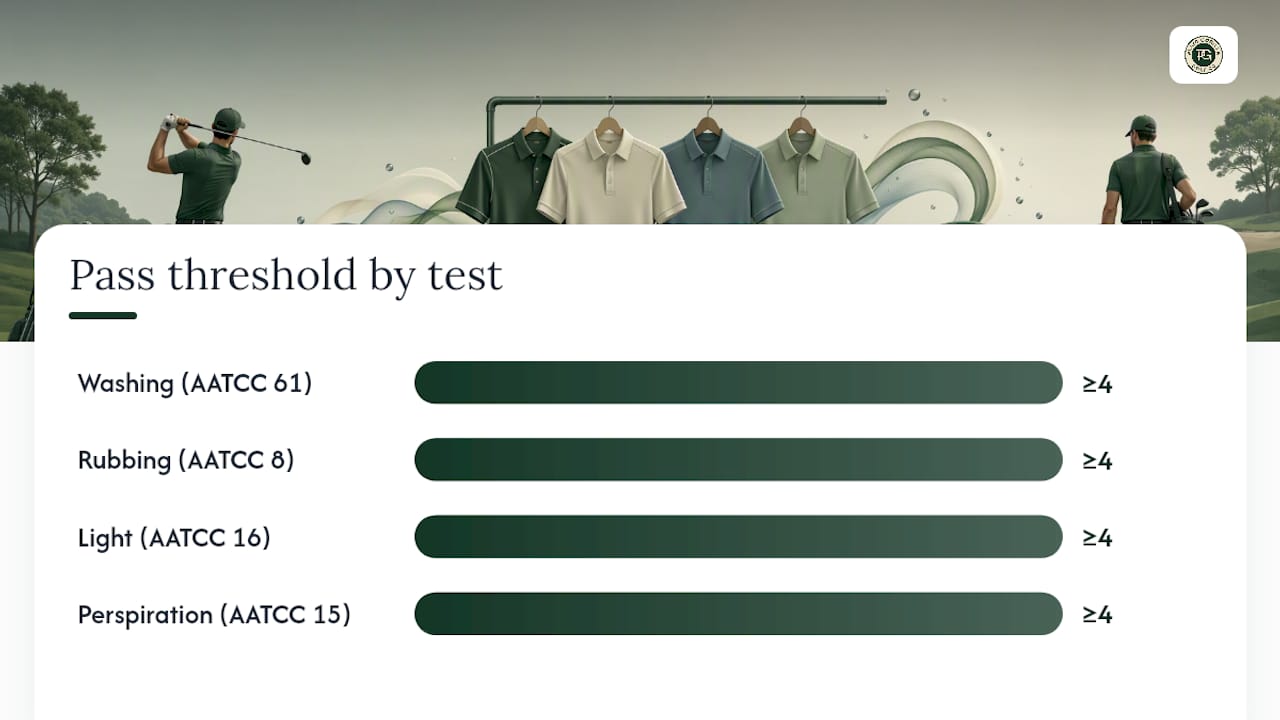
Buyers commonly request four major tests, and brands targeting premium outdoor sportswear typically set a minimum threshold of 4 out of 5 for each. Here’s how those tests map to real-world golf stresses:
| Test | Standard | What it measures | Typical pass score (premium golf apparel) |
|---|---|---|---|
| Colourfastness to washing | AATCC 61 / ISO 105-C06 | Colour change and staining after simulated laundering | ≥4 |
| Colourfastness to rubbing | AATCC 8 / ISO 105-X12 | Dry and wet dye transfer from friction | ≥4 |
| Colourfastness to light | AATCC 16 / ISO 105-B02 | Colour change after UV exposure | ≥4 |
| Colourfastness to perspiration | AATCC 15 / ISO 105-E04 | Colour change and staining under acidic/alkaline sweat | ≥4 |
A score below 4 on any of these tests is borderline for everyday wear and below acceptable for a garment you’ll wear through a full round in summer heat. When you’re buying bold colours or limited-edition prints, ask the retailer for a third-party lab certificate from a testing body like Intertek or SGS. A legitimate test report will show the test method, specimen description, numerical scores, test date, and the lab’s accreditation. If a brand can’t produce one, that tells you something.
How to check colourfastness at home before first wear
You don’t need a lab to catch obvious problems. These two quick checks take under five minutes and can save your other gear from a dye disaster.
- Crock test: Dampen a white cotton cloth or paper towel. Rub it firmly against a hidden seam, hem, or interior panel of the garment for about 10 seconds. Visible colour transfer on the cloth means the dye is poorly fixed and will likely bleed onto your skin or other clothing during wear.
- Home wash test: Fill a small basin with cold water and a drop of mild detergent. Submerge a small, inconspicuous section of the garment (or a clipped thread from the hem) for a few minutes. Remove it and blot onto a white cloth. Any colour on the cloth signals bleeding risk in a full wash cycle.
- Interpret the results: Light transfer on the crock test may be acceptable for some dark fabrics; heavy transfer is a clear red flag. Any visible bleed on the wash test warrants caution. Wash the garment separately the first time, and if transfer is significant, contact the retailer and request a lab report.
- Safety notes: Never use bleach unless the care label explicitly permits it. Avoid hot water on synthetic prints, as heat can trigger thermomigration, where disperse dyes move through the fabric and surface in unexpected places.
Care and buying tips to keep your golf colours looking sharp
Good colourfastness starts at the factory, but your laundry habits either protect it or undo it.
Washing:
- Turn garments inside out before washing to reduce surface abrasion
- Use cold water and a gentle cycle; heat accelerates dye breakdown
- Choose a colour-safe detergent without optical brighteners, which can alter perceived colour over time
- Wash darks and lights separately, especially for the first few washes
Drying and storage:
- Avoid drying printed or bold-coloured garments in direct, prolonged sunlight; hang them in shade or dry flat indoors
- Store golf apparel away from strong UV sources (a sunny car boot is a common culprit)
Shopping checklist for choosing golf clothing that lasts:
- Ask whether the fabric is solution-dyed or piece-dyed
- Request lab scores for perspiration and lightfastness, especially for bold or dark colours
- Look for a high rating on wash, crock, light, and perspiration tests
- Ask customer service: “Has this print been hot-soaped or reduction-cleared?” A brand that knows the answer is one that cares about finishing
Which fabrics hold colour best in golf conditions?
When you’re shopping for high-performance golf fabrics, the dyeing method matters as much as the fibre itself.
Solution-dyed polyester is the gold standard for outdoor golf apparel. Colour is added during fibre extrusion, before the fabric is even woven, which means dye molecules are locked inside the fibre rather than sitting on the surface. The result is excellent resistance to UV, washing, and sweat. For bold prints and saturated colours worn through a Canadian summer, this is the material to prioritise.
Piece-dyed polyester with disperse dyes performs very well when the heat-setting process is done correctly. The risk is sublimation on certain printed designs, where heat causes dye to migrate. A reputable manufacturer controls this through precise temperature management.
Cotton with reactive dyes is comfortable and breathable, but its fastness is more variable. Cotton’s colourfastness depends heavily on finishing chemistry and consumer care. A well-finished cotton golf shirt can score 4+ across the board; a poorly finished one will fade and bleed within a season. Always ask for test reports on cotton pieces with bold colours.
Indigo and natural dyes carry the highest risk of crocking and bleed. Indigo in particular is notorious for surface-level dye that transfers easily onto light fabrics. If you own indigo-dyed golf apparel, wash it separately and keep it away from light-coloured pieces until you’ve confirmed it’s colourfast.
Pro Tip: For any golf garment you’ll wear in heavy sun or sweat, solution-dyed synthetics are the safest bet. The colour is physically part of the fibre, not a coating that washes or sweats away.
How Plaid Gorilla Golf approaches colourfastness
At Plaid Gorilla Golf, bold colour is the whole point. Every piece we design is meant to stand out on the course and hold up round after round. That means colourfastness isn’t a footnote in our process; it’s a core quality requirement.
Here’s how that shows up in our products:
- Champagne Tees Rope Hat – Ponderosa Pine: The deep forest green colourway is chosen for its UV stability. Care guidance recommends hand wash or gentle machine wash in cold water, and air drying away from direct sun to preserve the colour depth.
- Country Club Snapback – Navy/Cloud White: The contrast between navy and cloud white demands tight rub fastness control. Any dye migration between panels would be immediately visible. We recommend spot cleaning and air drying for this piece.
- The Bogey Kit — Country Club Hat & Bogey Enthusiast Hoodie: As a bundle, both pieces are designed to be worn together and washed with consistent care. Cold wash, inside out, gentle cycle. The hoodie’s fleece construction benefits from air drying to maintain both colour and fabric structure.
- Bogey Enthusiast Hoodie – Pine: The pine colourway is a saturated, rich tone that requires solid perspiration and wash fastness to stay true. Care instructions are listed on each product page.
Pro Tip: Each Plaid Gorilla Golf product page includes care instructions. If you want to know more about the finishing standards behind a specific piece, reach out to our customer service team directly. We’re happy to share what we know.
Key takeaways
Colourfastness in golf clothing comes down to dye-to-fibre bond strength, and a score of 4 or higher across wash, perspiration, light, and rub tests is the minimum worth buying for outdoor play.
| Point | Details |
|---|---|
| Target a score of 4 or higher | Look for lab ratings of 4 or higher on wash, perspiration, light, and crocking tests before buying bold golf apparel. |
| Prefer solution-dyed synthetics | Solution-dyed polyester locks colour into the fibre during extrusion, giving the best UV and sweat resistance for outdoor golf. |
| Run a home test first | A damp white cloth rubbed on a hidden seam reveals unfixed dye before it transfers onto your skin or other gear. |
| Request lab certificates | For limited-edition or bold-coloured pieces, ask for a third-party test report from a lab like Intertek or SGS. |
| Plaid Gorilla Golf | Each product includes care guidance; contact customer service for finishing and testing details on specific pieces. |
Why colourfastness is the most underrated spec in golf apparel
Most golfers obsess over fit, stretch, and moisture-wicking. Almost nobody asks about colourfastness until their favourite navy hoodie turns grey after six washes or leaves a dye ring on their white polo collar.
The conventional wisdom is that premium price equals premium quality. That’s not always wrong, but it’s incomplete. A garment can use expensive fabric and still fail on perspiration fastness if the finishing process was rushed. Hot-soaping and reduction clearing aren’t glamorous, but they’re what determine whether a bold print survives a Canadian summer on the course or doesn’t. The brands that know their finishing chemistry are the ones worth trusting with your wardrobe.
There’s also a practical argument for caring about this beyond aesthetics. A shirt that bleeds dye onto your skin during a hot round isn’t just an annoyance; it’s a sign that loose, unfixed dye is in direct contact with you for hours. That’s a quality control failure, not a minor cosmetic issue.
The fix is simple: ask the right questions before you buy, run a quick home test before the first wash, and choose solution-dyed synthetics when UV and sweat are part of the equation. Golf on your terms means gear that keeps up.
Plaid Gorilla Golf: bold colour built to last
Limited drops mean nothing if the colour fades by the third round. Plaid Gorilla Golf designs each piece with colourfastness as a non-negotiable, so the forest greens, navies, and cream tones you see in the drop are the same ones you’re wearing a year from now.

The Bogey Kit pairs the Country Club Hat and Bogey Enthusiast Hoodie in colourways chosen for their UV and wash stability. The Champagne Tees Rope Hat in Ponderosa Pine brings that deep green to headwear with care instructions built right into the product page. Every piece in our lineup comes with specific washing and drying guidance, and our team can walk you through the finishing standards behind any item. View the full product care details on each product page, or contact us directly to request information on the testing standards behind your next drop.
Useful sources and standards
When you want to verify test methods, read a lab report, or request third-party testing for a garment, these are the authoritative references to know:
- Intertek — colourfastness testing
- Skychem — what is colour fastness in textiles
- TextileEdu — ultimate guide to colour fastness to perspiration (2026 edition)
- Testex — colour fastness: the ultimate guide
- Ninghow — fabric shrinkage test: buyers’ colourfastness checks
- Better Homes & Gardens — what is colourfastness and how to test for it
- Cotton Incorporated — colourfastness of cotton textiles (technical report)
A credible lab report will always show the specific test method used, the numerical rating for each criterion, and the date of testing. Any report missing those elements should be treated with scepticism.
FAQ
How do you know if clothing is colourfast?
Run a quick home crock test: dampen a white cloth and rub it on a hidden seam. No visible colour transfer means the dye is well-fixed. For certainty, ask the brand for a third-party lab certificate showing scores of 4 or higher on AATCC or ISO tests.
What is the difference between colourfast and non-colourfast fabric?
Colourfast fabric retains its original colour through washing, UV exposure, friction, and perspiration. Non-colourfast fabric fades, bleeds onto adjacent textiles, or transfers dye to skin, typically because the dye-to-fibre bond is weak or finishing was incomplete.
What fabrics are not colourfast?
Indigo-dyed and naturally dyed fabrics carry the highest risk of crocking and bleed. Poorly finished cotton with reactive dyes can also fail quickly. The risk isn’t the fibre itself but the dye class and finishing quality.
Is polyester a colourfast fabric?
Polyester is generally very colourfast, especially when solution-dyed or correctly heat-set with disperse dyes. Solution-dyed polyester in particular locks colour into the fibre during extrusion, giving excellent resistance to UV, washing, and sweat, making it a strong choice for outdoor golf apparel.