


Spot-clean with cool water and a mild, non-bleaching detergent first. That combination lifts most fresh sweat stains without damaging fabric or structure. Skip hot water, bleach, and the dryer on structured or delicate hats, since heat warps brims and sets protein stains permanently. Always test colourfastness on a hidden spot, then reshape the crown and air-dry away from direct heat.
TL;DR:
- Fresh sweat stains can often be removed with a quick rinse, mild detergent application, and reshaping, but older or darker stains may only fade over time.
- Different hat materials require specific treatments; cotton and polyester blends tolerate hand-washing, while straw, wool, and leather need careful, material-appropriate cleaning methods.
- Stubborn salt and oil stains respond well to baking soda paste or vinegar, and peroxide can be used on light fabrics but risks bleaching colored caps.
- Avoid machine washing structured or stiff-brim hats, and never tumble-dry, as heat causes warping and permanent damage.
- Proper drying and reshaping, along with preventative habits like rotating hats and using moisture-wicking linings, prolong hat cleanliness and appearance.
Table of Contents
- How do you remove hat sweat stains fast?
- Which cleaning method fits your hat’s material?
- What actually gets sweat stains out of a hat?
- How do you get rid of hat odour without damaging it?
- Can you machine wash a hat, and when should you avoid it?
- How do you dry and reshape a hat after cleaning?
- How can you prevent sweat stains before they start?
- What does Plaid Gorilla Golf recommend for performance fabrics?
- Most guides skip the material question. That’s the mistake.
- Pick a hat built to handle sweat better in the first place
- Sources
- FAQ
How do you remove hat sweat stains fast?
Fresh stains respond to a quick, low-risk routine before you reach for anything stronger.
- Blot and rinse the stained area with cool water to lift surface salt and oil before it sets.
- Dilute a mild detergent in water and work it into the sweatband with a soft toothbrush, using small circles instead of hard scrubbing.
- Rinse the sweatband thoroughly so no soap residue stays behind to attract more oil later.
- Reshape the crown and brim, then air-dry the hat completely out of direct sunlight.
- Repeat the treatment once if the stain is still visible. Some older marks fade rather than vanish entirely, and that’s a realistic outcome even with correct technique, according to GQ’s hat cleaning guide.
This sequence handles the sweat, salt, and light oil that build up after a normal round or a hot commute. Anything older or darker usually needs a stronger approach, covered below.
Which cleaning method fits your hat’s material?
Not every cap tolerates the same treatment, and guessing wrong is how a $40 hat ends up misshapen or discoloured. Start by checking the care tag; the symbols there tell you exactly what water temperature and drying method the manufacturer approves, per Canada’s official apparel care symbol guide.
- Cotton and polyester blends tolerate hand-washing in cool water and mild agitation, making them the easiest to treat at home.
- Wool needs spot-cleaning only. Submerging a wool cap risks shrinking or felting the fibres.
- Straw should never get soaked. Use a barely damp cloth and let it dry flat.
- Leather trims and sweatbands need a leather-safe wipe, not water or detergent soaking.
- Structured brims hold buckram or plastic inserts that warp under heat, so spot-clean only and never machine-wash.
Before treating any hat, dab a diluted detergent solution on an inside seam and wait a few minutes to confirm the colour holds. Hats with a moisture-wicking liner or a sealed barrier behind the sweatband resist staining far better in the first place, since the barrier keeps oil and salt from soaking into the crown fabric.
What actually gets sweat stains out of a hat?
Different stains call for different chemistry, and working from mild to strong keeps you from damaging fabric you didn’t need to touch.
- Start with diluted mild detergent. Mix a small amount with warm water and work it into the stain with a soft toothbrush. A mild dish soap such as Dawn breaks down oily residue effectively when diluted and rinsed thoroughly, which makes it a reasonable household stand in for a proper detergent.
- Move to a baking soda paste for salt and oil rings. Mix baking soda with a little water into a paste, apply it to the ring, and let it sit for 15 to 20 minutes before rinsing. Salt crusts and oxidized oils are the two most common culprits behind white and yellow marks on hats, and baking soda handles both without bleaching colour.
- Try white vinegar for stubborn salt deposits. A light vinegar and water solution dissolves crusted salt that detergent alone leaves behind. Rinse well afterward since vinegar’s smell lingers if it isn’t fully flushed out.
- Reserve hydrogen peroxide for light, washable fabrics only. Peroxide oxidizes yellowed sweat stains effectively on white or pale caps, but it can bleach dye right out of coloured or dark fabric. Spot-test on an inside seam first, and skip it entirely on anything you’re not willing to risk.
- Let treatments sit, then rinse fully. Most solutions need 10 to 20 minutes of contact time. Rinse with cool water until no residue or smell remains before moving to drying.
Pro Tip: Enzyme-based cleaners break down protein residue in sweat more thoroughly than plain soap because they target the organic compounds directly, which makes them worth trying on an older stain that regular detergent already failed to shift.
How do you get rid of hat odour without damaging it?
Stains and smell aren’t the same problem, and treating one doesn’t automatically fix the other.
- Sprinkle baking soda inside the crown and let it sit dry overnight to absorb trapped odour before you brush it out.
- Use an enzyme-based spray according to the label directions. OxiClean’s approach to hat stains recommends oxygen-based cleaners for exactly this kind of stubborn, bonded-in smell, provided you spot-test first.
- Air the hat out fully in a ventilated spot rather than a closed drawer or gym bag.
- Skip scented sprays or a blast from a hair dryer. Masking odour with fragrance or heat doesn’t remove the bacteria causing it, and heat can set the very stains you just treated.
- If the smell persists after two or three treatment rounds, a professional hat cleaner is worth the cost before you write the cap off entirely.
Can you machine wash a hat, and when should you avoid it?
A gentle cold cycle works for unstiffened cotton or twill caps without any internal structure, but that’s a narrow exception, not a default option.
- Use a mesh laundry bag or a hat cage to stop the brim from bending or creasing against the drum.
- Never tumble-dry a hat under any circumstance; the heat warps brims and shrinks fabric unevenly.
- Keep structured caps with buckram brims out of the washing machine entirely, and out of the dishwasher too, since dishwasher heat cycles do the same damage as a hot dryer.
- Hot water is the real enemy here. It sets protein-based sweat stains permanently and can warp a stiff brim beyond repair, which is exactly why cool water stays the standard recommendation.
How do you dry and reshape a hat after cleaning?
Drying is where a lot of otherwise well-cleaned hats get ruined, usually from rushing the shape back into place.
- Stuff the crown loosely with a small towel or a balled-up T-shirt, or set it over a jar, to hold its form while it dries.
- Pat down excess moisture with a clean towel first, then reshape the brim while the fabric is still slightly damp and pliable.
- Dry away from direct sunlight and away from radiators or space heaters, both of which fade colour and can shrink synthetic fibres unevenly.
- Give it a full day or two before wearing again. Rushing dry time is the most common reason a reshaped brim doesn’t hold.
For a closer look at jar and towel forming techniques, Plaid Gorilla Golf’s guide on restoring hat shape at home walks through the process step by step.
How can you prevent sweat stains before they start?
Prevention beats treatment every time, and most of it comes down to habits rather than products.
- Rotate between two or three hats instead of wearing the same one every round, giving fabric time to fully dry between wears.
- Wipe the sweatband down with a damp cloth after heavy use instead of letting sweat sit and dry into the fibres overnight.
- Use a washable sweatband liner or insert, which catches oil and salt before they ever reach the hat itself.
- Choose moisture-wicking linings for hats you wear during workouts or hot rounds, since they pull sweat away from fabric instead of letting it pool at the band.
- Store hats where air can circulate rather than stacked in a closed bag or bin.
What does Plaid Gorilla Golf recommend for performance fabrics?
Performance fabrics and structured caps need a different touch than a basic ball cap, and Mike’s advice on this is straightforward: treat moisture-wicking liners gently, since aggressive scrubbing breaks down the fine mesh faster than regular cotton. For structured crowns, reshape while damp and never force a brim back into curve when it’s fully dry. Plaid Gorilla Golf’s guides on cleaning golf hats and restoring hat shape cover the fabric-specific steps and shaping techniques in more detail than a general cleaning routine can.
Most guides skip the material question. That’s the mistake.
The advice you’ll find most often treats every hat the same: soak it, scrub it, maybe toss it in the wash. That works fine for a plain cotton cap and fails badly on a structured crown or a straw brim. The material determines the method, not the stain.
What gets underrated is the sweatband itself. A hat with a sealed, moisture-wicking liner rarely develops the deep salt and oil staining that ruins a crown, while a cheap unlined band saturates fast and stains permanently within a season or two. If you’re buying a new hat anyway, that construction detail matters more than colour or logo.
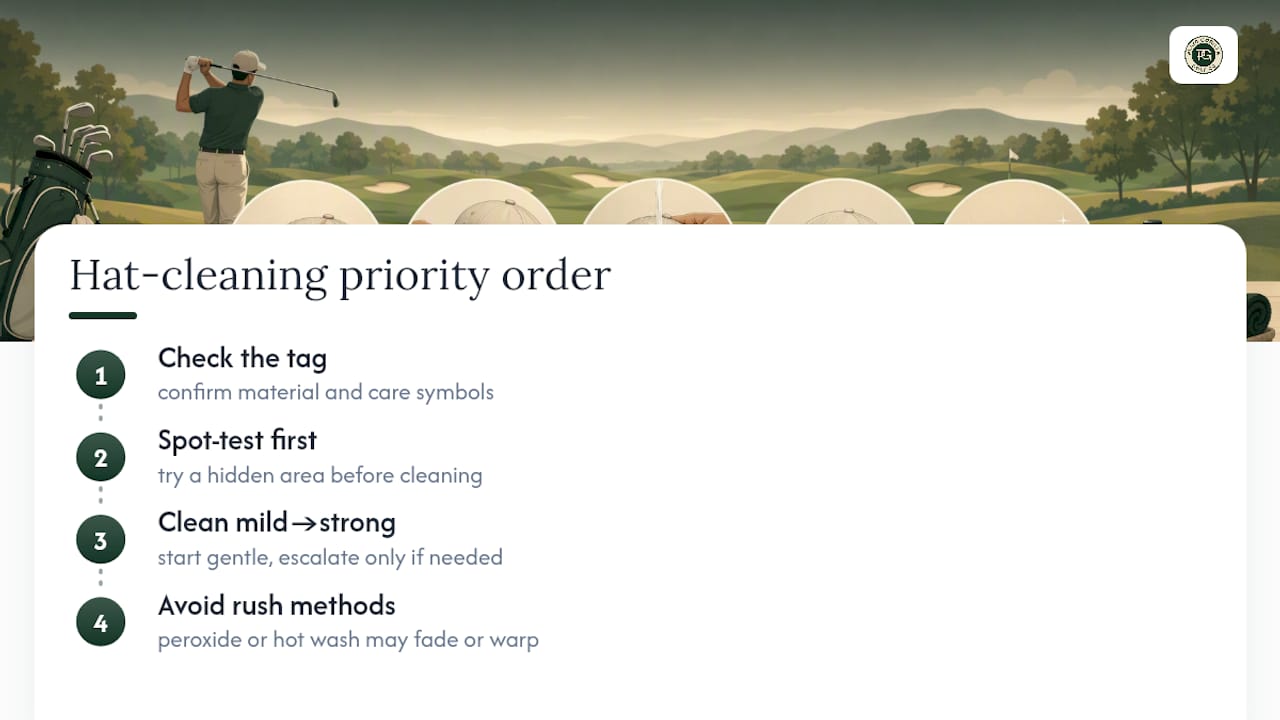
My take on priority order: check the tag, spot-test, then clean mild to strong. Skip straight to peroxide or a hot wash because you’re in a hurry, and you’ll likely trade a sweat stain for a faded patch or a warped brim. Patience with the sequence is what actually saves the hat.
— Mike
Pick a hat built to handle sweat better in the first place
Some stains fade with treatment. Others just remind you the hat was never built with sweat in mind. Some caps are designed with moisture-wicking linings and sturdier stitched sweatbands to prevent oil and salt from soaking straight through to the crown fabric like a basic promotional cap.

If your current hat is past saving, or you just want something that holds up better through a full golf season, the Champagne Tees Rope Hat in Ponderosa Pine and the Country Club Snapback in Navy/Cloud White both use construction built for easier care and longer wear. Want gear that matches, too? The Ponderosa Pine Set pairs the rope hat with the Bogey Enthusiast hoodie as a bundle, and The Club Kit combines the snapback with the Prime Hoodie for the same easy-care approach head to toe. Browse the current drop and pick the piece that fits your rotation.
Sources
- Guide to apparel and textile care symbols — Innovation, Science and Economic Development Canada
- How to wash a hat — GQ
- How to clean a hat — OxiClean
FAQ
Can you get old sweat stains out of a hat?
Older stains often improve significantly with baking soda paste or a spot-test hydrogen peroxide treatment, but some set-in discolouration only fades rather than disappearing completely once it’s bonded to the fibres.
How do I remove sweat stains from my cap?
Spot-clean the sweatband with diluted mild detergent and a soft toothbrush, rinse thoroughly, then reshape and air-dry away from heat; stubborn marks respond to a baking soda paste or a light peroxide treatment on washable, light-coloured fabric only.
Does Dawn dish soap remove sweat stains from hats?
Diluted Dawn dish soap breaks down oily residue in sweat effectively and works as a practical pretreatment, but it needs thorough rinsing afterward to avoid leaving soap film behind.
Why do I have white sweat stains on my hat?
White crusting comes from salt in sweat drying on the fabric, while yellow or brown marks are usually oxidized oils. Both respond to the same cool-water and baking-soda approach, just with different sitting times.
How do I stop sweat stains from coming back?
Rotate between two or three hats, wipe the sweatband after heavy wear, and choose a hat with a moisture-wicking lining so oil and salt don’t saturate the crown fabric between cleanings.