


A snapback is a hat with a flat brim, a high, structured front crown, and a plastic snap closure at the back that makes it adjustable to fit most head sizes). Its roots trace back to the rounded-top caps worn by 19th-century baseball teams like the Brooklyn Excelsiors, long before the snap closure or the flat brim ever existed.
Three moments define the hat’s arc from ballpark to sidewalk:
- Late 1800s: baseball teams standardize on a soft, rounded cap as part of official uniforms.
- Mid-20th century: manufacturers stiffen the crown and shorten the peak, setting up the structured six-panel shape.
- 1980s and 1990s: hip-hop artists and sports leagues turn the snapback into a cultural signal, not just a uniform piece.
What follows is the full timeline, a breakdown of what actually makes a snapback a snapback, its cultural high point, its fall and comeback, and where it stands in 2026.
Key Takeaways
The snapback survived from 19th-century baseball caps to 2026 streetwear because its adjustable closure solved a real sizing problem while its oversized front panel doubled as a branding canvas.
| Point | Details |
|---|---|
| Origin traces to baseball | Early rounded-top caps worn by teams like the Brooklyn Excelsiors set the template baseball caps still follow. |
| Snap closure solved sizing | The adjustable plastic snap let one cap size fit a wide range of heads, cutting retail complexity. |
| 1990s built its identity | Hip-hop artists and sports licensing deals turned team-branded snapbacks into mainstream culture. |
| Decline gave way to revival | Fitted caps overtook snapbacks in the 2000s, but nostalgia and streetwear brought them back. |
| Plaid Gorilla Golf modernizes the shape | The Country Club Snapback applies the same adjustable, structured design to bold, limited-run golf apparel. |
Table of Contents
- The complete snapback history timeline
- What makes a hat a snapback?
- How hip-hop and sports merchandising made snapbacks iconic
- Did snapbacks ever go out of style?
- Snapback vs strapback vs fitted vs trucker: what’s the difference?
- What materials go into a snapback, and how do you care for one?
- How team logos and streetwear turned snapbacks into identity markers
- Why snapbacks still make sense in 2026
- Notable brands and designers who shaped the snapback
- How different regions and communities have adopted the snapback
- How celebrities and media outside sports boosted snapback visibility
- What the history actually tells you about wearing one today
- Get a snapback built with that same history in mind
- Sources
- FAQ
The complete snapback history timeline
The story of snapback history is really two stories stitched together: how the baseball cap was engineered, and how it was culturally repurposed. Both threads start in the same place.
Late 19th century. Baseball clubs needed uniform headwear that stayed on during a sprint to first base. Early rounded-top caps, worn by clubs including the Brooklyn Excelsiors, established the basic template: a crown, a brim, and team identification stitched or pinned to the front. These caps were soft, unstructured, and nothing like the rigid shape people recognize today.
Early to mid-20th century. Manufacturing shifted. Cap makers began using internal stiffeners, including latex, to give the crown more shape and hold, a change that pushed the silhouette away from the floppy Excelsiors-era cap toward something firmer and more uniform in profile. Around this period, the six-panel construction that still defines most snapbacks today started to standardize across manufacturers, with New Era’s panel work playing a central role in locking in that shape.
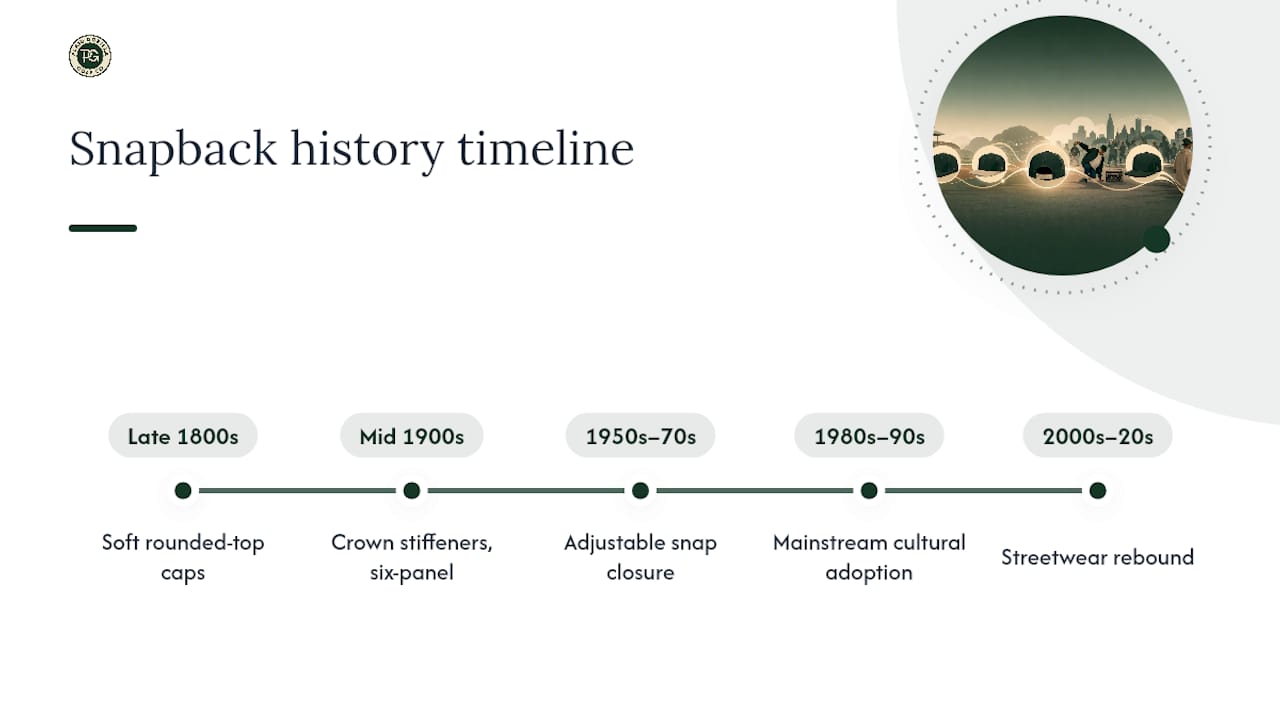
1950s through 1970s. The adjustable back strap emerged as a practical fix for a real problem: fitted caps required exact sizing, which meant more inventory and more fitting hassle for retailers and teams alike. The plastic snap closure solved that with one adjustable band that could stretch across a wide range of head sizes.
1980s and 1990s. This is the pivot point. Snapbacks stopped being purely functional sports gear and became mainstream cultural objects, driven by hip-hop artists, televised sports, and aggressive licensing deals between leagues and apparel makers.
2000s through 2020s. Popularity dipped as fitted caps and other silhouettes took over, then rebounded hard through streetwear, nostalgia culture, and designer collaborations that reintroduced the flat brim to a new generation.
What makes a hat a snapback?
Strip away the branding and colourways, and every snapback shares the same core anatomy:
- A plastic snap closure at the back, usually with multiple adjustment notches
- A flat, unstructured brim (as opposed to the curved brim on many fitted caps)
- A high-profile, structured front crown
- Five or six panels, most often built from wool blends, cotton, or polyester
- A large front panel designed for embroidery or patches
Construction details vary by maker, but most snapbacks add eyelets for ventilation and a sweatband stitched along the inner crown for comfort during long wear. The front panel is oversized compared to older ballcaps specifically because it doubles as a branding canvas, which is why team logos and streetwear graphics sit front and centre rather than off to the side.
Pro Tip: A taller crown and flatter brim read as bolder and more streetwear-leaning, while a lower profile and slightly curved brim feel closer to a traditional ballcap. If you’re deciding how a hat should sit, try it on and check where the brim falls relative to your eyebrows. Too low and it reads sporty, too high and it reads oversized.
How hip-hop and sports merchandising made snapbacks iconic
The 1990s did more for snapback history than any single design change. Two forces worked together: music and merchandising.
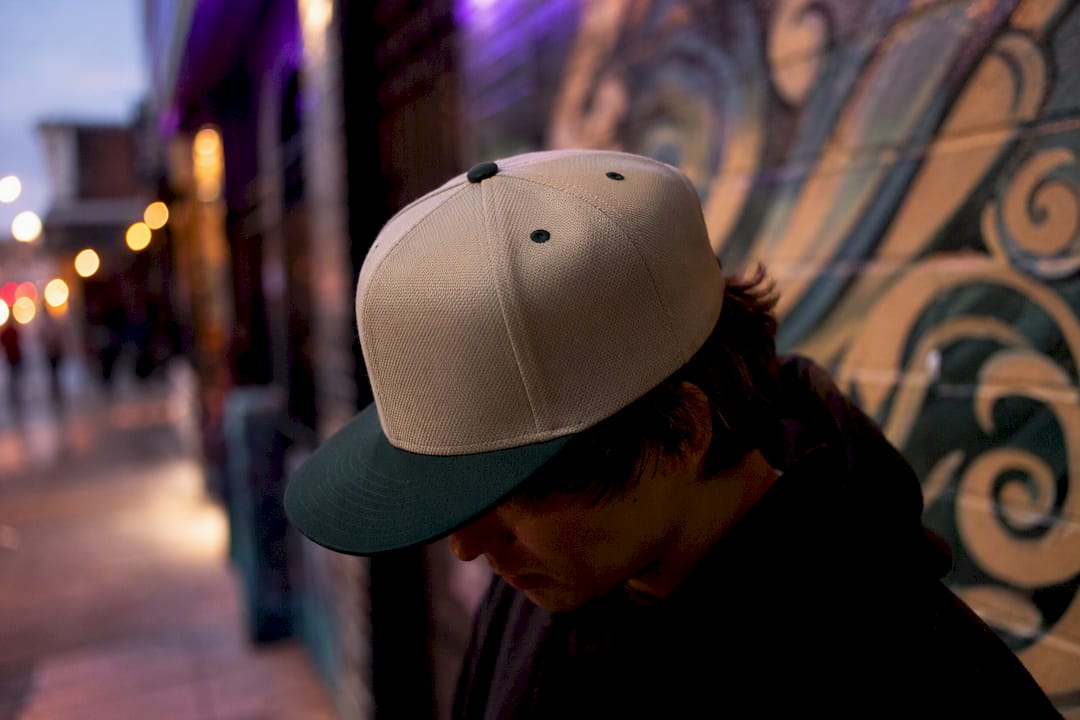
Hip-hop artists throughout the late 1980s and 1990s wore snapbacks as part of a broader visual language, pairing oversized team logos with baggy fits and heavy chains. Music videos put those caps in front of massive audiences, and the flat-brim, high-crown silhouette became instant shorthand for a specific attitude: unbothered, confident, urban.
At the same time, professional sports leagues were signing licensing deals that put team-branded snapbacks on shelves in malls, corner stores, and stadium gift shops far from any ballpark. This is where mainstream availability really took off, turning a niche fan item into something almost anyone could buy on a Saturday afternoon.
A few cultural touchpoints from that era still get referenced today. Rap videos regularly used oversized team logos as a visual anchor, often choosing caps for colour coordination rather than team loyalty. Sitcoms and sports broadcasts normalized snapbacks as everyday menswear rather than game-day-only gear. Retailers began stocking snapbacks in dedicated sections next to jerseys, cementing the hat as merchandise in its own right rather than an afterthought.
The front panel’s size mattered here too. That oversized embroidery area, built to carry team branding, made the snapback an effective walking billboard, which is exactly why licensing partners leaned into it so hard.
Did snapbacks ever go out of style?
Snapbacks lost ground in the 2000s as fitted caps, especially the flat-brimmed, tightly sized New Era 59FIFTY style, took over as the preferred look in hip-hop and streetwear circles. Fitted caps offered a cleaner, more tailored appearance, and for a stretch of years, the adjustable snap closure read as less premium.
The comeback came from a few directions at once. Nostalgia collectors started chasing vintage snapback deadstock. Streetwear labels reintroduced the flat-brim silhouette as a throwback statement, and luxury and designer collaborations gave the hat new credibility outside sports retail entirely.
So, are snapbacks still in style? Yes. Current trends favour cleaner, more structured silhouettes with classic colourways like black, navy, and earth tones over the loud, oversized graphics of the 1990s. The shape stuck around because the closure never stopped making practical sense, and the design never stopped being a legible piece of identity.
Snapback vs strapback vs fitted vs trucker: what’s the difference?
These four terms get used interchangeably, but the closure mechanism defines each one:
- Snapback: plastic snap closure, one size fits most, easy to adjust on the fly.
- Strapback: buckle or Velcro strap at the back, often leather or fabric, slightly more adjustment range.
- Fitted: no adjustment mechanism at all, sized precisely to the wearer’s head.
- Trucker: foam front panel with a mesh back, prioritizing airflow over structure.
Snapbacks and strapbacks suit brands and teams that want one product to fit a broad customer base. Fitted caps suit wearers who want a locked-in, no-shift fit for sport. Truckers work best for hot-weather wear where ventilation matters more than a clean silhouette. For anyone unsure how a snapback should sit, checking a snapback size guide before buying helps avoid the “too tight across the forehead” problem that turns up in reviews more than most buyers expect.
What materials go into a snapback, and how do you care for one?
Most snapbacks are built from wool blends, cotton, or polyester, with newer releases experimenting with stretch-fit panels and specialty brim finishes. Wool blends hold shape well and feel premium but can be harder to spot-clean. Cotton is breathable and easy to wash but softens the crown’s structure over time. Polyester resists moisture and holds colour, which is why a lot of sports merchandise leans on it.
Construction hasn’t changed as dramatically as materials have. Panel stitching and internal crown stiffeners still shape the silhouette, echoing the same structural logic manufacturers introduced decades ago to move caps away from their floppy 19th-century form.
To prevent sweat stains on a hat, avoid tossing it in a washing machine, since heat and agitation warp the brim and loosen the front panel’s structure. Spot-clean with a damp cloth and mild soap, air-dry away from direct heat, and store it brim-up rather than crushed under other gear.
How team logos and streetwear turned snapbacks into identity markers
A team logo on a snapback does more than name a franchise. It signals allegiance, hometown pride, and sometimes just an appreciation for a colour scheme, which is part of why sports memorabilia collectors treat certain vintage caps as legitimate keepsakes rather than throwaway merch.
Streetwear pushed that symbolism further. Wearing a snapback outside a sports context became a way to signal nostalgia for 90s culture, a connection to hip-hop’s visual history, or simply a rejection of more buttoned-up fashion norms. The hat carries meaning even when the wearer has no connection to the team or city printed on the front.
That symbolic weight comes with a responsibility worth naming: repurposing team logos, cultural symbols, or community-specific branding on merchandise deserves some thought about context and origin, especially when a design borrows from a community the brand or wearer isn’t part of. A cap is a small object, but it’s also a very visible one.
Why snapbacks still make sense in 2026
Golfers wearing snapbacks in 2026 tend to keep it simple: a clean, forward-facing brim with minimal bending, paired with streamlined golf streetwear rather than an oversized fit. That restrained styling fits a broader shift toward structured silhouettes over loud graphics.
The adjustable closure still solves a real merchandising problem. One snap size covers a wide range of head sizes, which cuts down on size-related returns and simplifies inventory for limited product drops, a genuine advantage for e-commerce fulfilment compared to fitted caps needing tight size runs.
Plaid Gorilla Golf builds its Country Club Snapback around that same logic: bold colourways, premium materials, and a fit that works across a real range of golfers rather than a narrow size band, paired naturally into bundles alongside the brand’s hoodies.
Notable brands and designers who shaped the snapback
New Era stands as the most influential name in snapback construction. Its panel work and manufacturing standards through the mid-20th century helped lock in the six-panel form that most modern snapbacks still follow, and its licensing partnerships with professional sports leagues drove the caps into mainstream retail during the 1980s and 1990s boom.
Beyond the major sports licensor, independent streetwear labels played a large role in the 2010s and 2020s revival. Rather than leaning on team logos, these brands used the snapback’s oversized front panel as a canvas for original graphics, tapping into the same visual branding logic that made team caps so effective decades earlier.
Designer collaborations added another layer of credibility. When high-fashion houses and limited-run streetwear labels started releasing their own takes on the flat-brim silhouette, they signalled to a broader audience that the snapback wasn’t just sports merchandise or nostalgia wear. It could be positioned as a fashion object in its own right, sold at a price point closer to apparel than to game-day giveaways.
Golf-specific apparel brands represent the newest chapter in that evolution. Plaid Gorilla Golf’s approach of pairing snapbacks with hoodies in themed bundles, like The Club Kit, reflects the same instinct that drove earlier brands: treat the cap as a design piece, not an afterthought accessory.
How different regions and communities have adopted the snapback
Snapback adoption hasn’t looked the same everywhere. In North America, the hat’s path runs almost directly through baseball and hip-hop, which is why team-branded caps still dominate a huge share of the category.
In parts of Europe and the UK, snapbacks arrived largely through hip-hop’s cultural export and skate and streetwear scenes rather than through domestic sports leagues, since baseball never held the same regional foothold. That meant European adoption often skewed toward graphic and brand-driven designs rather than team merchandise.
Across parts of Asia, particularly in urban centres in Japan and South Korea, snapbacks became closely tied to streetwear subcultures that blend Americana aesthetics with local design sensibilities, often reworking classic silhouettes with unconventional colourways or fabric choices.
In golf specifically, adoption has followed a different curve entirely. Traditional golf culture leaned on structured, low-profile caps for decades, and the snapback’s entry into golf apparel is a comparatively recent shift, driven by brands willing to blend sport-specific function with streetwear-influenced style. That crossover point, golf meeting streetwear sensibilities, is where a lot of current snapback design energy sits.
How celebrities and media outside sports boosted snapback visibility
Hip-hop and professional sports get most of the credit for snapback history, but other corners of media pushed visibility just as hard, if less loudly.
Film and television normalized the snapback as everyday menswear long after its sports-merchandise origins. Characters wearing team or brand-logo snapbacks in casual, non-sporting scenes reinforced the idea that the hat belonged in daily rotation, not just at the stadium.
Skate and surf culture adopted the snapback independently of hip-hop’s influence, often favouring smaller brand logos over large team branding, which pulled the silhouette into an entirely different subculture with its own visual rules.
Late-night television and talk shows also played a quiet role. Musical guests and comedians wearing snapbacks on camera, often paired with band or personal-brand merchandise, gave the hat repeated exposure to audiences who weren’t necessarily following sports or hip-hop closely. Each of these channels reinforced the same underlying message: the snapback works as a personal style statement independent of any single scene.
What the history actually tells you about wearing one today
Snapback history isn’t just trivia. It explains why the hat still gets picked over other silhouettes for both sports merch and fashion drops: the design solved a real sizing problem while staying visually bold enough to carry a logo, a message, or a colourway people want to be seen in. That combination of function and visibility is rare, and it’s why the shape survived a genuine style backlash in the 2000s.
For anyone designing or buying golf apparel, that history is a useful filter. A cap that fits one head size well and looks sharp across a range of styling choices tends to outlast trends built purely on graphics. Plaid Gorilla Golf’s product decisions, including bundles like The Course Kit, lean on that same reasoning.
Get a snapback built with that same history in mind
A lot of snapbacks on the market chase the trend of the month, loud graphics, novelty colourways, drops that disappear from relevance in a season. Plaid Gorilla Golf takes the opposite approach: bold patterns and premium materials built to hold up as everyday wear, not just a photo for one round of golf.
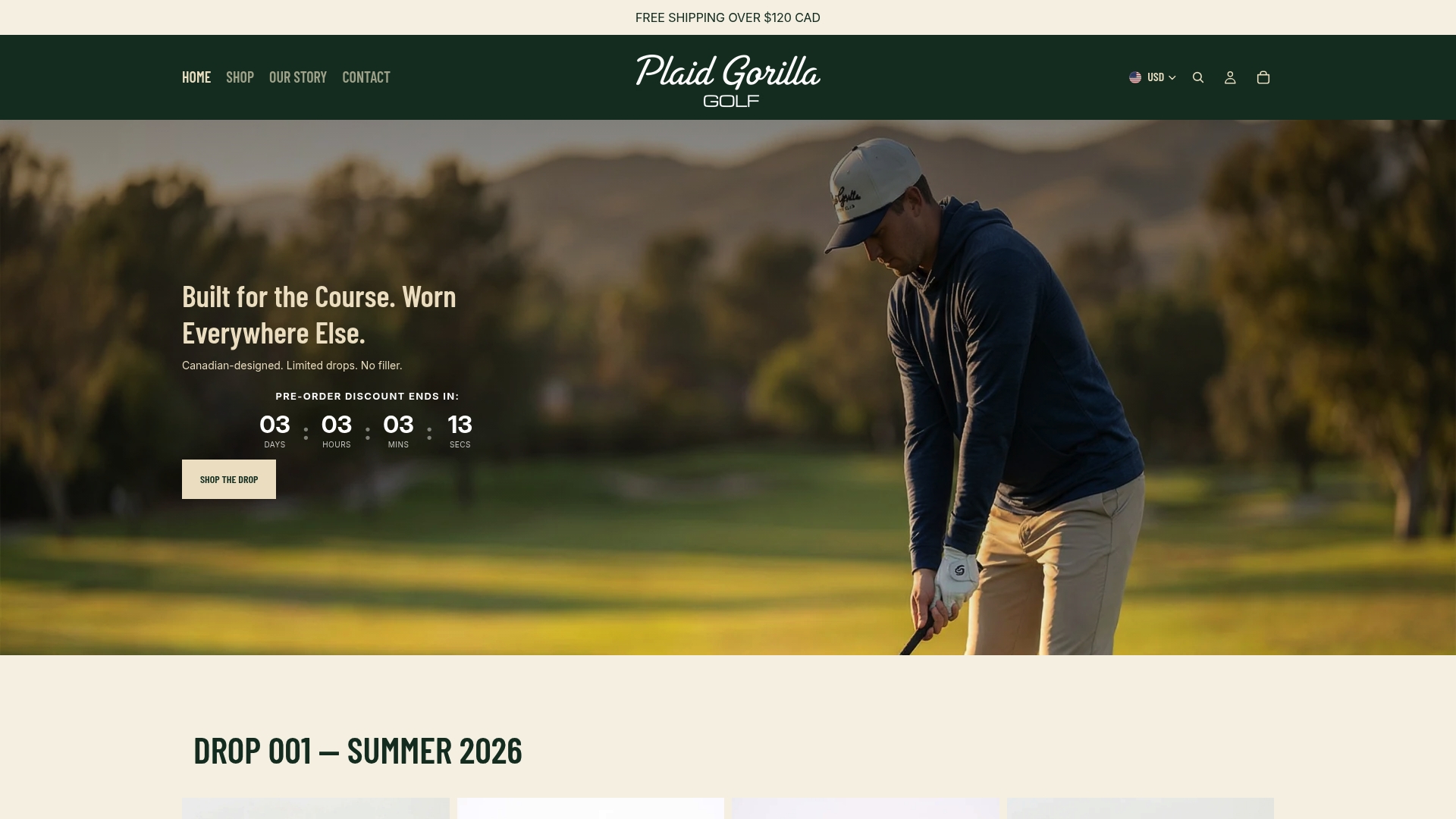
The Country Club Snapback in Navy/Cloud White keeps the classic flat-brim, adjustable-fit silhouette this article just walked through, minus the fast-fashion turnover. Prefer a bundle? The Bogey Kit pairs a country club hat with the Bogey Enthusiast Hoodie, and the Ponderosa Pine Set does the same with a rope hat. Every drop is limited, so once a colourway sells out, it’s gone. Check current availability on the Plaid Gorilla Golf site before your size disappears.
Sources
- The complete history of snapback hats — JoinTop Hat blog
- Mens snap back hats: why they’re still a smart choice — Hat Manufacturing
- Custom snapback hats (2026 guide) — Broken Arrow Wear
FAQ
What is the origin of snapbacks?
Snapbacks descend from 19th-century baseball caps, including the rounded-top style worn by early teams like the Brooklyn Excelsiors, which evolved over decades into the structured, adjustable cap known today.
When was the snapback era?
The snapback gained major cultural popularity during the late 20th century, influenced strongly by hip-hop culture and sports merchandising, with its presence waxing and waning in the years that followed.
Are snapbacks still in style?
Yes. Current trends tend to favour cleaner, more structured silhouettes in classic colours such as black, navy, and earth tones, moving away from the louder graphics common in past decades.
What does the term snapback mean?
“Snapback” refers to the plastic snap closure at the back of the hat that allows the band to adjust, giving it a “one size fits most” fit rather than a fixed, pre-sized crown.
How should a snapback fit?
A well-fitted snapback should sit level across the forehead without pinching at the temples, with the snap closure adjusted so the brim doesn’t ride up or slide down during movement.