


Patterns are not decoration. They are the language of golf fashion, and they have been since the sport’s earliest days on Scottish links. The role of pattern in golf fashion spans self-expression, psychological confidence, cultural identity, and technical performance. Whether you are stepping onto a public course in Alberta or walking into a clubhouse in Ontario, what you wear communicates something before you ever swing a club.
Here is what patterns actually do in golf attire:
- Express individuality: Your pattern choice signals personality, attitude, and how seriously you take your own style.
- Carry cultural weight: Classic designs like argyle connect wearers to golf’s Scottish heritage and long tradition.
- Affect your mindset: Bold colours and patterns can lift mood and sharpen confidence during play.
- Serve function: Pattern placement on modern technical fabrics supports movement, breathability, and comfort.
- Signal belonging: On the course, what you wear tells other golfers something about your relationship with the game.
Table of Contents
- How golf fashion patterns evolved from the links to the streets
- Why argyle and classic patterns still matter in golf
- How patterns shape your psychology and style on the course
- Performance, comfort, and pattern design in modern golf apparel
- How Plaidgorillagolf is advancing Canadian golf fashion
- How to build a patterned golf wardrobe with confidence
- How Canadian culture shapes golf fashion pattern choices
- Matching your pattern choice to the occasion and your skill level
- Plaidgorillagolf: bold Canadian golf style, no filler
- FAQ
- Key takeaways
How golf fashion patterns evolved from the links to the streets
Golf has never been as conservative as its reputation suggests. The sport’s earliest players wore thick wool tweeds and flat caps, practical for the cold, windswept courses of Scotland and England. Patterns were built into the fabric itself, woven tartans and checks that reflected regional identity as much as personal taste.
The 1950s and 1960s brought a genuine style moment. Golf enjoyed a loud, unapologetic heyday, with players favouring bold alpaca cardigans and vivid colours that stood apart from the restrained menswear of the era. Frank Sinatra famously preferred loose, brightly coloured cardigans on the course, buying them by the dozen. That era proved that golf fashion could be expressive without sacrificing seriousness.
Strict clubhouse dress codes through the 1970s and into the 1980s pushed fashion back toward caution. Then the 1980s swung hard in the opposite direction. Bold colours and patterns marked a significant shift toward individual expression, with players like Ian Poulter and John Daly eventually making flamboyant prints part of their personal brand. The course became a runway, whether the traditionalists liked it or not.
Key milestones in the evolution of golf fashion patterns:
- Pre-1900s: Woven tartans and regional checks dominate; pattern tied to geography and clan identity.
- 1920s–1940s: Argyle rises as the defining golf pattern, crossing from Scottish knitwear into mainstream sportswear.
- 1950s–1960s: Bold cardigans and vivid colours signal a stylish, personality-driven era on the course.
- 1970s–early 1980s: Clubhouse rules tighten; conservative polos and muted tones become the norm.
- Mid-1980s–1990s: Bright geometric prints and loud patterns return, driven by individual players and broader pop culture.
- 2000s–2010s: Technical performance fabrics reshape pattern design; moisture-wicking and stretch become non-negotiable.
- 2020s–present: Streetwear aesthetics merge with golf apparel; golf participation outside the US has increased significantly in the past decade, driving demand for contemporary patterned styles over traditional ones.
The demographic shift is real. Younger players entering the sport expect their clothing to reflect who they are, not just where they are playing.
Why argyle and classic patterns still matter in golf
Argyle is the most recognisable pattern in golf fashion, and its staying power is not accidental. Argyle originates from Scottish tartan tradition and became a staple in golf apparel through its aesthetic appeal and deep cultural ties to the sport’s birthplace. The diamond grid of overlapping colours, originally derived from the tartan of Clan Campbell, translated naturally into knitwear and then into the sweaters and vests that defined mid-century golf style.

The pattern carries symbolic weight beyond aesthetics. Wearing argyle on the course is a quiet nod to golf’s origins, a way of connecting with a tradition that stretches back centuries. It reads as knowledgeable rather than nostalgic, which is why it has survived every fashion cycle the sport has thrown at it.
| Classic pattern | Origin | Primary association in golf |
|---|---|---|
| Argyle | Scottish tartan (Clan Campbell) | Heritage, prestige, tradition |
| Plaid/tartan | Scottish Highlands | Regional identity, authenticity |
| Houndstooth | English/Scottish weaving | Sophistication, classic style |
| Stripes | General sportswear | Clean lines, team identity |
| Geometric prints | 1980s sportswear | Bold expression, individuality |
What separates argyle from other classic patterns is its versatility. It works on a sweater vest at a private club and on a hoodie at a public course. That range is exactly why modern golfwear brands blend traditional pattern motifs with contemporary streetwear influences to attract younger players without alienating those who value the sport’s history.
How patterns shape your psychology and style on the course
Clothing affects performance more than most golfers admit. Bright colours and patterns in golf apparel can enhance a golfer’s mood and confidence, which feeds directly into how you carry yourself between shots. This is not abstract. When you feel good in what you are wearing, you stand differently, walk differently, and approach the first tee with a different energy.
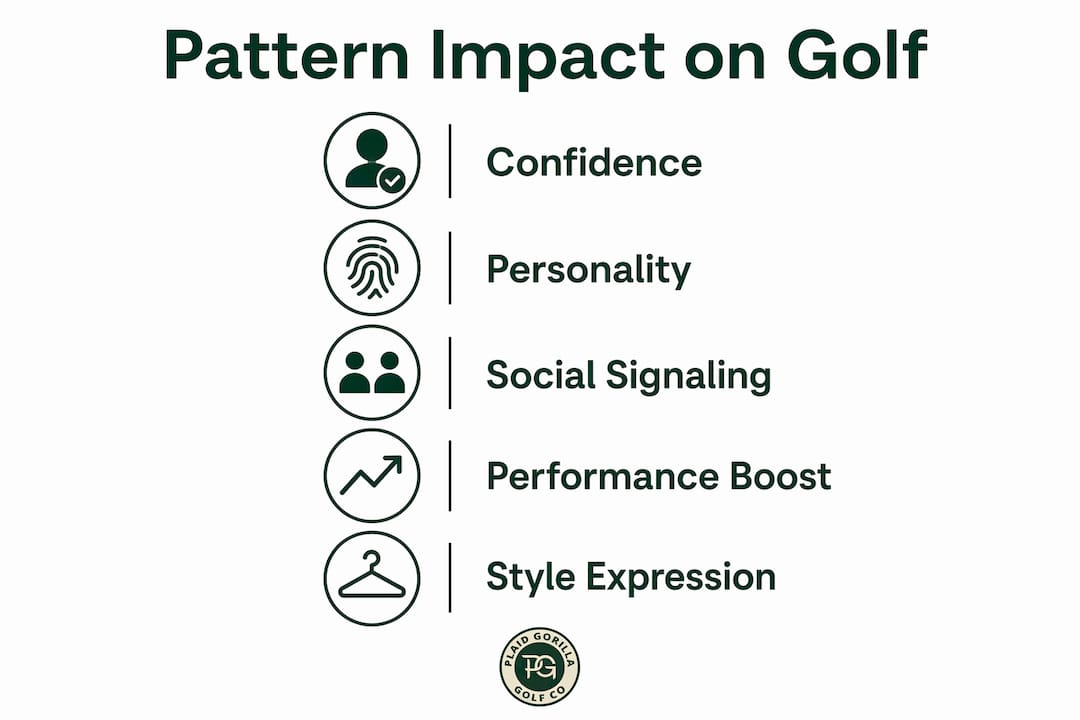
Expressing personality through pattern choice enhances self-confidence and social signalling among golfers. Pattern is one of the fastest ways to communicate who you are to playing partners and strangers alike, before a single word is exchanged. A bold geometric print says something different from a subdued houndstooth, and both say something different from a plain polo.
Pro Tip: If you are new to wearing patterns on the course, start with one patterned piece and keep everything else solid. A bold hoodie or a statement hat paired with neutral trousers lets the pattern do its work without overwhelming your look.
The social dimension of pattern choice is particularly strong in golf, a sport where, as Mikhel Ruia of Glenmuir puts it, players judge another golfer’s seriousness by what they wear. That is not about wealth. It is about showing you have thought about your relationship with the game, and that you are confident enough to express it.
Performance, comfort, and pattern design in modern golf apparel
Pattern is not purely visual in modern golf clothing. Technical golf clothing requires patterns and colours that maintain fabric breathability, moisture-wicking, and flexibility without sacrificing style. The placement of a pattern, where seams fall, how panels are cut, and how colour blocks direct the eye, all interact with how a garment performs during four or five hours of play.
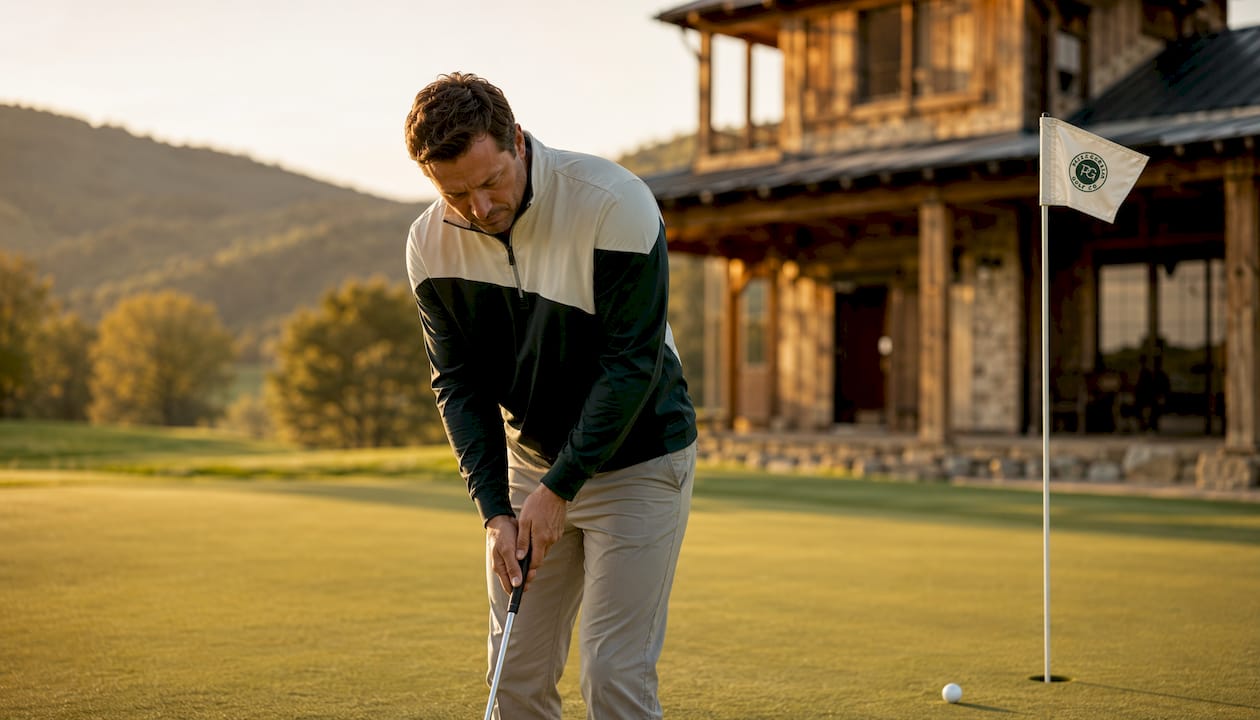
In Canada’s variable climate, this intersection of pattern and function is especially relevant. A round in May in British Columbia can start cold and finish warm. A July afternoon in Saskatchewan can mean direct sun for hours. Pattern choices that incorporate lighter colours in sun-exposed areas and darker tones in layering pieces reflect both style awareness and practical thinking.
| Design feature | Performance benefit | Style benefit |
|---|---|---|
| Colour-blocked panels | Allows targeted fabric weight variation | Creates visual structure and proportion |
| Tonal patterns | Hides moisture and wear marks | Reads as sophisticated and understated |
| Bold all-over prints | Works with single-layer technical fabrics | Maximum visual impact, minimal layering |
| Subtle texture patterns | Compatible with stretch and wicking weaves | Adds depth without visual noise |
Sublimation printing, which bonds colour directly into synthetic fibres, has made it possible to produce complex patterns on performance fabrics without adding weight or reducing breathability. This technique is why the boldest prints you see on the course today often perform just as well as a plain technical polo.
How Plaidgorillagolf is advancing Canadian golf fashion
Canadian golf fashion has its own character, shaped by the country’s climate, its multicultural cities, and a culture that tends to value authenticity over pretension. Plaidgorillagolf, born in Spruce Grove, Alberta, sits squarely in that tradition. The brand builds patterned hoodies and hats that combine vibrant design with premium materials, reflecting Canadian style and golf culture without apology.
What sets Plaidgorillagolf apart is the design philosophy: deep forest green and warm cream tones, geometric precision, and a zero-filler approach to product development. Every piece is a limited drop, which means the patterns you wear are not going to show up on every golfer at your club.
“Built for the Course. Worn Everywhere Else.” — Plaidgorillagolf
The brand’s kits are built for exactly the golfer who wants to look sharp on the first tee and feel just as comfortable at the 19th hole. That dual-purpose thinking is where Canadian golf fashion is heading.
- Design philosophy: Bold but refined, with a colour palette that feels grounded rather than garish.
- Product approach: Limited drops mean genuine exclusivity, not manufactured scarcity.
- Canadian roots: Designed with the Canadian golfer’s climate and culture in mind.
- Versatility: Pieces that work on the course and off it, without looking like you raided a pro shop.
Pro Tip: Check Plaidgorillagolf’s field notes blog for current styling guides and drop announcements. Limited releases sell out fast.
For golfers who want to understand how modern pattern choices connect to golf wardrobe expression, Plaidgorillagolf’s approach is a practical case study in doing it right.
How to build a patterned golf wardrobe with confidence
Wearing patterns well on the course comes down to a few clear principles. You do not need to overthink it, but you do need to make deliberate choices.
- Start with one statement piece. A patterned hoodie or a bold hat anchors the outfit. Build everything else around it in solids that pull from the pattern’s colour palette.
- Match the occasion. A private club tournament calls for classic patterns like argyle or subtle geometric prints. A casual weekend round at a public course is the right moment for something bolder.
- Respect the dress code, then push it. Most Canadian courses allow hoodies and casual wear outside of formal competition. Know the rules, then use the space you have.
- Pair patterns with neutral bottoms. Dark trousers or shorts in navy, charcoal, or khaki let a patterned top breathe. Avoid competing patterns on top and bottom unless you know exactly what you are doing.
- Consider the season. Lighter patterns and colours work in summer; richer, deeper tones suit the shoulder seasons that Canadian golfers know well.
- Use accessories to extend the pattern story. A rope hat or a country club-style cap in a complementary colour ties a look together without adding visual noise.
- Wear it like you mean it. Confidence is the most important part of any outfit. If you are second-guessing your pattern choice on the first tee, it will show.
For golfers at every skill level, the principle is the same: choose golf clothing that stands out for the right reasons, meaning quality, fit, and a pattern that actually reflects who you are.
How Canadian culture shapes golf fashion pattern choices
Canada’s regional diversity shows up in golf fashion in ways that do not always get acknowledged. A golfer in Vancouver dresses differently from one in Halifax or Winnipeg, and those differences reflect climate, culture, and local golf traditions as much as personal taste.
In Quebec, where style consciousness runs high and the clubhouse carries a certain social weight, classic patterns like argyle and houndstooth remain popular. They signal that you take both the sport and your appearance seriously. In Alberta and British Columbia, where golf culture skews more casual and outdoor-oriented, bolder prints and streetwear-influenced designs have taken hold faster. The hoodie, once banned at traditional clubs, is now a staple at courses across the country.
Indigenous design influences are also beginning to appear in Canadian golf fashion, with geometric patterns drawn from First Nations artistic traditions finding their way into limited-edition apparel. This is a meaningful development, one that reflects a broader shift toward celebrating Canadian identity in sportswear rather than defaulting to British or American style references.
The golf apparel market’s shift toward a broader, younger, and more diverse clientele is felt acutely in Canada, where the sport’s demographics have changed faster than in many other markets. Canadian golfers want wear patterns on the golf course that reflect the country they actually live in, not a mid-century British ideal.
Matching your pattern choice to the occasion and your skill level
The right pattern for a beginner playing their first round at a public course is not the same as the right pattern for a scratch golfer competing in a club championship. Skill level and occasion both shape what works.
For beginners and casual players: Keep it simple and comfortable. A solid-colour base with one patterned accent, a hat or a hoodie, is enough to show personality without overthinking the dress code. Comfort matters more than complexity at this stage.
For intermediate golfers playing regular rounds: This is where you can start experimenting. Try a patterned hoodie like the Bogey Enthusiast Hoodie paired with a solid polo and neutral trousers. The Country Club Hat in the same kit pulls the look together with minimal effort.
For competitive or club-level golfers: Classic patterns carry authority. Argyle, subtle geometric prints, and tonal designs read as intentional and polished. The Course Kit’s Prime Hoodie and Rope Hat combination works well here, premium materials and a refined pattern that respects the competitive setting.
For golfers who want a Canadian-specific look: The Ponderosa Pine Set from Plaidgorillagolf combines heritage-inspired design with contemporary pattern use, a Rope Hat and Bogey Enthusiast Hoodie built for active play in Canadian conditions.
The through-line across all skill levels is intentionality. Wear patterns that you chose, not patterns you defaulted to. That choice, made confidently, is what golf style and patterns are actually about.
Plaidgorillagolf: bold Canadian golf style, no filler
Golf fashion has never had more options. But most of them are either too conservative to stand out or too trend-chasing to last a season. Plaidgorillagolf sits in a different position: Canadian-owned, limited-edition, and built for golfers who want quality and personality in the same piece.
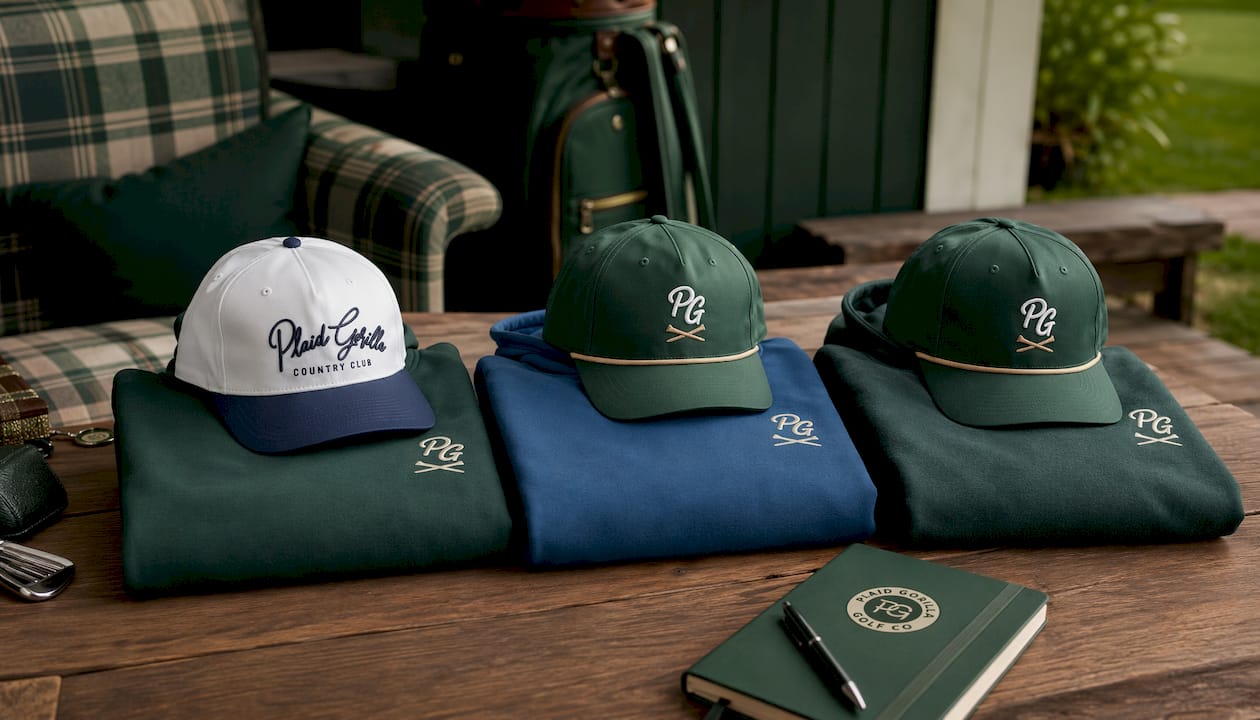
The Bogey Kit, the Course Kit, and the Ponderosa Pine Set are not just apparel. They are a point of view on what Canadian golf fashion should look like in 2026: bold without being loud, premium without being precious, and versatile enough to wear from the first tee to wherever the day takes you after. Every drop is limited, which means the window to get your kit is real.
Shop the current drop at plaidgorillagolf.ca and find the kit that fits how you play.
FAQ
What pattern do golfers most commonly wear?
Argyle is the most historically significant pattern in golf fashion, originating from Scottish tartan tradition and remaining a staple across decades. Today, geometric prints, stripes, and bold all-over designs are equally common, especially among younger players.
What does pattern choice communicate on the golf course?
Pattern choice signals personality, confidence, and your relationship with the sport. Bold patterns suggest individuality and a modern approach to the game, while classic designs like argyle or houndstooth connect the wearer to golf’s heritage.
Why do patterns matter for golf performance apparel?
Technical golf clothing requires patterns that work with breathable, moisture-wicking fabrics. Pattern placement and printing methods like sublimation affect how a garment moves and performs, not just how it looks.
What is the definition of pattern in golf fashion?
In golf fashion, a pattern is a repeated visual design, such as argyle, plaid, stripes, or geometric shapes, applied to apparel to create aesthetic interest and express the wearer’s identity. Patterns range from subtle tonal textures to bold all-over prints.
How does Plaidgorillagolf approach pattern design?
Plaidgorillagolf uses a limited-drop model with a palette of deep forest green and warm cream tones, combining geometric precision with premium materials. Each kit, including the Bogey Kit, Course Kit, and Ponderosa Pine Set, is designed for both on-course performance and everyday wear.
Key takeaways
Patterns in golf fashion serve a dual purpose: they express identity and affect performance, making intentional pattern choice one of the most underrated decisions a golfer can make.
| Point | Details |
|---|---|
| Patterns carry cultural history | Argyle and tartan connect modern golfers to the sport’s Scottish origins and centuries of tradition. |
| Psychology drives pattern value | Bold colours and patterns can enhance mood and confidence, directly influencing how you play and carry yourself. |
| Function shapes pattern design | Technical fabrics require patterns that support breathability and movement, not just visual appeal. |
| Canadian golf fashion is evolving | Regional diversity and demographic shifts are driving demand for bolder, more personal pattern choices across Canada. |
| Plaidgorillagolf leads Canadian style | The Bogey Kit, Course Kit, and Ponderosa Pine Set offer limited-edition, premium patterned apparel built for Canadian golfers. |