


Premium golf hats typically run C$40 to C$65 for entry-premium, C$65 to C$90 for mid-premium, and C$90 and up for high-end or designer styles. For golfers who care about fit, durability, and standing out on the first tee, the mid-premium band usually delivers the best return on your money.
- Entry-premium: C$40–C$65
- Mid-premium: C$65–C$90
- High-end/designer: C$90+
Pro Tip: Don’t judge a hat by its price tag alone. A C$70 hat with a proper adjustable closure and moisture-wicking fabric will outlast a C$45 hat that fades and stretches out after one summer.
Key Takeaways
Premium golf hat prices sort into clear bands, and matching the band to how often you’ll actually wear the hat is the decision that matters most.
| Point | Details |
|---|---|
| Know the price bands | Entry-premium runs C$40–C$65, mid-premium C$65–C$90, and high-end/designer C$90 and up. |
| Materials drive real cost | Performance fabric, reinforced bills, and rope trim or 3D embroidery are what actually justify a higher price. |
| Calculate cost-per-wear | An C$80 hat worn 80 times costs C$1.00 per wear, often cheaper long-term than a bargain hat replaced repeatedly. |
| Buy for how you’ll use it | Adjustable fit and moisture-wicking fabric matter more on course than logo prestige. |
| Bundles improve value | Plaid Gorilla Golf’s kits pair a rope hat or Country Club snapback with a hoodie, lowering the effective price versus buying separately. |
Table of Contents
- What does premium hat price actually buy you?
- What makes a golf hat premium, exactly?
- Is a premium hat actually worth the price on course?
- Where should you actually buy a premium golf hat?
- How do you calculate whether a hat is worth its price?
- Why Plaid Gorilla treats hats as a real investment, not merchandise
- Get the rope hat and Country Club snapback in a bundle
- Retail and manufacturer pages for further price checks
- Sources
- FAQ
What does premium hat price actually buy you?
Walk into any pro shop and you’ll see the same pattern repeat itself: hats cluster into predictable price bands, and each band buys you something specific. Understanding those bands is the difference between paying for real quality and paying for a logo.
At the entry-premium level, some large Canadian retailers list golf hats starting around C$22.50, climbing toward the mid-premium range as materials and construction improve. These hats usually get you a decent cotton or poly blend, a basic embroidered logo, and a standard snap or hook-and-loop closure. Fine for casual rounds, but they wear out fast under sun and sweat.
Mid-premium is where performance fabric shows up. Titleist’s Tour Elite hat retails at C$55 on its Canadian storefront, while PXG Canada prices many of its cap styles between C$50 and C$65, with promotional drops sometimes dipping to C$50. Expect at this level:
- Moisture-wicking sweatbands and breathable panelling
- Structured or unstructured crowns built for a cleaner silhouette
- Reinforced bills that resist warping in a golf bag
High-end and designer hats push past C$90 largely because of what’s added, not just what’s used. Limited runs, collaboration branding, and decorative details like rope trim or 3D embroidery all add labour and material cost. Titleist’s Tour Performance hat shows how a single trim upgrade nudges a hat from the C$55 range toward C$60, and that pattern scales up fast once a brand starts stacking premium features on one product.
What makes a golf hat premium, exactly?
“Premium” isn’t marketing fluff when the materials back it up. Three factors drive most of the price difference between a basic cap and a genuinely premium one.
- Fabric technology. Performance blends, treated cotton, and moisture-managing synthetics cost more to source and cut than basic poly-cotton. Some higher-end lines even work merino or technical wool into the sweatband for temperature control.
- Construction quality. Reinforced bills, taped seams, and double-stitched panels hold their shape through hundreds of rounds instead of dozens. This is where a hat earns its price rather than just wearing it.
- Decoration and detail. 3D embroidery, woven patches, and rope trim all require extra production steps. Rope hats and specialty patches seen in premium catalogues reliably add labour time during inspection and quality control, and that cost flows straight into the retail price.
Scarcity plays its own role. A limited run or a designer collaboration doesn’t just signal exclusivity, it genuinely limits supply, and that pushes prices toward the top of the high-end band regardless of the raw materials used. This is exactly why Plaid Gorilla Golf treats limited-edition drops as a design principle, not a sales gimmick: fewer units, more attention paid to each one.
Is a premium hat actually worth the price on course?
Price only tells half the story. The other half is whether the hat actually performs and fits the way you need it to, round after round.
- Fit and adjustability matter more than most golfers admit. An adjustable closure means one hat fits your head through humidity swings and haircuts, extending usable life well past a fixed-size cap.
- On-course performance comes down to fabric behaviour. Look for moisture-wicking panels and ventilated crowns if you play in heat or humidity.
- Durability determines your real cost-per-wear. A hat that holds its shape and colour through two seasons beats a cheaper one you replace three times.
- Off-course wear changes the math entirely. If you’re going to wear a hat to brunch after your round, a higher price is easier to justify since you’re spreading the cost across more occasions.
Where should you actually buy a premium golf hat?
Purchase channel affects price almost as much as materials do, and Canadian golfers have three realistic paths to choose from.
Traditional retailers offer the widest selection and the most predictable pricing. Niagara Golf Warehouse spans the full spectrum from entry-level to tour-calibre hats, and typically offers Canada-wide shipping once your order clears a set threshold, which matters when you’re deciding whether to bundle a hat with other gear.
Direct-to-consumer drops work differently. Brands selling limited runs, Plaid Gorilla Golf included, price for scarcity rather than shelf competition, and often offset that with bundle discounts that lower the effective per-item cost when you buy a hat alongside a hoodie or tee.
- Retail: widest selection, standard returns, prices anchored to market norms
- Direct drops: limited stock, bundle savings, first access to new colourways
- Wholesale/custom: lower per-unit cost at volume, but factory guidance warns buyers to account for decoration, shipping, and defect risk rather than chasing the lowest quoted price alone
Check return windows and shipping minimums before you buy. A great price on paper disappears fast if a hat doesn’t fit and the return policy is thin.
How do you calculate whether a hat is worth its price?
Cost-per-wear turns an abstract price tag into a number you can actually compare. It’s the simplest gut check for whether a premium hat earns its spot in your bag.
- Divide price by expected wears. A C$80 hat worn 80 times over two seasons works out to C$1.00 per wear, a number that looks a lot more reasonable than the sticker price alone.
- Compare expected lifetime, not just price. A cheap C$25 hat that fades and loses shape after 20 wears actually costs more per use than a well-built C$70 hat that lasts 150 rounds.
- Check the warranty and return terms before buying. Brands confident in their construction usually offer clearer return windows, which tells you something about expected durability even before you wear the hat once.
- Favour repairable details and clear material specs. A hat with a replaceable strap or documented fabric composition tends to age, and get repaired, better than one with vague marketing copy and no spec sheet.
Why Plaid Gorilla treats hats as a real investment, not merchandise
Golf apparel design rewards patience more than trend chasing. The hats that hold up, both in fabric and in style, are the ones built with actual construction standards behind them, not just a logo slapped on a blank.
That’s the thinking behind why Plaid Gorilla Golf runs limited drops instead of mass-producing one design forever. Smaller runs mean tighter quality control on details like rope trim and reinforced bills, the same features that push a hat from basic to genuinely premium. It also means the hat you’re wearing on the course probably isn’t the same one three other guys in your foursome are wearing.
The conventional wisdom says you pay more for a logo. The real driver is fabric, construction, and scarcity working together, and that’s worth paying attention to before your next purchase.
— Mike
Get the rope hat and Country Club snapback in a bundle
Plaid Gorilla Golf’s rope hat and Country Club snapback both sit squarely in the mid-premium band, but you get more value buying them as part of a kit than shopping piece by piece elsewhere.
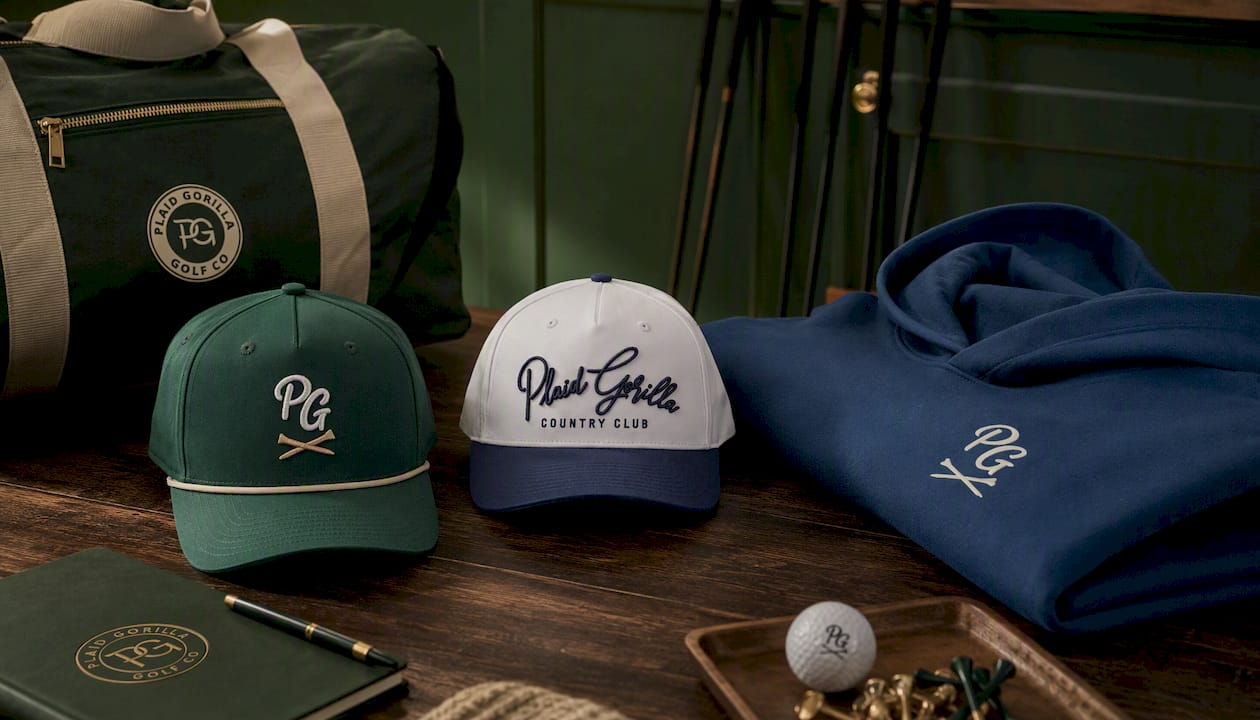
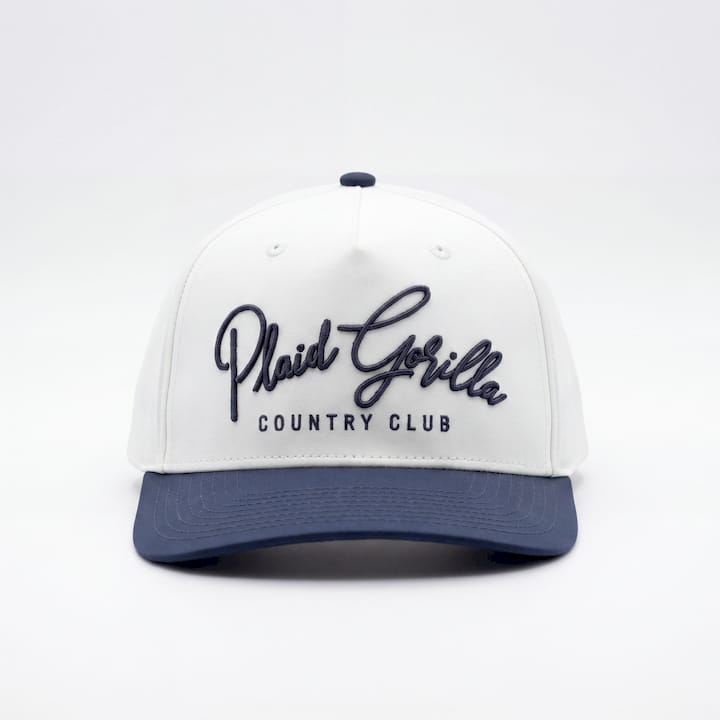
The Champagne Tees Rope Hat in Ponderosa Pine carries the woven rope trim that usually pushes a standalone hat toward the high-end band, and the Country Club Snapback pairs a structured crown with a clean navy and cloud white finish built for everyday wear off the course. Bundled into The Course Kit or The Club Kit, you get a hat and a Prime Hoodie together for less than buying each piece separately, which changes the cost-per-wear math in your favour from day one. Golfers who want the Ponderosa Pine colourway across both pieces should look at The Ponderosa Pine Set, and anyone leaning toward The Bogey Kit gets the Country Club Hat matched with the Bogey Enthusiast Hoodie in one limited drop. Every kit is limited run, so once a colourway sells out, it’s gone. Check the current drop selection and grab your size before the next one closes.
Retail and manufacturer pages for further price checks
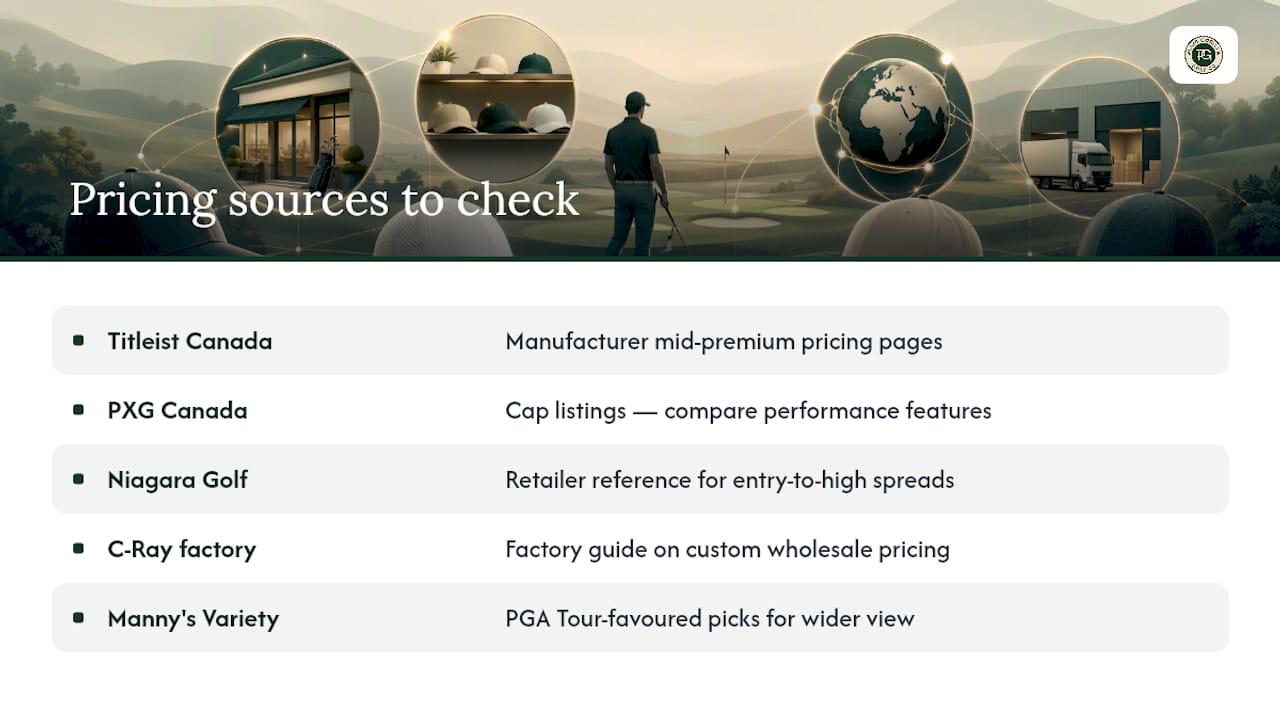
Golfers who want to verify current pricing before buying can check a few of the sources referenced throughout this guide. Titleist’s Canadian product pages show current mid-premium pricing directly from the manufacturer, while PXG Canada’s cap listings offer a useful comparison point for similar performance features. Niagara Golf Warehouse remains a solid broad retailer reference for entry-to-high price spreads, and golfers curious about the wholesale side of the industry can review the factory guide on custom cap pricing from C-Ray. For a wider look at current tour-favoured picks, Manny’s Variety’s PGA Tour picks round out the retail landscape.
Sources
- Golf Hats – NIAGARA GOLF WAREHOUSE
- Caps | Premium Golf Hats - PXG Canada
- Custom Golf Cap Factory Guide to Premium Caps - C-Ray
FAQ
What is a fair premium hat price for a golfer starting out?
Expect to pay between C$40 and C$65 for a solid entry-premium hat with decent fabric and construction, based on pricing seen at major Canadian retailers.
Why do some golf hats cost over C$90?
Hats above C$90 usually carry limited-edition branding, decorative rope trim, or 3D embroidery, all of which add labour and material cost during production.
Is a mid-premium hat better value than a high-end one?
For most golfers, yes. Mid-premium hats in the C$65–C$90 range, similar to pricing seen from Titleist and PXG Canada, deliver strong performance features without paying a full scarcity premium.
How do I calculate cost-per-wear on a golf hat?
Divide the purchase price by the number of times you expect to wear it. An C$80 hat worn 80 times works out to roughly C$1.00 per wear.
Does buying a hat and hoodie bundle actually save money?
Yes, kits like Plaid Gorilla Golf’s Course Kit typically cost less than buying the hat and hoodie separately, while also including limited-edition colourways.