


A structured golf wardrobe is a curated capsule of performance-led, mix-and-match pieces that look club-appropriate and cut your morning routine in half. Think of it as a system, not a collection. Every item earns its spot by pairing with at least three others, and the whole thing works together so well that getting dressed before a round stops being a decision at all.
The core pieces are straightforward:
- Polos (2–3 in a cohesive palette)
- Tailored trousers or shorts/skorts (2 bottoms minimum)
- Mid-layer (quarter-zip or structured vest)
- Lightweight performance jacket
- Spikeless or soft-spike shoes
- Hat or cap
- Belt and performance socks
According to capsule wardrobe analysis, an eight-piece golf capsule can generate 20+ outfit combinations and typically cuts annual apparel spend by 40–60%. That is the whole argument for the structured approach in two numbers.
Table of Contents
- What does a “structured” golf wardrobe actually mean?
- What are the essential pieces in a structured golf wardrobe?
- Which fabrics and fits keep you polished without looking athletic?
- How do dress codes change what your capsule needs?
- How do you build a structured golf wardrobe step by step?
- What should you avoid in a structured golf wardrobe?
- How do you keep structured pieces looking sharp?
- Does a structured wardrobe actually save money?
- What does a structured golf wardrobe cost to build in Canada?
- Where can you shop for structured golf wardrobe pieces in Canada?
- Key takeaways
- Why the structured approach is the only one worth building
- Plaidgorillagolf kits built for the Canadian capsule
- Useful sources
- FAQ
What does a “structured” golf wardrobe actually mean?
The word structured does double duty here. It describes both the system (a deliberately edited, cohesive set of pieces) and the physical garments themselves. Collars that hold their shape, hemlines that sit flat, waistbands that stay crisp — these details separate a structured look from a casual, shapeless one.
The guiding principles are:
- Cohesion over volume. Every piece shares a colour family and a silhouette logic.
- Quality over quantity. Fewer, better items outlast a drawer full of impulse buys.
- Layering compatibility. Each piece must work under or over at least one other.
- Performance baseline. Moisture-wicking, stretch, and breathability are non-negotiable, not bonuses.
- Constrained palette. Three to four tones, chosen once, applied consistently. A disciplined colour story is the single most important factor in a functional capsule.
The three-pairing rule is the practical test: before buying anything new, confirm it pairs naturally with at least three pieces you already own. If it can’t, it’s an orphan item waiting to happen.
Pro Tip: Apply the 70/30 proportion rule: 70% of your capsule should be neutral anchor tones (navy, white, charcoal, stone), and 30% can carry your accent colour or a bold pattern. This keeps every combination looking intentional.

A capsule approach also reduces decision fatigue before early morning rounds. When the closet is built to work, you stop second-guessing at 6:45 AM and start focusing on your game.
What are the essential pieces in a structured golf wardrobe?
Build around these eight categories. Each one has a job.
- Performance polo (2–3 pieces). The workhorse. A structured collar that holds its shape, moisture-wicking polyester blend, and a hem that stays tucked. Polos with performance fabrics are the primary piece for a proper golf outfit — get the fit right here first.
- Tailored trousers (1–2 pairs). Four-way stretch technical woven, a clean break at the ankle. Polished enough for the clubhouse, free enough for a full backswing.
- Shorts or skorts (1–2 pairs). Same fabric logic as the trousers. Tailored, not baggy. A neutral that pairs with every polo in the capsule.
- Quarter-zip or structured vest (1 piece). Your primary mid-layer. Merino blend or technical knit. This is the piece that takes you from the front nine to lunch without a change.
- Lightweight performance jacket (1 piece). Wind-resistant and packable. In Canada, waterproofing matters more than it does in drier climates — prioritise a DWR-treated shell for shoulder-season rounds.
- Spikeless or soft-spike shoes (1 pair). Spikeless shoes transition from course to clubhouse without a change. Fit them late in the day to mirror the foot expansion that happens mid-round.
- Hat or cap (1–2 pieces). A structured shape with clean branding. The last thing on, often the first thing noticed.
- Belt and performance socks. Matching the belt to the shoe is a small detail that reads as deliberate.
Three outfit examples from eight pieces:
- Navy polo + stone trousers + quarter-zip + spikeless shoes
- White polo + charcoal shorts + performance jacket + cap
- Accent-colour polo + navy trousers + vest + shoes
Pro Tip: Polos represent the highest usage share in any golf capsule — they appear in every outfit. Buy them first, get the fit right, and collect two or three colourways before adding anything else.
For more on choosing standout pieces that still integrate into a capsule, Plaidgorillagolf’s field notes are worth a read.
Which fabrics and fits keep you polished without looking athletic?
Performance and polish are not opposites. The right fabric does both.

| Garment | Best Fabric | Key Feature |
|---|---|---|
| Polo | Polyester/elastane blend | Moisture-wicking, collar retention |
| Trousers | Technical woven (4-way stretch) | Wrinkle resistance, clean drape |
| Mid-layer | Merino or tech knit blend | Warmth-to-weight, no bulk |
| Jacket | Nylon/polyester shell | DWR coating, packability |
| Socks | Synthetic/merino blend | Cushioning, moisture management |
Fit matters as much as fabric. The right trouser rise sits at the natural waist, the hem breaks cleanly at the ankle, and the polo shoulder seam lands exactly at the shoulder point. Too relaxed reads sloppy; too fitted restricts the swing. The target is balanced tailoring: freedom through the backswing, clean lines at address.
For Canadian golfers, the waterproofing-versus-breathability trade-off is real. In wet coastal conditions (Vancouver Island, the Maritimes), a fully waterproof shell is worth the slight breathability penalty. On dry prairie courses in Alberta or Saskatchewan, a wind-resistant, highly breathable jacket serves better. High-performance golf clothing guidance from Plaidgorillagolf covers this trade-off in detail for Canadian conditions.
How do dress codes change what your capsule needs?
Three tiers, three different calibrations.
Traditional (private clubs, formal events):
- Structured-collar polo or collared shirt, no exceptions
- Tailored trousers (no denim, no cargo pockets)
- Soft-spike or spikeless shoes; no athletic trainers
- Subtle logos only; no loud graphics
Smart casual (resort courses, semi-private clubs):
- Polished technical chinos or tailored shorts
- Refined knit mid-layer or structured vest acceptable
- Clean athletic footwear may be permitted; confirm with the pro shop
- One accent colour or tasteful pattern is fine
Casual (public courses, twilight rounds):
- Breathable performance polo and tailored shorts
- Spikeless shoes or clean athletic footwear
- Caps and hats welcome; visors acceptable
- Avoid gym shorts, T-shirts, and anything with visible athletic branding across the chest
For Canadian courses, add a layering consideration to every tier. Early-morning rounds in May or September can sit at 8–12°C at tee time. A packable mid-layer and a wind jacket cover that range without breaking any dress code. Dressing with purpose means reading the room — and the forecast.
How do you build a structured golf wardrobe step by step?
Follow this sequence and you won’t buy a single orphan item.
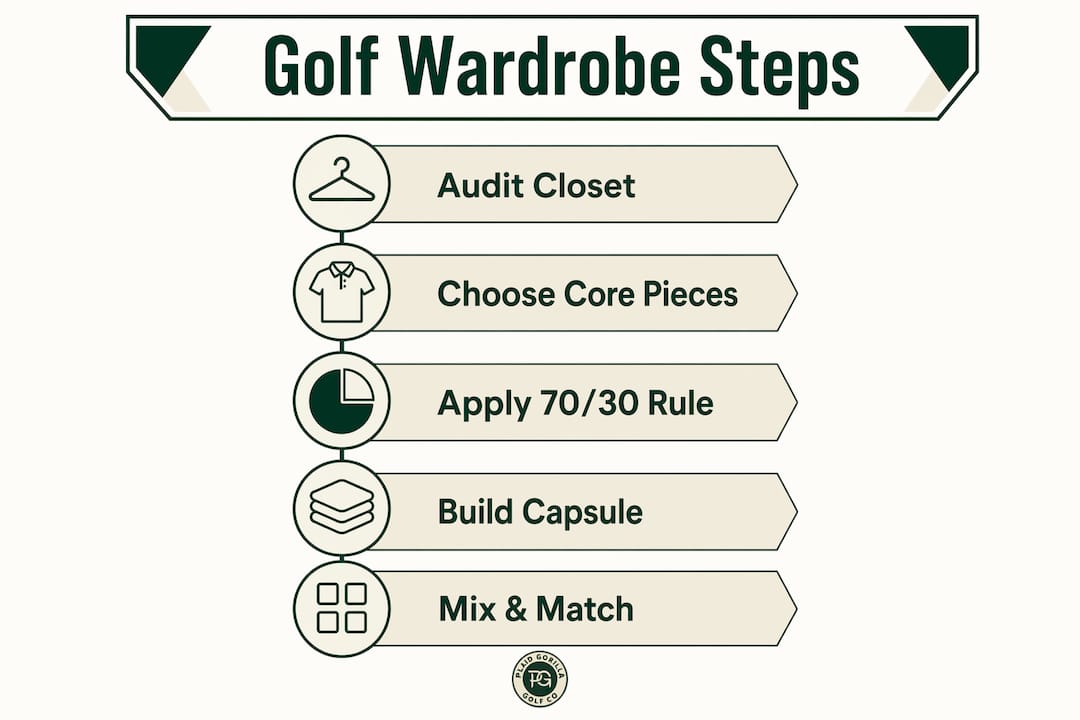
- Audit your current closet. Pull out every golf piece. Test each one against the three-pairing rule. Anything that pairs with fewer than three others goes in the retire pile.
- Choose your palette. Pick one neutral anchor (navy, white, charcoal, or stone), one soft secondary, and one accent. Every future purchase must live in this palette. Colour combination guidance can help you lock this in.
- Set a piece-count target. An eight-piece starter capsule covers most rounds. A 12–15 piece extended capsule handles full-season Canadian play, including cold-weather layering.
- Build a shopping list by priority. Polos first, then bottoms, then the mid-layer, then outerwear, then accessories.
- Map your combinations. A simple grid (polos across the top, bottoms down the side) shows you every possible outfit. Aim for at least 15 combinations from your starter set.
- Buy one elevated piece per season. Not a haul. One piece that upgrades the whole capsule.
| Capsule size | Pieces | Approx. combinations |
|---|---|---|
| Starter | 8 | 20+ |
| Extended | 12–15 | 40+ |
Pro Tip: When shopping, bring a photo of your current capsule on your phone. Before buying anything, check it against your palette and count the pairings on the spot.
What should you avoid in a structured golf wardrobe?
Some mistakes are about etiquette. Others just wreck the capsule logic.
Pieces that break the system:
- Gym shorts and athletic T-shirts — no structure, no collar, no place on most courses
- Overly baggy fits or cropped tops — both disrupt the clean silhouette the capsule depends on
- High-fashion athleticwear with oversized logos — breaks the palette and reads as gym, not golf
- Loud, single-use statement pieces that pair with nothing else you own
Etiquette-based misses:
- Metal spikes — banned at the majority of Canadian courses; always check before you arrive
- Visible athletic undergarments in the clubhouse — compression shorts showing below a polo hem, for example
- Denim of any cut — even dark-wash jeans read as casual in most club settings
The most common capsule-killer is buying a piece that looks great on the hanger but pairs with nothing in your closet. Expressing personality through golf clothing is absolutely possible — but it works within the palette, not against it.
How do you keep structured pieces looking sharp?
Technical fabrics are low-maintenance, but they punish the wrong care habits.
Washing rules:
- Cold water, gentle cycle for all performance fabrics
- Turn polos inside out to protect collar structure and printed details
- Never use fabric softener on moisture-wicking pieces — it clogs the fibres
- Wash waterproof shells separately and re-apply DWR spray after every few washes
Drying and storage:
- Air-dry polos and mid-layers flat or on a wide hanger — never a wire hanger, which distorts the shoulder.
- Hang trousers by the waistband, not the cuff, to preserve the crease.
- Store shoes with cedar inserts or shoe trees to hold the toe-box shape.
- Fold knit mid-layers rather than hanging them to prevent stretch.
When to repair versus replace: A polo with a collar that no longer holds its shape has lost its structural job. Replace it. A jacket with a failed DWR coating can often be restored with a wash and re-treatment. A shoe with a worn midsole affects your swing stability — that one gets replaced, not repaired.
Does a structured wardrobe actually save money?
Yes, and the savings are notable. Analysis of eight-piece golf capsules shows that a capsule wardrobe can reduce annual apparel spending by 40–60% compared to an unstructured collection of similar size. The mechanism is straightforward: when every piece pairs with everything else, you stop buying replacements for items that don’t work together.
The decision-fatigue benefit is real too. Boutique stylists consistently report that a capsule-style wardrobe reduces the mental load before early-morning rounds, which improves focus and mood at tee time. Less time at the closet, more time on the range.
Three rules to implement immediately:
- Apply the three-pairing rule to every future purchase
- Cap your active capsule at 15 pieces until you’ve worn every combination at least once
- Build a cohesive capsule around quality over quantity — two premium polos outperform five mediocre ones
What does a structured golf wardrobe cost to build in Canada?
Budgeting for a capsule is simpler than budgeting for a random collection, because you’re buying fewer, better pieces.
A starter eight-piece capsule in Canada typically runs $400–$700 CAD, depending on brand tier. That breaks down roughly as: two polos ($60–$100 each), one pair of trousers and one pair of shorts ($80–$120 each), a mid-layer ($80–$120), a packable jacket ($100–$150), and a hat ($30–$60). Shoes are separate and add $100–$200 for a quality spikeless pair.
An extended 12–15 piece capsule with premium pieces runs $900–$1,500 CAD. At that level, you’re adding a second mid-layer, a second jacket for wet conditions, and a dress or skort set for single-decision days.
The smarter budget move is to start with the eight-piece starter and add one elevated piece per season rather than buying everything at once. Spread over two seasons, the extended capsule costs the same but you wear each piece more before the next arrives.
Where can you shop for structured golf wardrobe pieces in Canada?
Canadian golfers have solid options at every price point.
Canadian brands and retailers:
- Plaidgorillagolf (Spruce Grove, Alberta) — limited-edition hoodies, hats, and kits built for the course and worn everywhere else. Ships across Canada.
- Golf Town — Canada’s largest golf retailer; carries a broad range of performance polos, trousers, and footwear from major labels.
- Sport Chek — accessible price points for performance basics; good for mid-layers and outerwear.
- Mark’s — strong for technical trousers and layering pieces that cross over from golf to everyday wear.
For hybrid casual pieces that work on and off the course, GfaceGear is worth checking — their apparel bridges the gap between athletic and course-ready without sacrificing either.
For Canadian-specific styling context and wardrobe modernisation advice, Plaidgorillagolf’s field notes series covers current season trends through a distinctly Canadian lens.
Key takeaways
A structured golf wardrobe built on eight core pieces can generate 20+ outfit combinations and cut annual apparel spend by 40–60%.
| Point | Details |
|---|---|
| Audit first | Remove any piece that pairs with fewer than three others before buying anything new. |
| Lock in your palette | Choose three to four tones once; every future purchase must fit that colour story. |
| Start with eight pieces | A starter capsule of eight items covers most rounds and produces 20+ combinations. |
| Apply the three-pairing rule | Every new purchase must pair naturally with at least three pieces you already own. |
| Plaidgorillagolf kits | The Club Kit, Bogey Kit, and Ponderosa Pine Set each fill the hat and layering roles in a Canadian capsule. |
Why the structured approach is the only one worth building
Most golfers buy reactively. A sale here, a bold piece there, a jacket grabbed before a trip. The result is a closet full of options and nothing that actually goes together. The structured approach flips that. You decide the system once, and the system does the work every morning after.
What most wardrobe guides miss is that the discipline of removing pieces is just as important as choosing new ones. A capsule with one orphan item is still a capsule. A capsule with five orphan items is just a closet with a better name. The three-pairing rule is not a suggestion — it’s the filter that keeps the whole thing honest.
Canadian golfers have an extra reason to think structurally: the season demands layering, and layering only works when every piece is compatible. A mid-layer that clashes with your only jacket is useless at 8°C on a September morning in Banff. Build the system right once, and it handles every condition the Canadian golf calendar throws at you.
Plaidgorillagolf kits built for the Canadian capsule
If you’ve built your palette and you’re ready to add pieces that actually hold their shape and stand out on the course, Plaidgorillagolf delivers exactly that. Born in Spruce Grove, Alberta, the brand makes limited-edition hats and hoodies designed to fill the accessory and layering roles in a structured wardrobe — bold enough to express personality, clean enough to stay within any capsule palette.
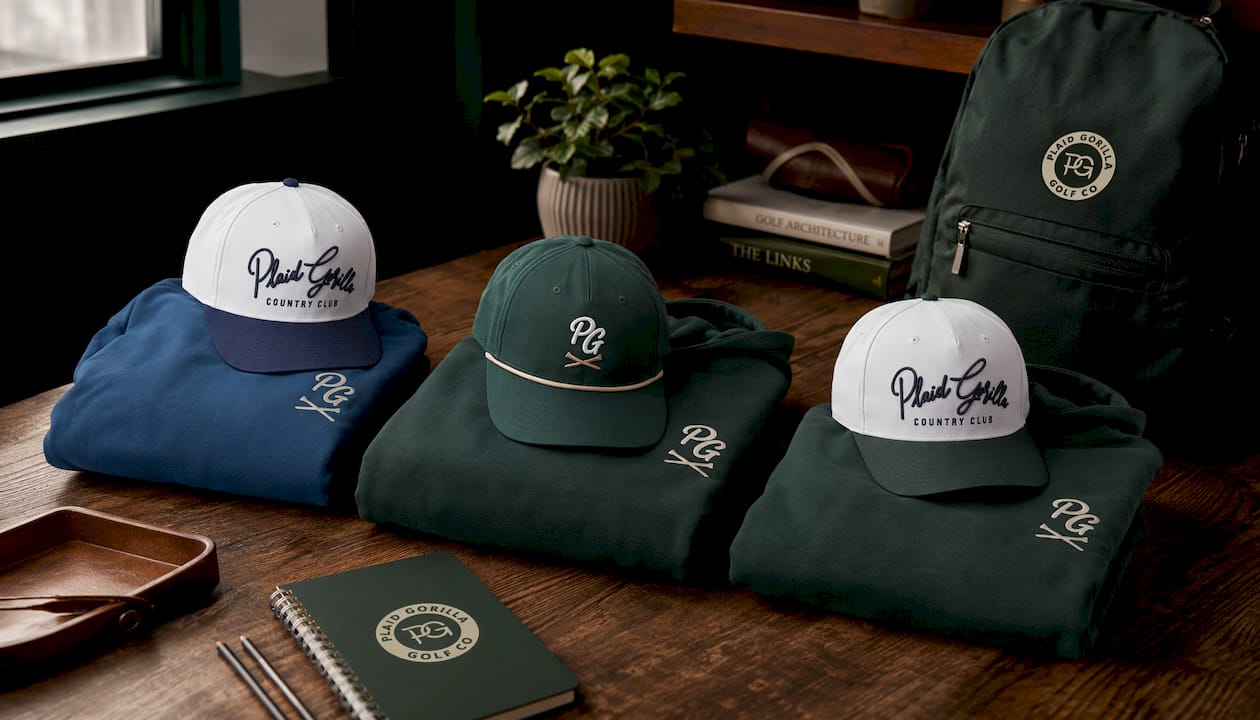
Three kits map directly to the capsule system:
- The Club Kit — Country Club Snapback and Prime Hoodie. Your hat-and-layer combination, done in one drop.
- The Bogey Kit — Country Club Hat and Bogey Enthusiast Hoodie. A starter pairing for golfers building their first capsule.
- The Ponderosa Pine Set — Rope Hat and Bogey Enthusiast Hoodie. A seasonal accent set that adds character without breaking the palette.
All three ship across Canada. Shop the current drop at plaidgorillagolf.ca and add the piece your capsule is missing.
Useful sources
- The art of the golf capsule — A. PUTNAM: The definitive guide to building a capsule golf wardrobe around a colour story and the three-pairing rule.
- Eight-piece golf capsule wardrobe — GolfDrivingSwingTips: Source for the 40–60% savings figure and the 20+ outfit-combination claim.
- Building a capsule golfing wardrobe — Social Life Magazine: Covers sustainability, cohesion, and the quality-over-quantity argument.
- Golf dress code guide — Mizzen+Main: Practical polo and dress-code guidance from a performance-apparel perspective.
- Golf wardrobe modernisation — Plaidgorillagolf: Canadian-focused overview of structured wardrobe trends for the current season.
- How to choose high-performance golf clothing — Plaidgorillagolf: Fabric, fit, and performance guidance tailored to Canadian golfers.
- Golf wardrobe expression — Plaidgorillagolf: How to dress with personality while respecting dress codes and capsule logic.
FAQ
What is the 70/30 rule in golf?
The 70/30 rule is a styling guideline: 70% of your capsule pieces should be neutral anchor tones (navy, white, charcoal, stone) and 30% can carry an accent colour or bold pattern, keeping every outfit combination looking intentional rather than accidental.
How do you build a golf wardrobe from scratch?
Start with an eight-piece starter capsule: two to three polos, one pair of trousers, one pair of shorts or a skort, a mid-layer, a packable jacket, and a hat. Apply the three-pairing rule to every purchase and lock in a three-to-four tone palette before you buy anything.
What is the 90% rule in golf?
The cart-path rule on many courses requires golf carts to stay on the path except when close to the ball. It is a course-management rule, not a wardrobe guideline, though it is commonly searched alongside golf dress-code questions.
What should you not wear when golfing?
Avoid gym shorts, athletic T-shirts, denim, metal spikes, and any piece with oversized logos or visible athletic undergarments. Most Canadian courses also prohibit cargo shorts and sleeveless tops for men in the clubhouse.
Can a hoodie be part of a structured golf wardrobe?
Yes, when it is purpose-built for the course. A structured hoodie with clean lines and a refined fit fills the mid-layer or finishing-layer role in a capsule. Plaidgorillagolf’s Prime Hoodie and Bogey Enthusiast Hoodie are designed exactly for this, pairing with hats and polos without breaking the capsule’s visual logic.