


Limited-edition products are controlled by quantity or channel to create exclusivity, while seasonal products are tied to a calendar window or occasion and typically come back around every year. Brands often blend both tactics into seasonal drops or capsule collections, and that mix matters because shoppers respond to each differently. It also matters legally: scarcity claims need to hold up, or they cross into deceptive marketing territory.
TL;DR:
- Limited runs disappear after sellout, while seasonal products can restock during their window and usually return next year; seasonal prices often fall afterward.
- Before buying, verify a drop’s published end date or unit cap and checkout stock; resetting countdowns or false low stock claims mislead shoppers.
- Brands can use limited runs to generate buzz and seasonal assortments to meet predictable demand, but leftover seasonal stock needs markdowns or storage.
- Small DTC brands should set a cap, publish an end date, and use preorders before committing to inventory; track repeat purchases, not sellout speed.
Table of Contents
- Availability, scarcity, and pricing: how the two tactics stack up
- Choosing between limited editions and seasonal assortments
- How brands actually run a limited drop
- How Plaid Gorilla Golf runs its limited drops and kits
- What “limited edition” and “seasonal” actually mean
- Our take: match the tactic to what you’re actually selling
- Shop our current limited runs before they’re gone
- FAQ
- Sources
Availability, scarcity, and pricing: how the two tactics stack up
The practical differences show up the moment you try to buy something.
Availability works on opposite logic. A limited edition disappears once the run sells out, full stop, regardless of the date on the calendar. A seasonal item disappears when the season ends, but it’s coming back next year in a similar form.
Scarcity control follows the same split. Limited editions cap scarcity through a fixed production run, a single retail channel, or a specific region. Seasonal products aren’t scarce in that engineered sense: their relevance is just tied to weather, a holiday, or a cultural moment, and stock usually gets replenished while that window is open.
Pricing and markdowns diverge too. Limited editions rarely go on sale while the drop is live since the entire pitch is exclusivity, not a deal. Seasonal items follow a more predictable cycle: full price early in the season, clearance markdowns once the window closes. Any sale pricing still has to reflect a genuine reduction from the ordinary selling price, a detail the Competition Bureau of Canada calls out specifically when it comes to fake urgency cues.
Buyer motivation is the real split underneath all of this. Limited-edition buyers chase exclusivity and collectibility, something they can point to and say “there were only a handful of these.” Seasonal buyers are after timely usefulness, whether that’s a rain jacket in April or a holiday-themed hoodie in December.
Before you buy into any “exclusive drop,” run a quick check:
- Does the brand state a real end date or unit count, not just a countdown that resets?
- Is the “only X left” claim tied to an actual inventory number you can verify at checkout?
- Would this item plausibly return next year, which would make it seasonal rather than limited?
Choosing between limited editions and seasonal assortments
The right tactic depends on what a brand actually needs to accomplish.
Limited editions build brand equity and urgency. They work best when the goal is buzz, press, or a loyal following that wants first access. Seasonal assortments serve a different goal: steady inventory turnover and matching product to predictable demand, like swim gear in July or toques in January. Brands chasing a short-term revenue spike sometimes layer a limited run on top of a seasonal collection, which is where capsule collections come from.
The trade-offs are real. Limited runs are harder to forecast since there’s no sales history to lean on, and running out too fast can frustrate shoppers who show up a day late. Seasonal assortments carry their own fulfilment headache: leftover stock at season’s end has to be marked down or stored for next year.
A small DTC brand testing its first limited run should move through this order:
- Pick a fixed unit count you can actually produce and ship on time.
- Announce a real end date or sellout threshold, never a vague “while supplies last.”
- Use pre-orders to gauge demand before committing to a second run.
- Track sell-through rate and repeat-purchase behaviour after the drop closes.
Pro Tip: Measure success by repeat purchases in the following month, not just how fast the first run sold out, urgency alone doesn’t tell you if the product earned loyalty.
How brands actually run a limited drop
The mechanics behind a convincing limited drop are fairly consistent across categories.
Most brands lean on a handful of tools: preorders to test demand before committing inventory, timed drops that open and close on a published schedule, staged restocks for high-demand sizes, and retailer exclusives that keep certain designs off the open market entirely. Raffles show up too, mostly for items expected to sell out in minutes, since they spread access more fairly than a straight first-come checkout.
Channel choice matters as much as the product itself. A drop sold only through a brand’s own site feels more exclusive than the same item pushed through every retail partner at once. The biggest pitfall is overpromising: a countdown timer that quietly resets, or a “low stock” banner that doesn’t reflect real inventory, both qualify as the kind of deceptive marketing practice the Competition Bureau of Canada warns against.
Operating a drop ethically comes down to a short list:
- Publish a real end time or unit count, and stick to it.
- Keep stock messaging accurate at every stage of checkout.
- Follow up with customers after a sellout instead of leaving them guessing.
- Avoid resetting countdowns or reusing “last chance” language for stock that isn’t actually last chance.
How Plaid Gorilla Golf runs its limited drops and kits
We build our own drops around the same principle: a fixed run, a clear window, and no pretending otherwise. Pieces like the Prime Hoodie - Real Teal and the Bogey Enthusiast Hoodie – Pine typically launch in limited runs, while hats like the Champagne Tees Rope Hat – Ponderosa Pine and the Country Club Snapback – Navy/Cloud White often anchor a themed kit.
We also package pieces into bundles, like The Club Kit, The Bogey Kit, The Course Kit, and The Ponderosa Pine Set, which pair a hat and hoodie around one look. Bundling a hat with a hoodie gives golfers a reason to come back for the whole set instead of one piece.
A few things we watch on every run include announcement timing ahead of the drop, incentives that improve the appeal of kits compared to single pieces, and inventory limits set before launch.
Academic research on limited editions shows the tactic can raise willingness to pay and perceived uniqueness, though the effect varies by brand quality and product type, which is part of why we keep our runs genuinely small rather than padding counts to look exclusive. For more on how this plays out across a full collection, our guide to limited-edition apparel benefits breaks down the reasoning further.

What “limited edition” and “seasonal” actually mean
A limited-edition product is one restricted by quantity, time, region, or distribution channel, specifically to create scarcity and push perceived value higher. Once a run sells out, it’s typically gone for good, unlike a standard product line that gets restocked whenever demand calls for it. The defining trait isn’t the design itself but the artificial ceiling placed on how many a brand will ever make.
A seasonal product is tied to a specific time of year, a holiday, or a weather pattern, and it’s built to sell within that finite window, as trade resources describing the category note. Unlike a limited edition, a seasonal item isn’t scarce by design: a brand can restock it freely while the season is live, and the same style usually returns the following year in roughly the same form.
The overlap between the two is where things get interesting. A seasonal capsule collection can also be limited, carrying both a calendar window and a fixed unit count, which is exactly how hybrid capsule drops work in practice. Hat and hoodie kits that launch around a specific golf season but only in a capped run fall into that same overlap: seasonal timing paired with genuine scarcity, rather than one tactic standing in for the other.
Our take: match the tactic to what you’re actually selling
Lean into limited editions when the goal is exclusivity and a story worth talking about. Lean into seasonal assortments when the goal is matching product to predictable, recurring demand. The tactics aren’t competitors, they’re tools for different jobs, and using the wrong one just creates frustration on one side or wasted inventory on the other.
Consumer trust is the real asset here. Scarcity claims only work if they’re true, and a countdown or “low stock” banner that doesn’t match reality erodes trust faster than it builds urgency. Test small, measure whether buyers come back for a second purchase, and keep every stock claim honest.
— Mike
Shop our current limited runs before they’re gone
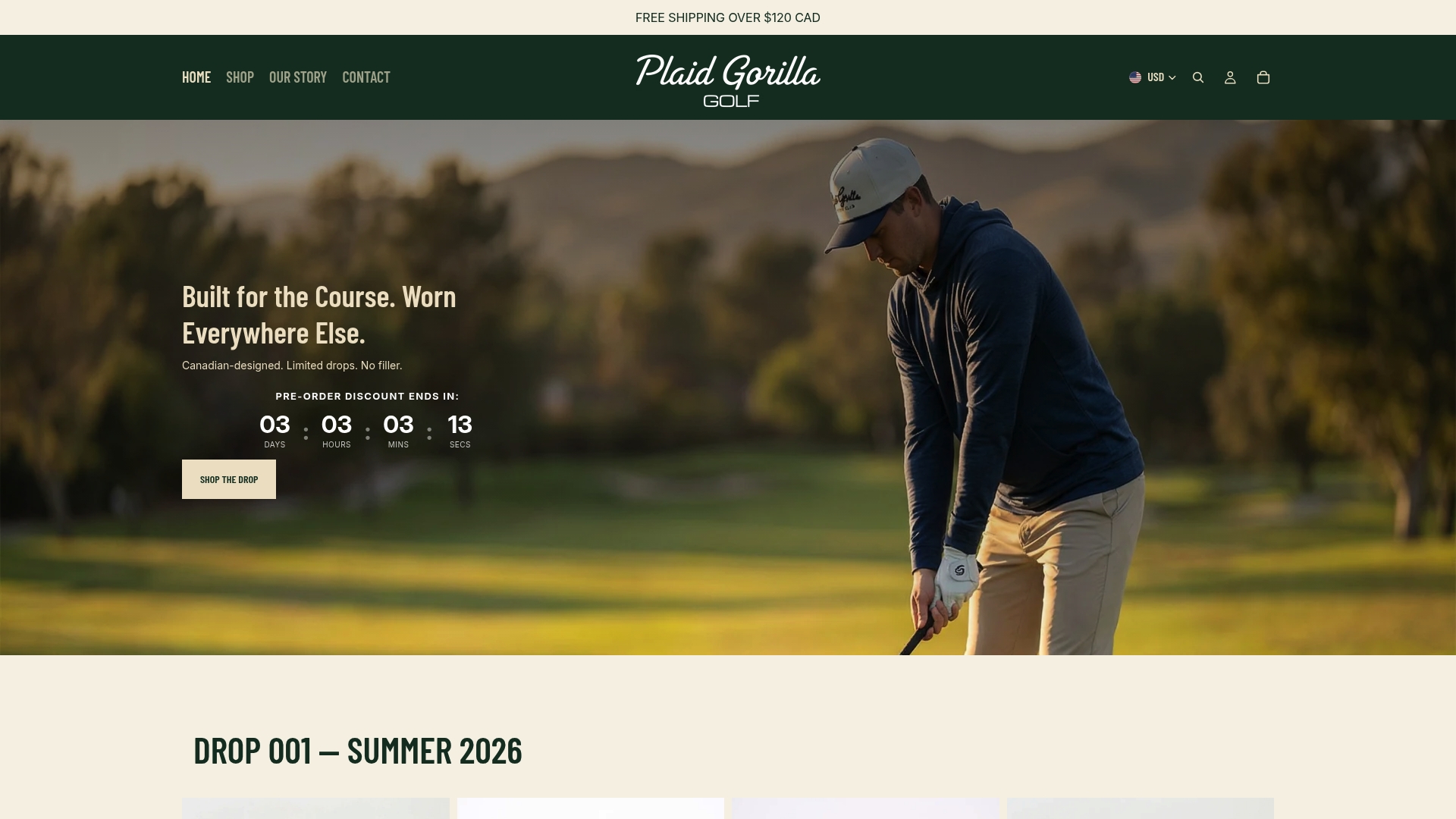
Every kit and drop we release follows the same rule: a real cap, a clear window, and nothing manufactured to look scarcer than it is. Browse what’s live right now and you’ll see exactly how the limited-edition approach plays out in hats, hoodies, and kits built for the course and everywhere else.
- Prime Hoodie - Real Teal: our core limited-run hoodie.
- The Bogey Kit: a bundled hat and hoodie set.
- Golf Hats: the full current lineup of rope hats and snapbacks.
- Golf Hoodies: every hoodie currently in rotation.
Sign up for drop alerts so you hear about new kits the moment they launch, and always check the listed stock count and end date before you buy, since once a run is gone, it’s gone for good.
FAQ
What does “limited edition” mean?
A limited edition is a product made in a fixed, capped quantity or restricted to a specific channel or region, designed to create scarcity and boost perceived value. Once the run sells out, the brand typically doesn’t restock it in the same form.
What are examples of seasonal products?
Seasonal products include items tied to a specific time of year or occasion, like holiday-themed apparel, spring rain gear, or summer swimwear. They’re restocked while their season is active and usually return in a similar form the following year.
What are limited edition items?
Limited edition items are goods released in a capped quantity, often tied to a specific design, collaboration, or moment, with no guarantee of restock once they sell out. Apparel brands commonly use this format for hats, hoodies, and themed kits to drive early demand.
Is it “limited edition” or “limited edition”?
“Limited edition” is the standard spelling and usage, written as two words with no hyphen when it follows the noun it describes. It’s sometimes hyphenated as “limited-edition” when used as a compound adjective directly before a noun, such as “a limited-edition hoodie.”
Sources
- Fake urgency cues — Competition Bureau of Canada
- Limited Edition Products research — Marketing Science (INFORMS)